Beyond lasers and creams, Korea is known for injectable skin treatments that improve hydration, texture, and glow from within — most famously skin boosters and Rejuran. They're gentle, popular with locals, and priced far below US clinics. (See also our K-beauty dermatology guide and melasma & laser toning guide.)
What are skin boosters?
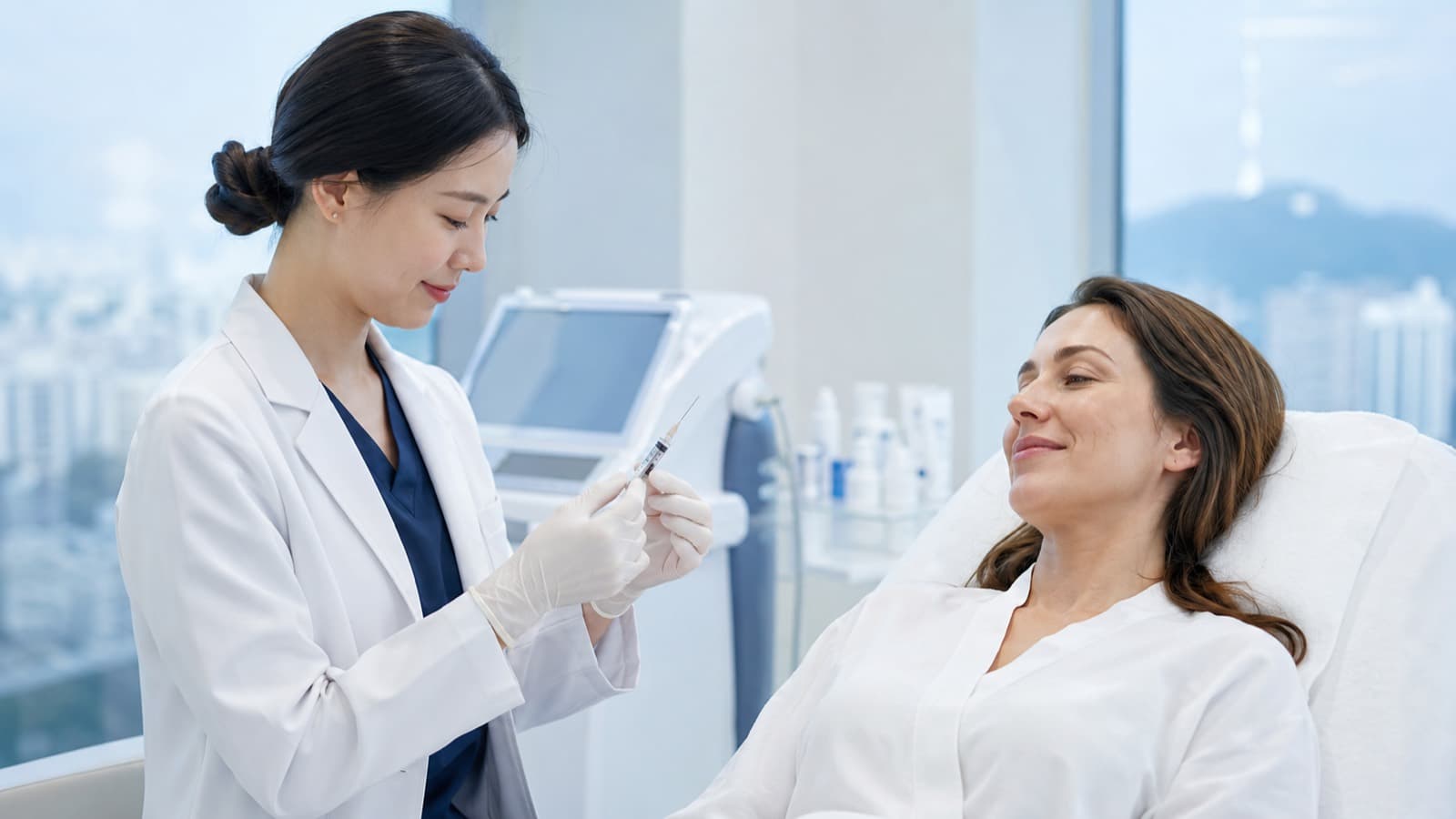
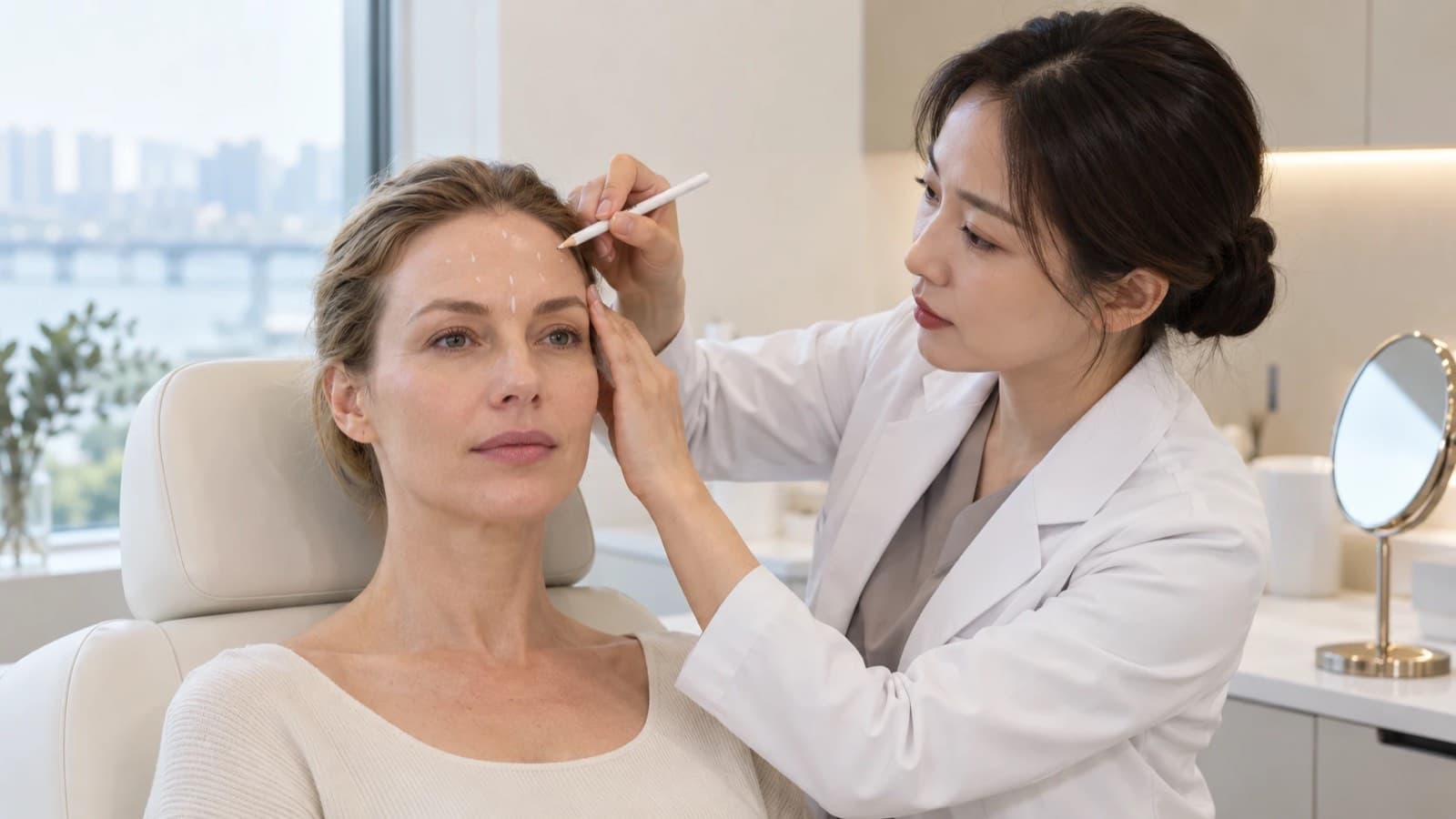
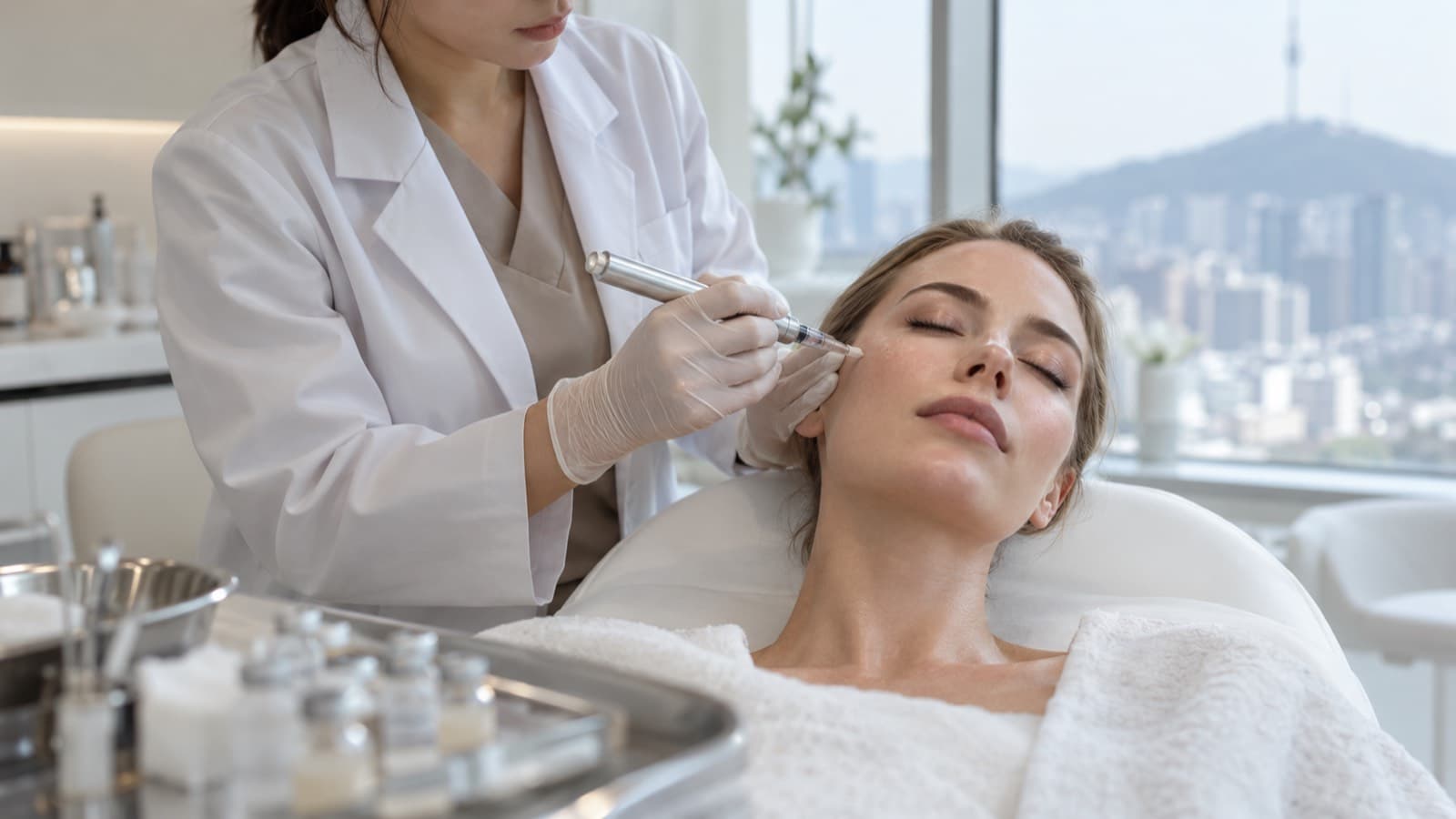
Skin boosters are micro-injections of hydrating and skin-conditioning ingredients — most often hyaluronic acid (e.g., Juvéderm Volite) — spread across the face. Rather than adding volume like filler, they improve hydration, elasticity, and a natural glow.
What is Rejuran?
Rejuran ("연어주사," the salmon-DNA injection) uses polynucleotides derived from salmon DNA to support skin repair, calm inflammation, and improve fine texture and resilience. It's popular for overall skin quality and delicate areas like under the eyes.
- Skin boosters — deep hydration and glow
- Rejuran — skin repair, texture, and resilience
- Many patients combine both, or add them to a laser plan
Why US patients choose Korea
Korean dermatologists administer these injections in extremely high volume, with careful technique and honest expectations. You pay the clinic's own per-session price — with no foreigner markup.
What it costs (Korea vs US)
| Treatment | United States | South Korea |
|---|
| Skin booster (per session) | $400–$700 | $150–$300 |
| Rejuran (per session) | $400–$600 | $150–$350 |
Illustrative ranges in USD; most protocols run a short series of sessions.
What to expect and recovery
Expect tiny injection points and possible mild swelling or small bumps that settle within 1–3 days. There's little to no true downtime, which makes these easy to combine with a short trip. Results build gradually over a series of 2–4 sessions, spaced a few weeks apart.
How to choose a clinic
- Confirm a board-certified dermatologist (피부과 전문의) performs or supervises injections.
- Ask which products they use and how many sessions your goals realistically need.
- Get a written per-session and package price. Curo pre-screens all of this.
Planning your trip from the US
- Entry: US citizens visit visa-free for short stays — check the current K-ETA before flying.
- Length of stay: A single session needs only a day; plan 3–7 days to combine treatments or fit two sessions.
- Support: Curo arranges interpretation and booking.
How Curo helps
Curo matches you with a doctor-vetted dermatology clinic, returns the clinic's own price with no foreigner markup, and arranges your booking and interpretation at no cost. Explore Dermatology & Skin in Korea, or get a free quote.
This content is general information and not medical advice. Personal treatment decisions require consultation with your treating physician. Curo is a Ministry of Health & Welfare–registered international patient attraction agency and is not a medical institution.