Injectables are the most-performed aesthetic treatment in Korea by a wide margin, and the price difference is the largest of any treatment we cover — often 70–80% below US pricing, not the 50% typical elsewhere.
There is a straightforward reason, and an honest catch. Both below.
Why it costs so much less
Korea is not just a big consumer of botulinum toxin — it is a major manufacturer. Domestic competition among Korean toxin makers has driven prices down in a way the US market, dominated by a few brands, has not experienced.
This is the part worth understanding before you assume cheap means inferior:
| Korean brand | Maker | US status |
|---|
| Nabota | Daewoong | Same active ingredient is FDA-approved in the US as Jeuveau (2019) |
| Botulax | Hugel | Same active ingredient is FDA-approved in the US as Letybo (2024) |
| Innotox | Medytox | Korea-approved (liquid, ready-to-use); not FDA-approved |
| Botox | Allergan | The original; available in Korea, priced higher |
So the toxin injected into your forehead in Gangnam is frequently the same molecule Americans pay several times more for under a different trade name. Korean brand presentations are authorised by Korea's Ministry of Food and Drug Safety (MFDS) — ask which product is being used and confirm it is MFDS-approved.
The Korean approach: smaller doses, more often
Korean injectors generally favour conservative dosing at shorter intervals over large infrequent doses. The goal is reduced movement, not absent movement — a face that still expresses.
Two techniques you will encounter that are far more common in Korea than the US:
- Skin botox / microtox — very dilute toxin placed superficially across the face to refine pores, reduce oil and add a smooth "glass skin" finish. It does not freeze muscles; it is a skin-quality treatment.
- Masseter (jaw) botox — slimming the jaw muscle for a softer facial contour. Extremely common in Korea, also genuinely useful for teeth grinding and jaw tension.
What it costs
| Treatment | United States | South Korea |
|---|
| Glabella (frown lines) | $300–$600 | $50–$150 |
| Three areas (forehead, glabella, crow's feet) | $800–$1,500 | $150–$350 |
| Masseter / jaw slimming | $600–$1,200 | $100–$250 |
| Skin botox / microtox, full face | $500–$1,000 | $150–$300 |
| HA filler, per syringe | $700–$1,200 | $250–$500 |
Illustrative ranges in USD. Korean clinics typically price per area or per session rather than per unit — ask which, and how many units, so you can compare properly.
The honest catch: this does not last
Botulinum toxin lasts 3–4 months. Fillers last 6–18 months depending on the product and placement.
That changes the travel maths completely compared with surgery:
- Flying to Korea for injectables alone rarely makes sense. Save $600 and spend $1,200 getting there, four times a year.
- It makes excellent sense as an add-on. If you are already in Korea for vision correction, dental work, a health screening or a skin programme, injectables are a genuinely cheap addition — often an hour, no downtime.
- It makes sense if you travel to Asia regularly for work or family.
We would rather tell you this than sell you a trip that does not pay for itself. The same logic applies to orthodontics.
Safety: the part that matters more than price
Toxin is forgiving; filler is not. The serious risk is vascular occlusion — filler entering or compressing a blood vessel, which can cause tissue death or, rarely, blindness. It is uncommon, and it is a genuine emergency.
What to require:
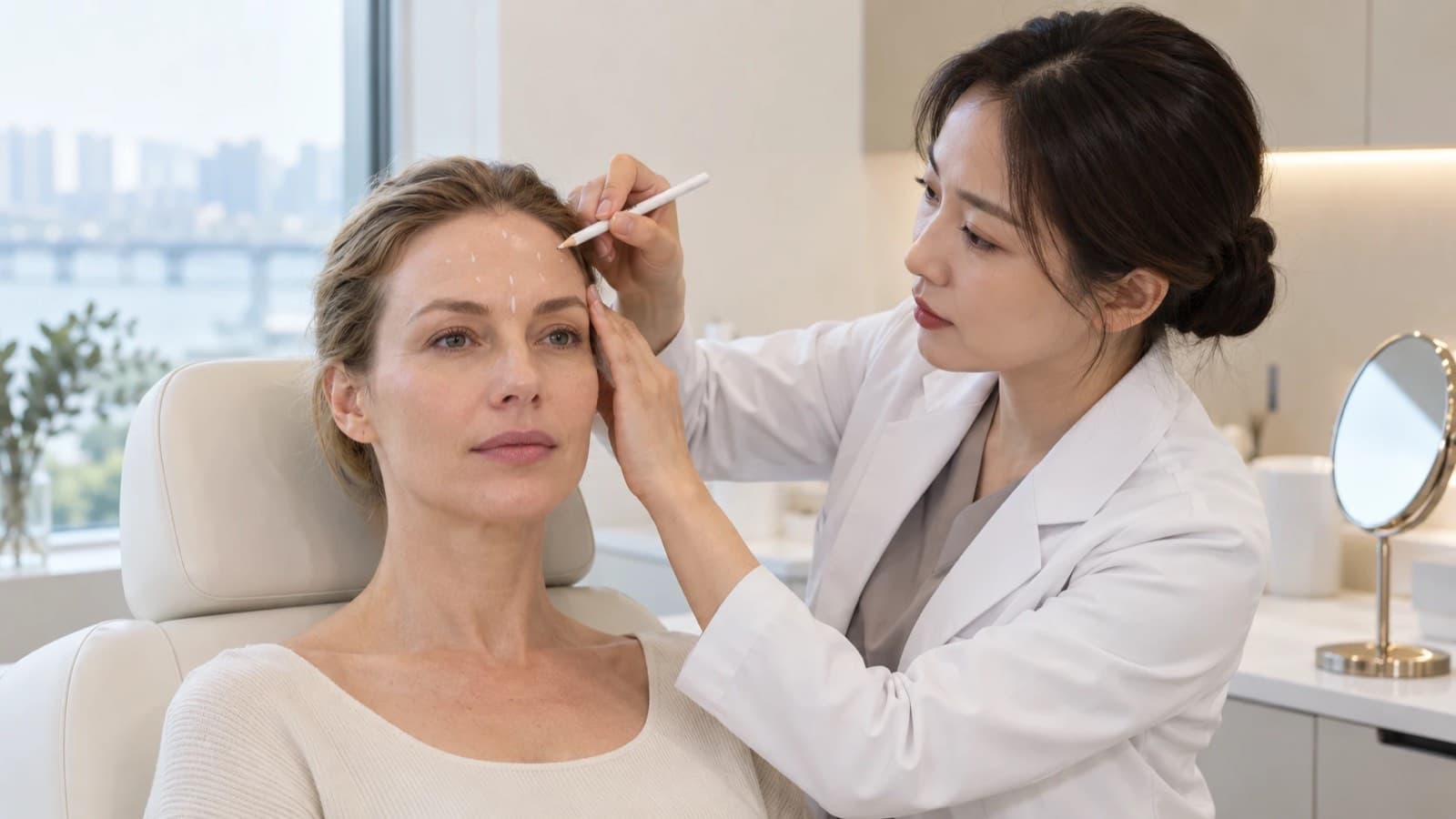
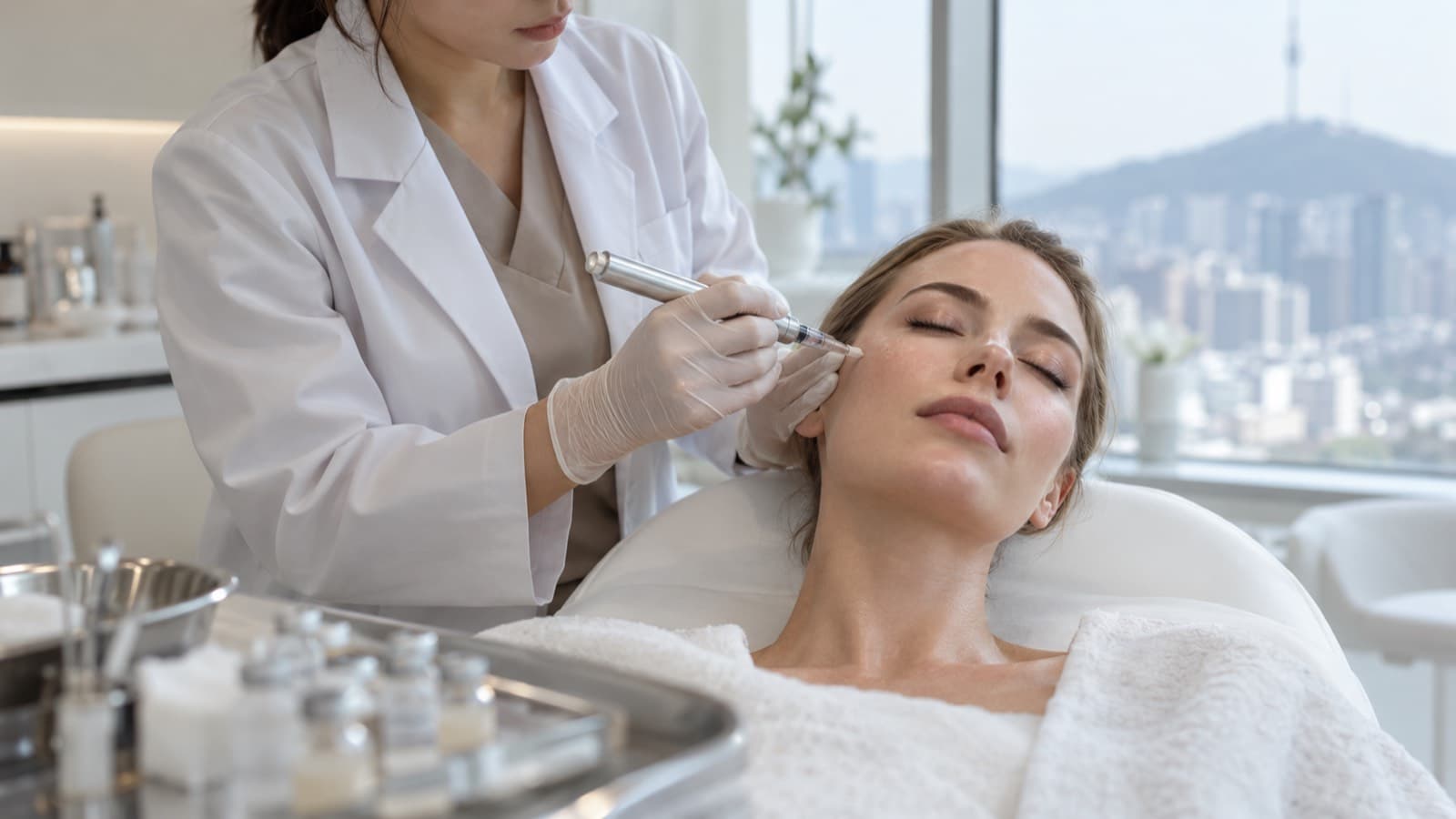
- A physician injector. In Korea, confirm a licensed doctor is performing the injection — ideally a board-certified dermatologist or plastic surgeon, not an assistant.
- Hyaluronidase on site. This is the enzyme that dissolves HA filler and the frontline treatment for vascular occlusion. A clinic that injects filler must stock it. Ask directly.
- A named, sealed product opened in front of you. Counterfeit and grey-market filler exists in every market.
- A complication plan for after you fly home. Occlusion usually presents within hours to days — know who to call and have your injector's contact and the product details in writing.
- Realistic volume. Reputable Korean injectors are conservative. Pressure to add syringes is a reason to leave.
Avoid injectables if you are pregnant or breastfeeding, have an active skin infection at the site, or have certain neuromuscular conditions.
Planning it
- Time: 15–45 minutes. No meaningful downtime, though small bruises are common with filler.
- Timing in your trip: book injectables 2–3 days before flying home, not on arrival — so any bruising or asymmetry can be reviewed before you leave. Toxin takes 3–7 days to show and two weeks to settle fully, so do not judge the result on day two.
- Avoid alcohol, aspirin and fish oil for a few days beforehand to reduce bruising.
- Do not lie flat or rub the area for four hours after toxin.
For the broader skin picture, see our Korean dermatology guide, skin boosters and Rejuran, and Ultherapy and skin tightening.
How Curo helps
Curo is a registered patient-attraction agency, not a clinic. A Korean doctor matches you with a physician-led dermatology clinic, confirms which products are used, and returns the clinic's own price — no foreigner markup. Booking and interpretation are free. Explore dermatology in Korea or get a free quote.
This content is general information and not medical advice. Personal treatment decisions require consultation with your treating physician. Curo is a Ministry of Health & Welfare–registered international patient attraction agency and is not a medical institution.