When Hollywood's biggest names opened the 2026 Oscars nominee gift bag, the skincare slot went to a Korean beauty brand — and the hero ingredient inside it was one Korean dermatologists have been injecting for over a decade.
This article reports on publicly available information for general interest. Curo is not affiliated with, and does not claim any endorsement by, any brand or individual mentioned.
What was actually in the bag
The "Everyone Wins" bag is produced independently by the Los Angeles marketing agency Distinctive Assets — it is not from the Academy — and in March 2026 it went out to the 25 acting and directing nominees, a list reported to include Timothée Chalamet, Leonardo DiCaprio, Emma Stone, Kate Hudson and Rose Byrne. Press coverage put this year's total value at roughly $321,000–$350,000.
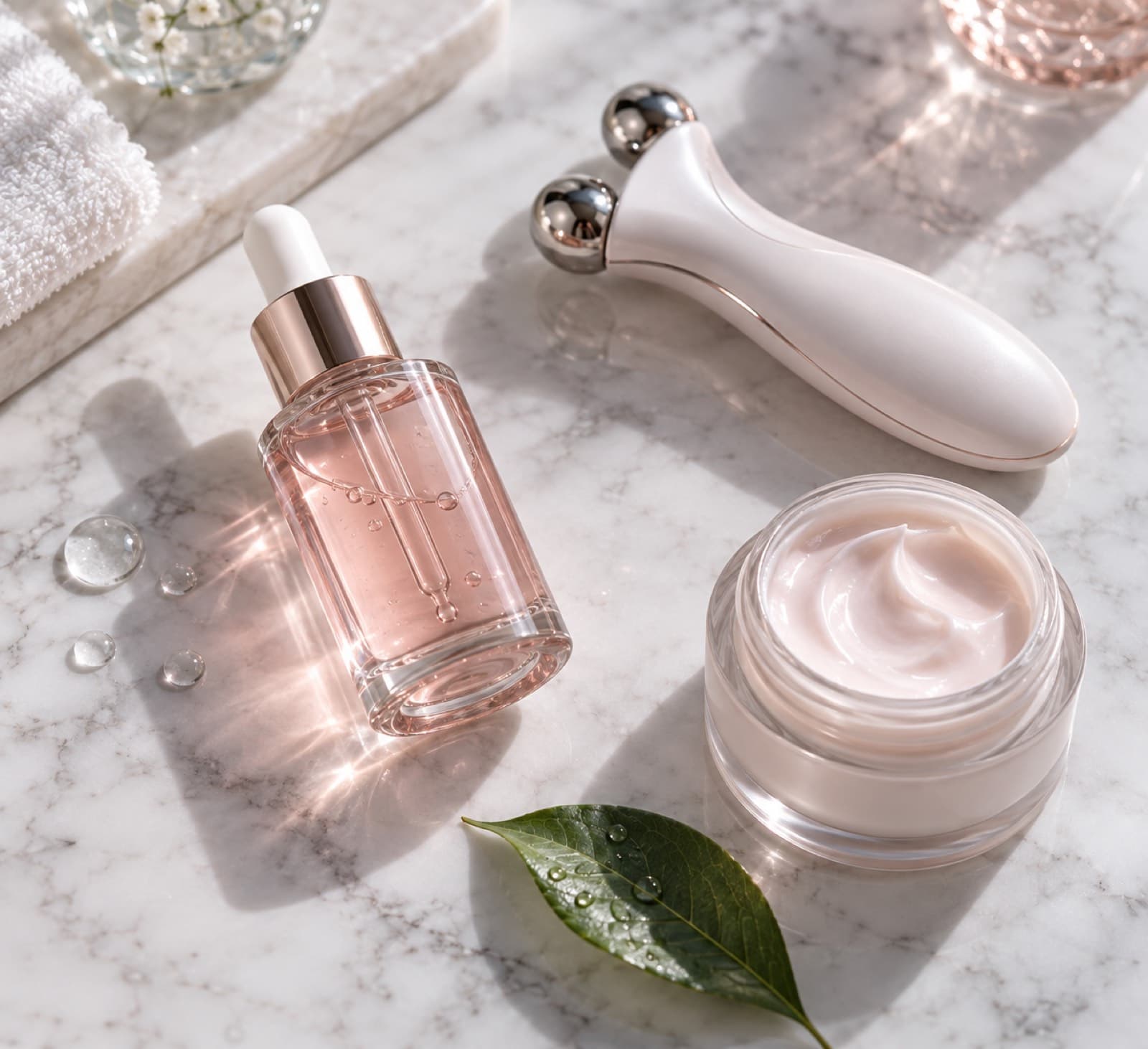
The skincare feature was a Glow Recipe K-beauty set: the brand's Watermelon Glow PHA+BHA Pore-Tight Toner and its newer PDRN+ toner pads, formulated to soothe irritation and support the skin barrier.
What makes it interesting isn't the toner. It's that the same bag also carried in-clinic cosmetic work — including a facial-rejuvenation package reported at around $25,000 and a high-definition liposuction offer. Shelf skincare and clinic procedures, in one box, at wildly different price points. That gap is the whole story.
So what is PDRN?
PDRN stands for polynucleotide — short, purified fragments of DNA, most often sourced from salmon. In Korea it is not a trend word; it is a clinic staple. Rejuran, made by the Korean pharmaceutical company PharmaResearch, has been used in Korean dermatology since 2014, and polynucleotide injectables remain one of the most-booked treatments in Seoul.
The important distinction, said plainly:
- Topical PDRN (a toner pad, essence, or cream) sits on the surface. It can genuinely calm redness and support a stressed barrier. It is skincare, and it behaves like skincare.
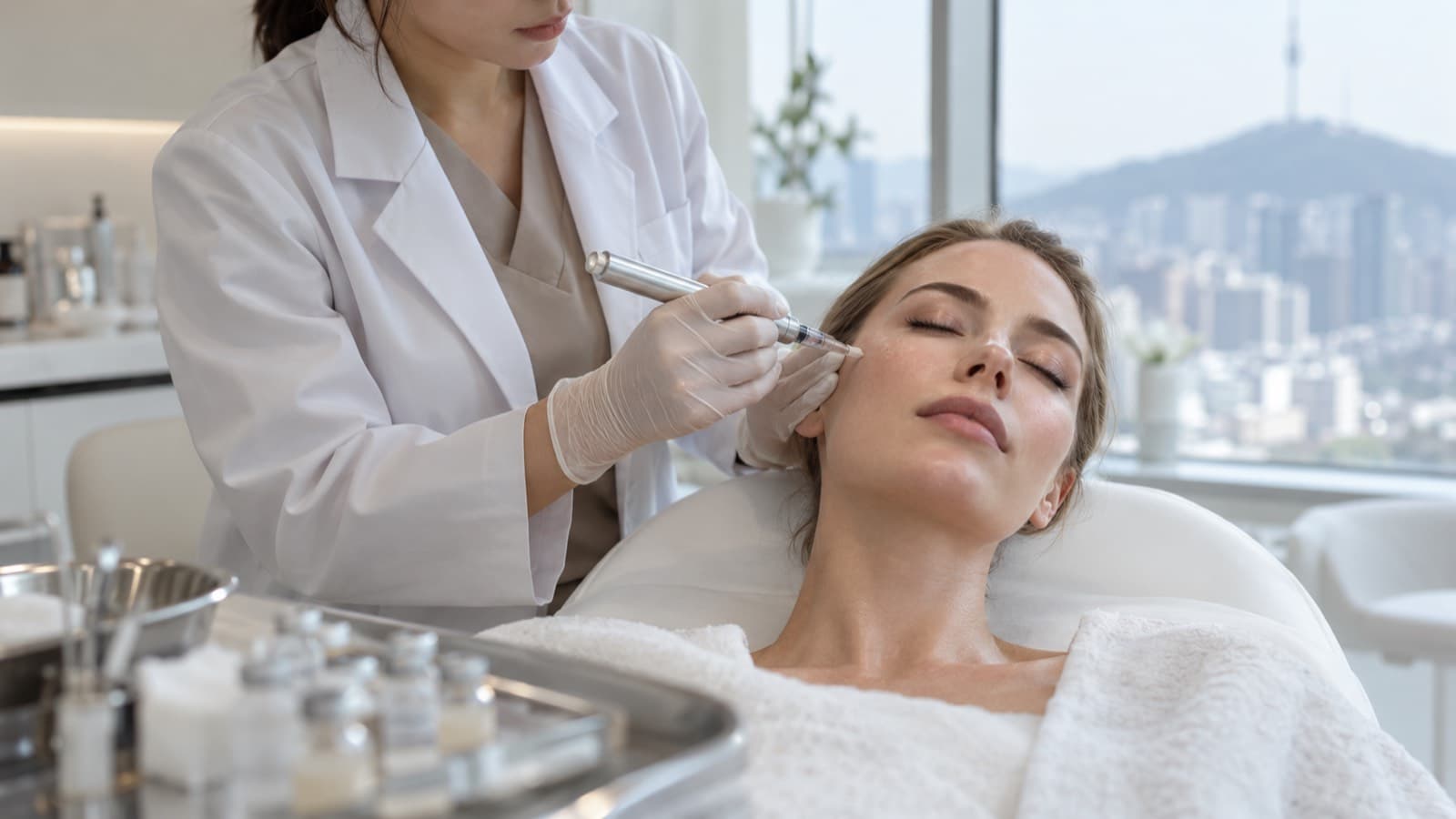
- Injected PDRN (Rejuran and similar) is placed into the dermis in a series of micro-injections. That is where the collagen-stimulating effect studied in the literature happens — and it is a medical procedure performed by a physician.
A pad will not do what an injection does. Anyone telling you otherwise is selling the pad. But the topical version is a reasonable, low-risk way to find out whether your skin likes the ingredient before you ever consider the clinical one.
Why the clinic version is a Korea trip, not a US one
Polynucleotide injectables are routine in Seoul and priced accordingly. Korean dermatology clinics run enormous volume — the same physician may perform a treatment hundreds of times a month — and international patients pay the clinic's ordinary domestic rate.
| Treatment | Typical US price | Typical Korea price |
|---|
| Rejuran / polynucleotide (per session) | $400–$600 | $150–$350 |
| Skin booster (per session) | $400–$700 | $150–$300 |
| Laser toning (per session) | $300–$600 | $80–$200 |
| Ultherapy / HIFU (full face + neck) | $2,000–$4,000 | $600–$1,500 |
Illustrative ranges in USD. Actual pricing depends on your skin, the product used, and the clinic.
Rejuran is usually done as a course of 3–4 sessions spaced 2–4 weeks apart, which matters for planning: one trip gets you one or two sessions, not a full protocol. Many US patients pair a first session with laser toning or HIFU so a short visit still does real work.
What to expect, honestly
- Downtime: small bumps and some bruising for 1–3 days after polynucleotide injections. Topical numbing is standard.
- Timeline: results build gradually over weeks — this is not a same-day transformation.
- Not for everyone: active skin infection, pregnancy, or certain conditions rule it out. A real consultation should screen for this.
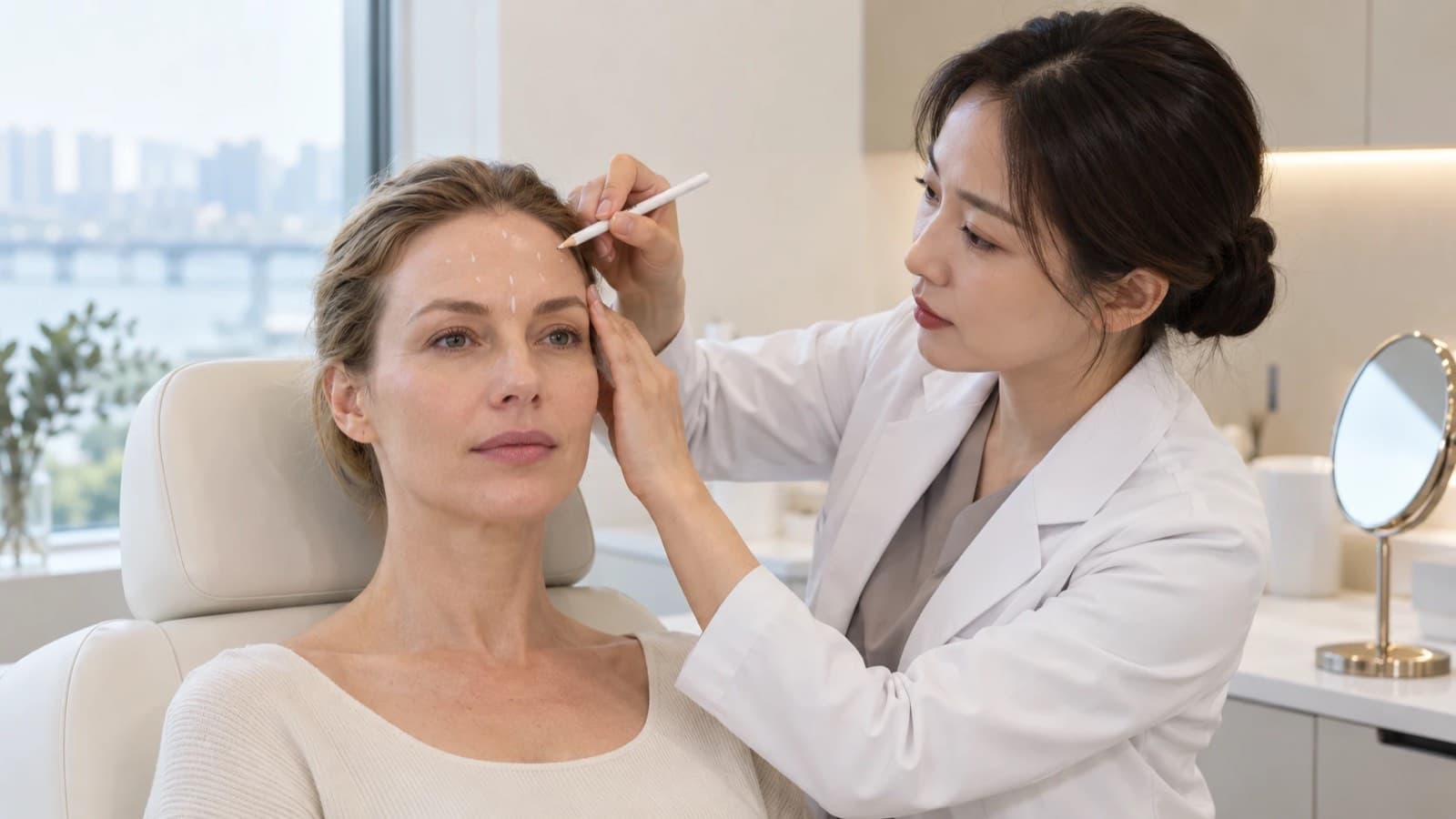
Our skin boosters & Rejuran guide goes deeper on the protocol, and the K-beauty dermatology guide covers what US patients most often book alongside it. For tone and pigment specifically, see melasma & laser toning; for lifting, Ultherapy & skin tightening.
The takeaway
A Korean skincare brand earning the beauty slot in Hollywood's most-photographed gift bag is a milestone for K-beauty. But the ingredient that got it there has a second, older life in Seoul dermatology clinics — at a fraction of what comparable in-clinic work costs in the US.
How Curo helps
Curo is a registered patient-attraction agency, not a clinic. A Korean doctor reviews your case, matches you to a board-certified dermatologist, and returns the clinic's own price — no foreigner markup. Booking and interpretation are free. Explore Dermatology & Skin in Korea or get a free quote.
This content is general information and not medical advice. Personal treatment decisions require consultation with your treating physician. Curo is a Ministry of Health & Welfare–registered international patient attraction agency and is not a medical institution.