"K-beauty" is often reduced to sheet masks and 10-step routines. But behind the consumer products sits a serious medical discipline: Korean dermatology combines advanced laser technology with a preventative, skin-barrier-first approach that has reshaped global standards of care — and it's increasingly why US patients build a trip around their skin.
What makes Korean dermatology different
Two ideas set it apart. First, protect the barrier: rather than one aggressive treatment, Korean dermatologists favor lower-intensity, multi-session protocols that minimize downtime and the risk of post-inflammatory pigmentation. Second, treat early and consistently: the culture leans preventative, so clinics are set up for maintenance programs, not just one-off fixes.
For patients with sensitive skin, melasma, or a tendency to pigment after procedures, that difference is significant.
The treatments patients travel for
- Laser toning for melasma and stubborn pigmentation
- Fractional resurfacing for acne scarring and texture (see our acne-scar guide)
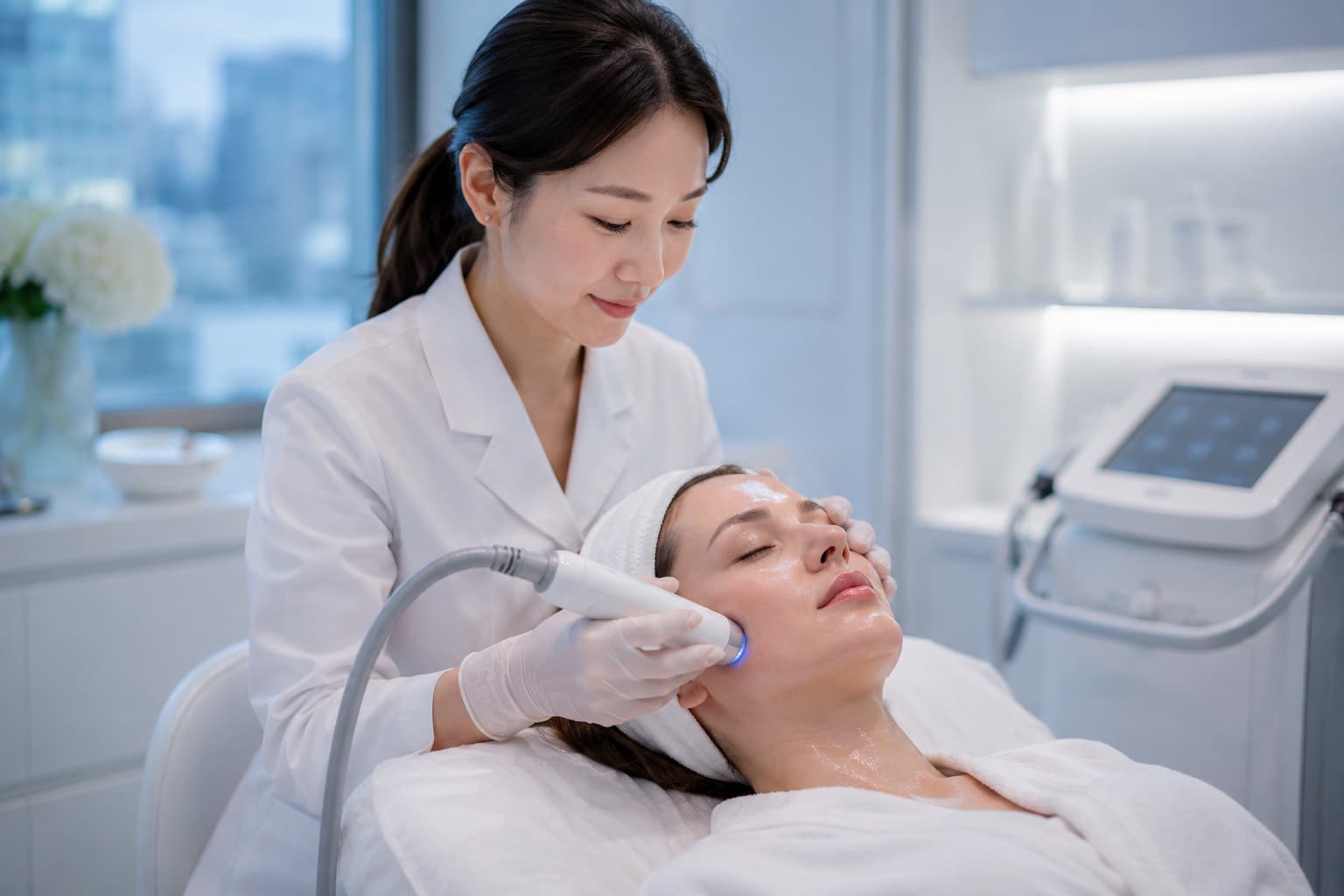
- Skin-tightening (ultrasound and RF, e.g. Ultherapy/Thermage) as a non-surgical lift
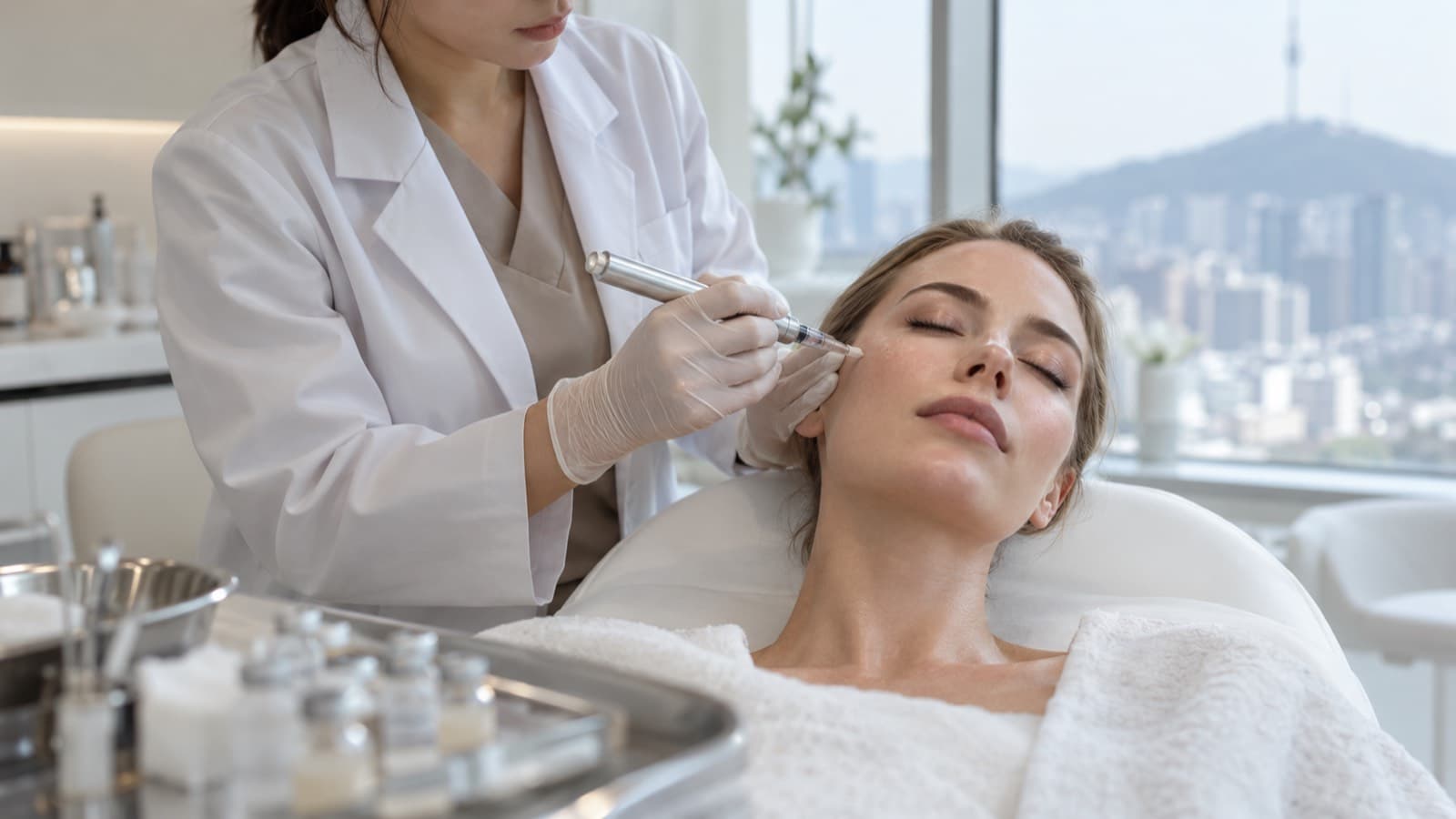
- Rejuvenation programs — microneedling, boosters, and peels tuned for natural results
- Injectables placed conservatively for balance rather than volume
What a first visit looks like
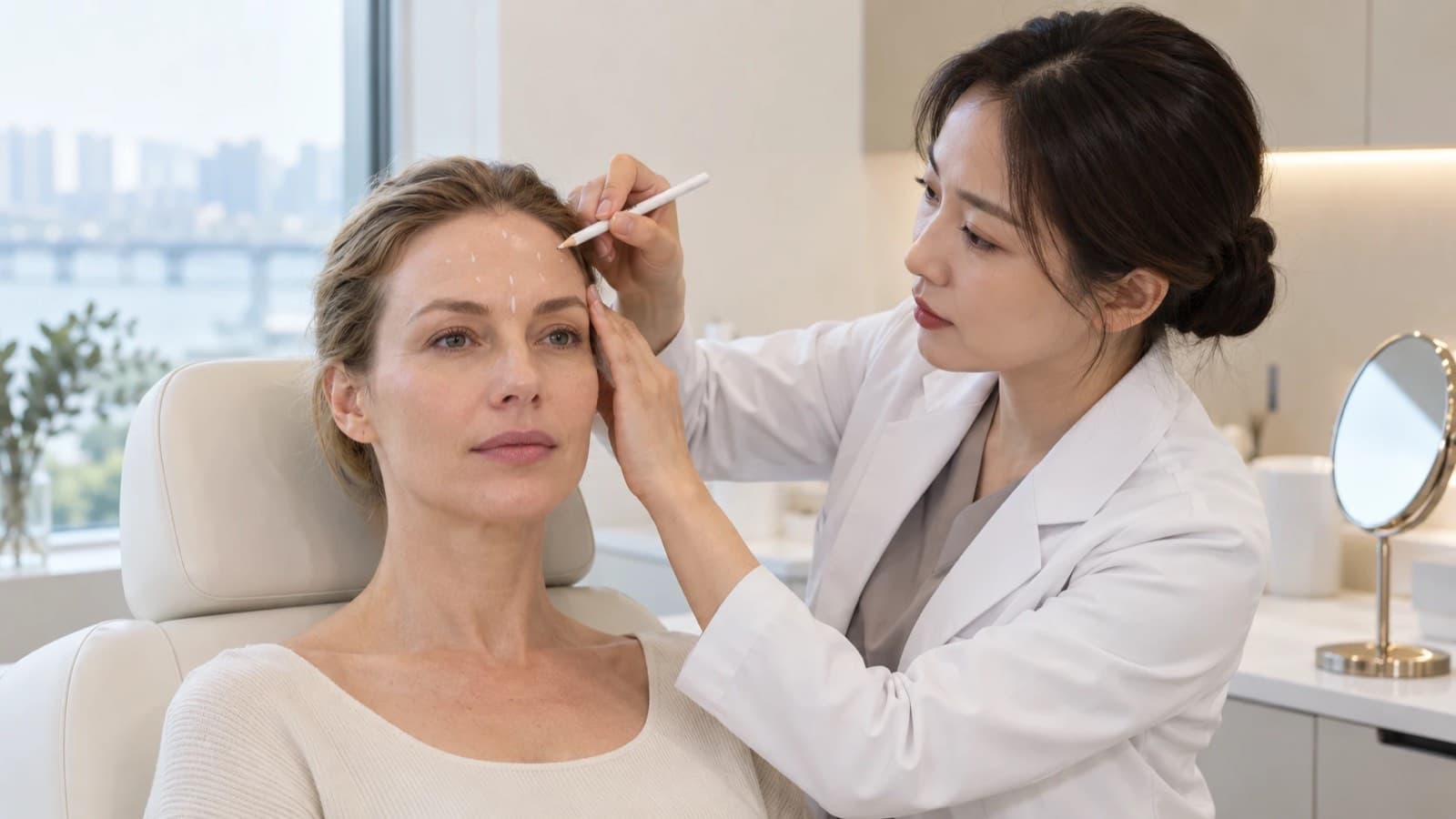
A good clinic starts with a diagnostic skin analysis — imaging that shows pigment, redness, and pore/oil patterns beneath the surface. From there, the dermatologist builds a staged plan rather than pushing a single procedure. Expect a frank conversation about what's realistic in one trip versus what needs maintenance at home.
What it costs
| Treatment | United States | South Korea |
|---|
| Laser toning (per session) | $300–$600 | $80–$200 |
| Fractional resurfacing | $1,000–$2,500 | $300–$600 |
| Ultherapy (full face) | $2,500–$5,000 | $800–$1,800 |
Illustrative ranges in USD; plans vary by skin type and number of sessions.
How to choose a clinic
- Look for dermatologist-led care (a board-certified 피부과 specialist), not a non-physician operating a laser.
- Ask which device will be used and why — good clinics tailor the laser to your skin type.
- Be cautious of clinics that promise dramatic results in a single visit; skin rarely works that way.
Planning your trip from the US
Most skin programs run 3–7 days, making dermatology one of the easiest specialties to combine with a short stay — or to pair with a comprehensive health screening. Sun protection before and after treatment is essential, especially for laser work.
How Curo helps
Curo matches you to a dermatologist-led clinic, translates your history, and helps sequence treatments so you get the most out of each day. Explore Korean dermatology with Curo, read up on specific treatments like laser toning for melasma or skin boosters and Rejuran, or ask about a personalized skin plan.
This content is general information and not medical advice. Personal treatment decisions require consultation with your treating physician. Curo is a Ministry of Health & Welfare–registered international patient attraction agency and is not a medical institution.