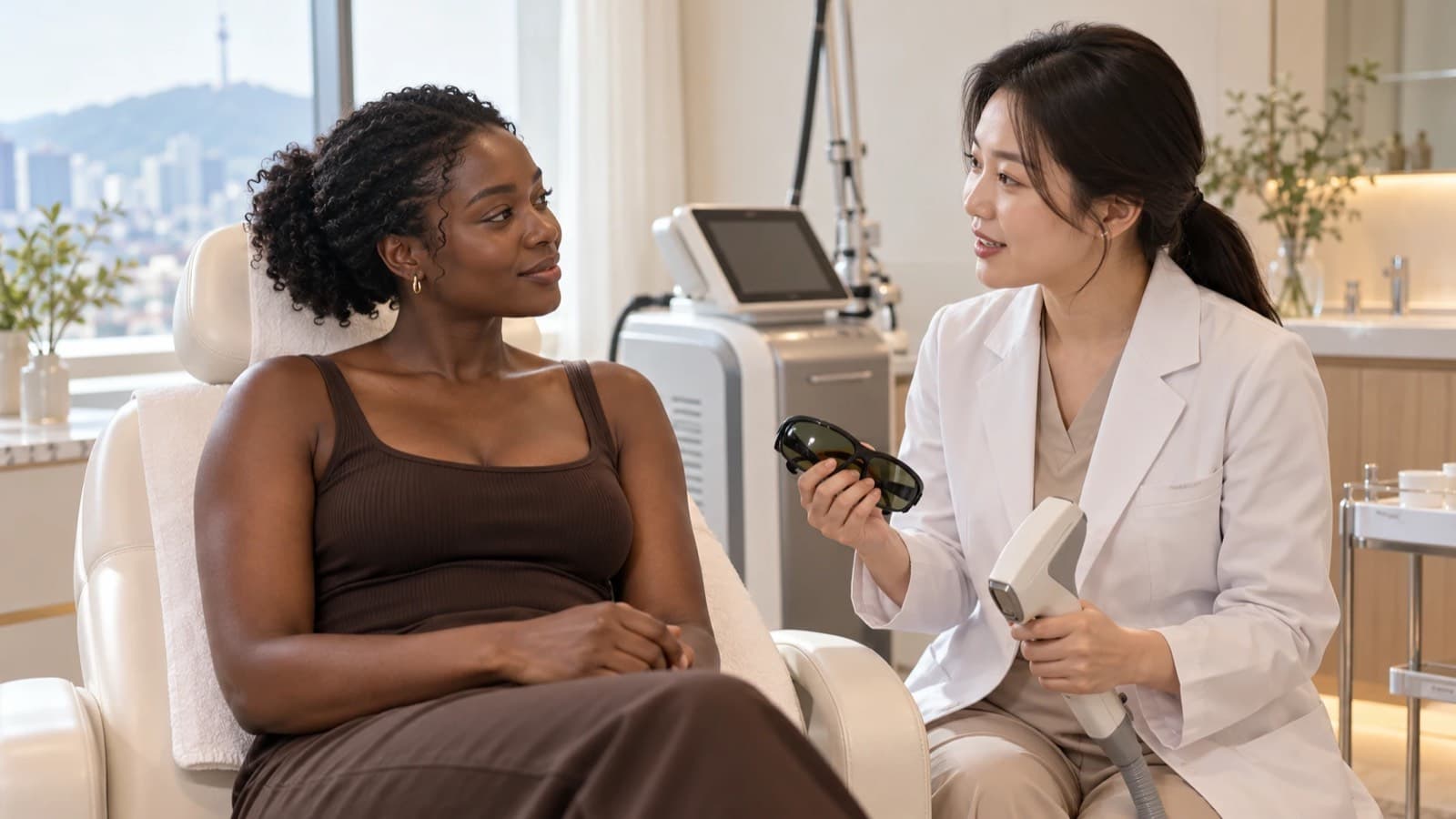
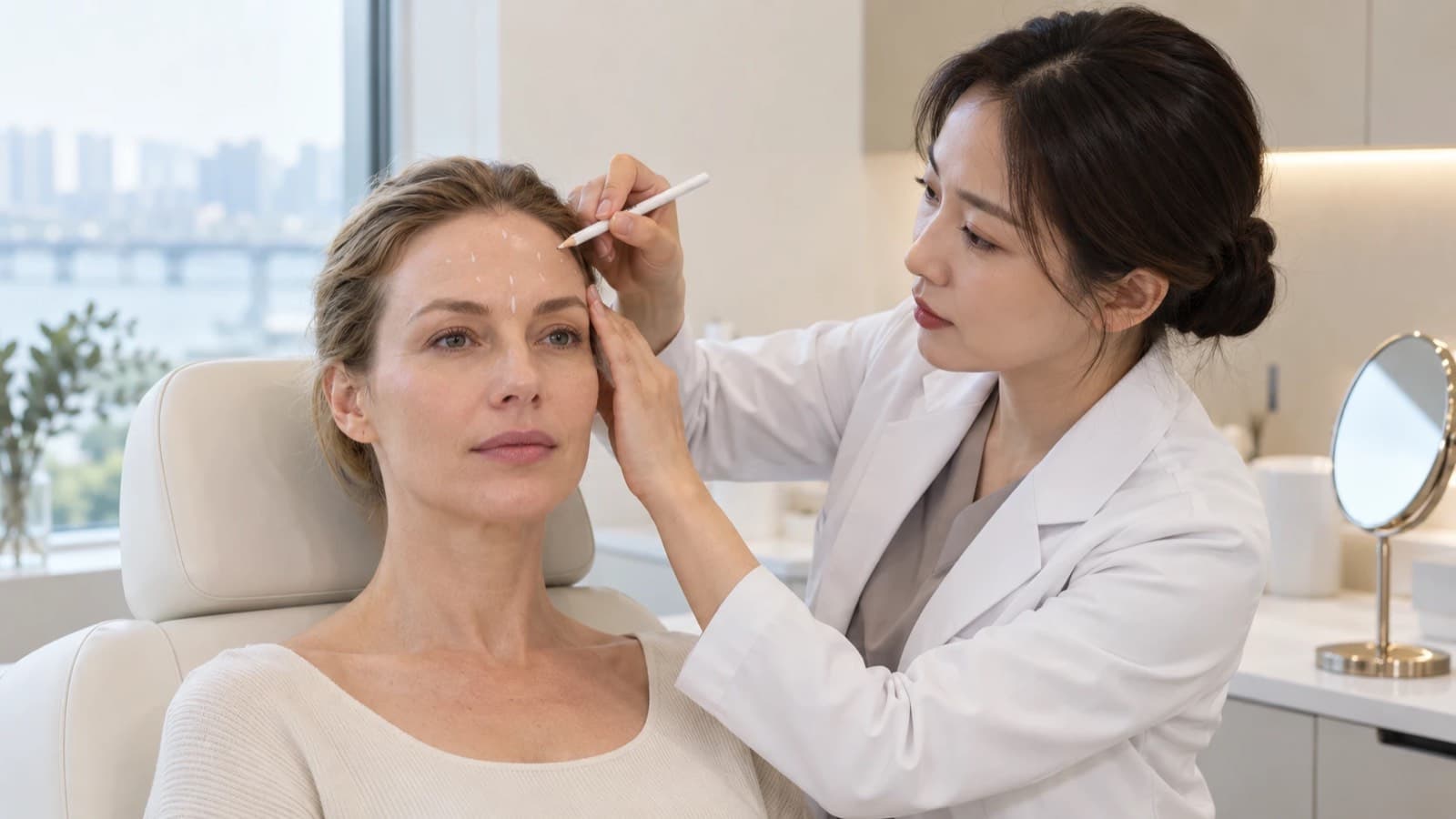
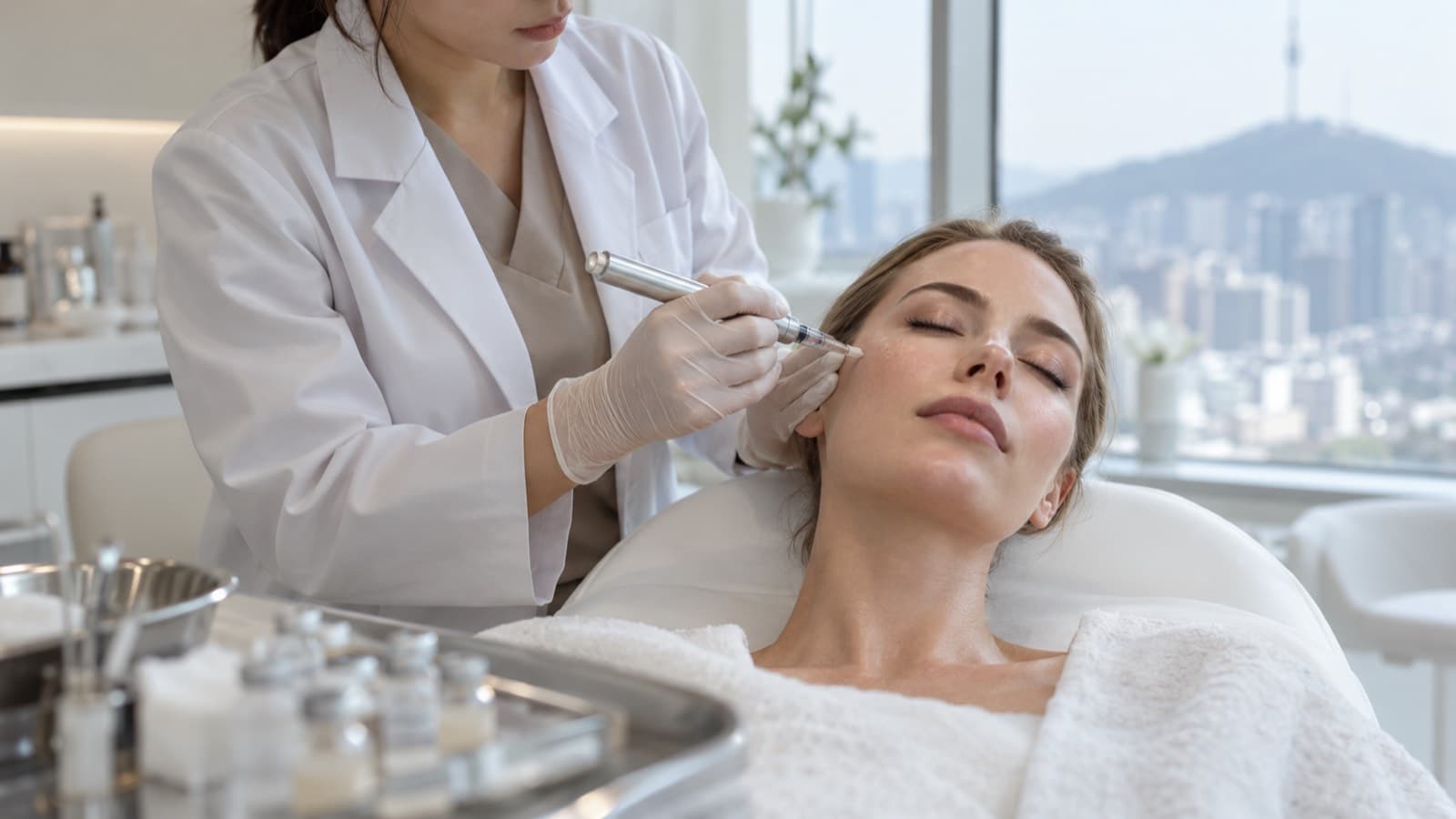
If you have medium-brown to deeply pigmented skin, you have probably been told some version of "lasers are risky for you." It is not wrong, and it is not the whole story.
The risk is real, it is specific, and it is largely a function of which device, which setting, and which clinician — not of your skin being unsuitable for treatment.
The Fitzpatrick scale, quickly
Dermatologists classify skin by how it responds to sun:
| Type | Typically | Burns / tans |
|---|
| I–II | Very fair to fair | Burns easily, rarely tans |
| III | Light to medium | Sometimes burns, tans gradually |
| IV | Olive, Mediterranean, Latin American, East Asian, South Asian | Rarely burns, tans easily |
| V | Brown | Very rarely burns, tans darkly |
| VI | Deeply pigmented | Never burns |
Most laser research, marketing and device default settings were built around types I–III. If you are IV–VI, the standard protocol is not the right protocol.
What actually goes wrong
The mechanism is simple: lasers target pigment, and your skin has more of it. Energy intended for a hair follicle or a sunspot is partly absorbed by the melanin in the surrounding skin, which heats it and inflames it. Two consequences follow.
- Post-inflammatory hyperpigmentation (PIH) — the treated area darkens, sometimes for months. This is the common one, and it is the reason people conclude "lasers made it worse."
- Hypopigmentation — lighter patches where pigment cells were damaged. Less common, far harder to reverse.
Burns and scarring are possible but rare with competent treatment. PIH is the realistic risk, and PIH is what a good protocol is designed to prevent.
Why Korean dermatology is a good fit
This is not a marketing claim; it follows from who Korean clinics treat every day.
Korean skin is typically Fitzpatrick III–IV — pigment-prone, PIH-prone, and melasma-prone. Korean dermatology developed in a market where aggressive settings produce visibly bad outcomes, so the prevailing approach became:
- Low fluence, more sessions. Rather than one high-energy pass, Korean protocols favour gentler energy repeated over 5–10 sessions. "Laser toning" for melasma is a Korean-origin approach built on exactly this logic.
- Barrier-first. Soothing, hydration and sun protection are treated as part of the protocol, not aftercare advice.
- Longer wavelengths as the default. The 1064 nm Nd:YAG is the workhorse precisely because longer wavelengths are absorbed less by surface melanin and penetrate more safely in pigmented skin.
The result is that the conservatism Korean clinics are known for is the clinically correct approach for Fitzpatrick IV–VI — it just happens to also be how they treat everyone.
Devices, by what they mean for you
- 1064 nm Nd:YAG — the safest workhorse across IV–VI. Used for toning, pigment, vascular work and hair removal in darker skin.
- Picosecond and Q-switched lasers at low fluence — effective for pigment with a lower thermal burden than older nanosecond settings.
- Non-ablative fractional resurfacing — usable for texture and acne scarring in darker skin with conservative settings and longer intervals.
- Ablative CO2 resurfacing — carries meaningfully higher PIH risk at V–VI. Not off-limits, but it demands an experienced hand and a frank conversation.
- IPL — broad-spectrum light with poor selectivity for pigment. Generally avoided at V–VI, and used cautiously at IV. Be particularly wary of IPL marketed for hair removal on dark skin.
- Alexandrite (755 nm) and diode (810 nm) hair removal — effective on lighter skin, higher risk at V–VI, where 1064 nm Nd:YAG is the appropriate choice.
For melasma specifically
Melasma is both more common and more stubborn in darker skin, and it is the condition most often made worse by over-treatment. Korean laser-toning protocols are among the most refined anywhere — see our melasma and laser toning guide.
The honest framing: melasma is controlled, not cured. Anyone promising permanent clearance in one visit is describing a different condition.
What to ask before you book
- "How many patients with my skin type do you treat?" Ask directly. Volume with Fitzpatrick V–VI is not universal even in Korea.
- "Which device and what wavelength, and why for my skin?" A specific answer is a good sign.
- "Will you do a test patch first?" For types V–VI this should be standard, usually 2–4 weeks ahead.
- "How many sessions, at what interval?" If the answer is one aggressive session, look elsewhere.
- "What is the plan if I get PIH?" A clinic that has never seen it has not treated enough darker skin.
Preparing and protecting
- Stop retinoids and exfoliating acids roughly a week before treatment.
- No tanning or significant sun exposure for 4 weeks beforehand — recent tanning raises risk substantially.
- Daily broad-spectrum SPF 50, before and especially after. In pigmented skin, sun exposure after treatment is the single biggest driver of PIH.
- Be careful with skin-lightening products. Hydroquinone is sometimes prescribed short-term around treatment, but unsupervised long-term use causes its own pigmentation problems. Products containing mercury or unlabelled steroids are sold in many markets and cause real harm.
Planning it
- Time: most pigment and texture programmes need 5–10 sessions, 2–4 weeks apart — so one trip typically starts a course rather than finishing it.
- The realistic plan: a trip that covers diagnosis, a test patch, and the first 2–3 sessions, with a maintenance plan you can continue at home.
- Avoid summer travel for a first laser course if you can; post-treatment sun avoidance is easier in cooler months.
More on what US patients book in our Korean dermatology guide, and on injectables in the botox and fillers guide.
How Curo helps
Curo is a registered patient-attraction agency, not a clinic. A Korean doctor reviews your skin type and history and matches you to a dermatologist-led clinic with genuine experience in your skin type — and you pay the clinic's own price, no foreigner markup. Booking and interpretation are free. Explore dermatology in Korea or get a free quote.
This content is general information and not medical advice. Personal treatment decisions require consultation with your treating physician. Curo is a Ministry of Health & Welfare–registered international patient attraction agency and is not a medical institution.