Dry eye is the most common reason a confident LASIK candidate is turned down — and one of the most under-treated conditions in American eye care. The standard US experience is a bottle of artificial tears, a prescription drop that costs a fortune, and a shrug.
Korean eye clinics treat it as a condition with a mechanism, a diagnosis, and a procedure list.
Most dry eye is not a lack of tears
This is the part that changes how people think about it.
Your tear film has a watery layer and, on top of it, an oily layer produced by the meibomian glands in your eyelids. That oil stops the tears evaporating. In the large majority of dry-eye cases the problem is not that you produce too few tears — it is meibomian gland dysfunction (MGD): the glands are blocked, the oil is missing, and the tears evaporate as fast as you make them.
Which means artificial tears are topping up the layer that was never the problem. They relieve symptoms for twenty minutes. They do not treat anything.
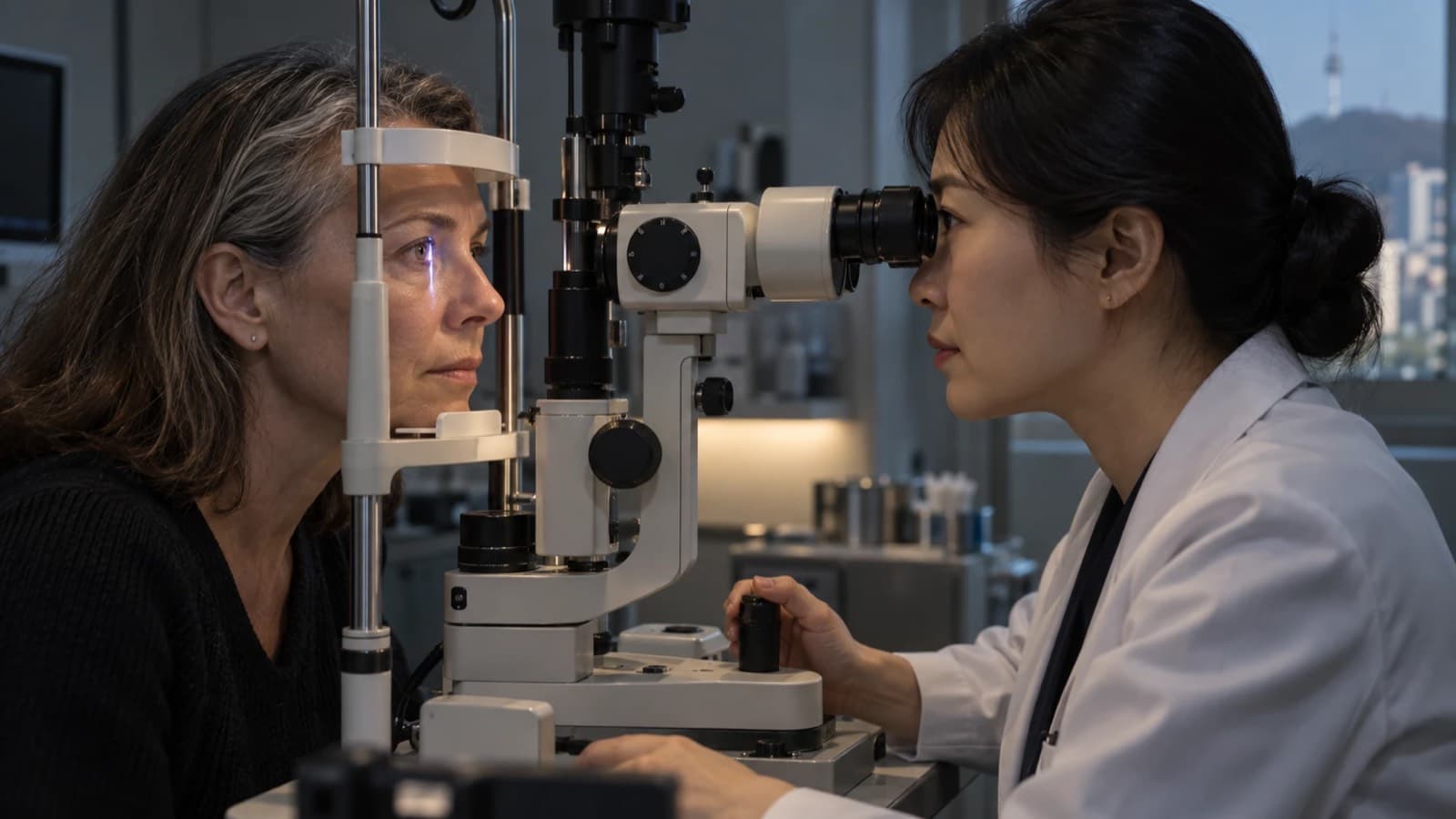
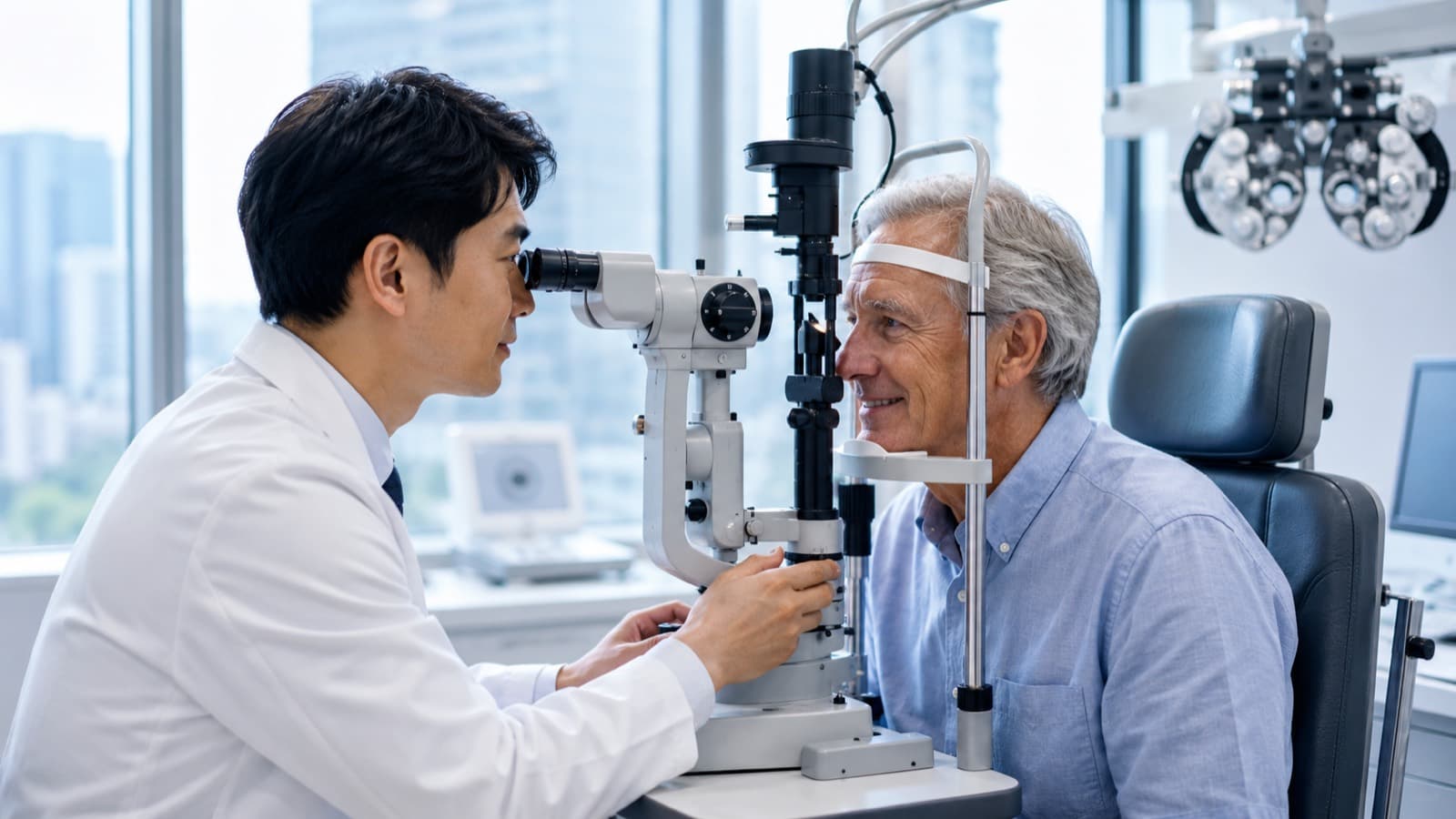
What a Korean dry-eye workup includes
- Tear break-up time (TBUT) — how fast the film destabilises
- Schirmer test — actual tear production, which separates evaporative from aqueous-deficient dry eye
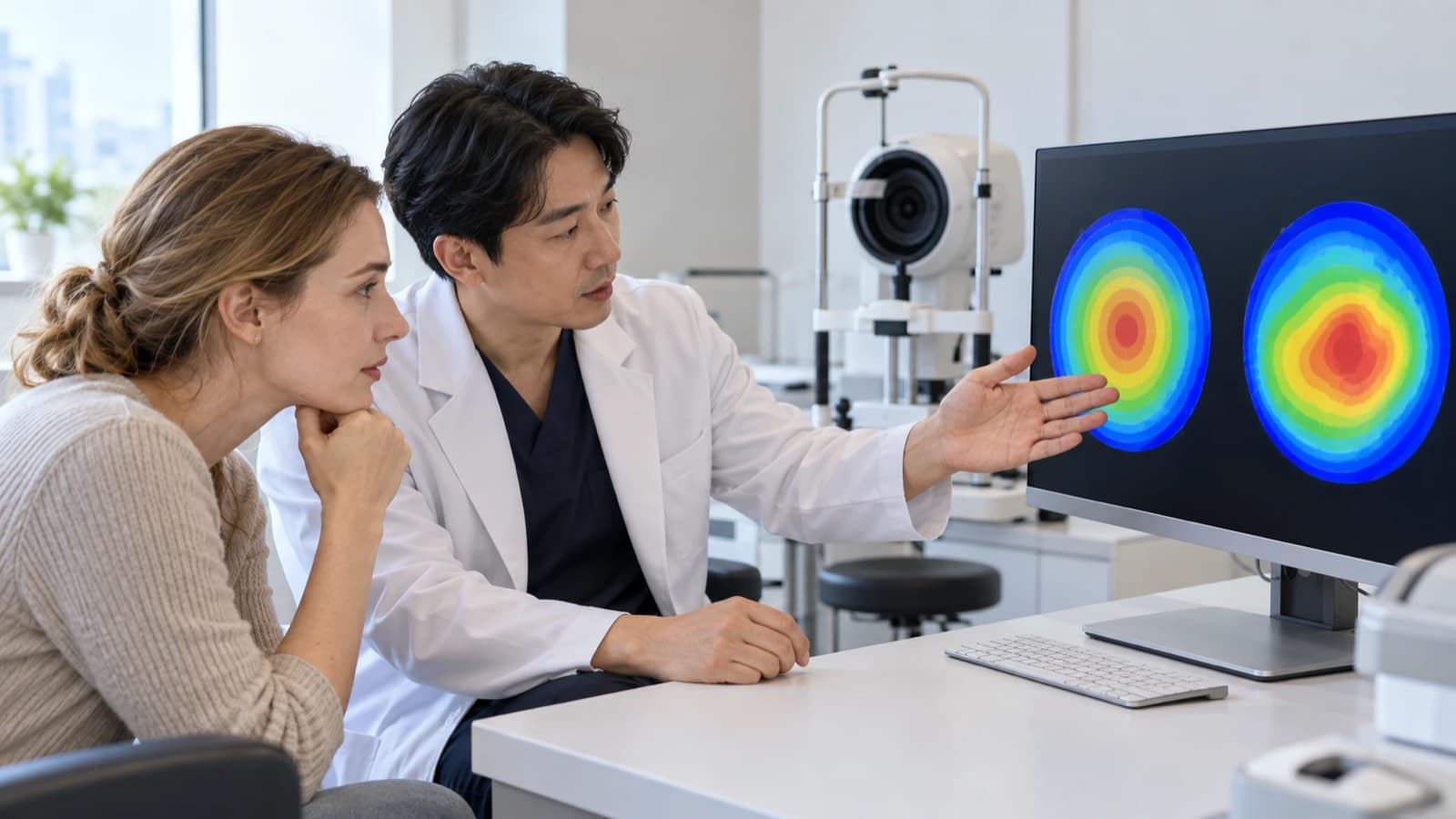
- Meibography — imaging of the meibomian glands themselves, showing whether they are blocked, shortened, or permanently lost
- Tear osmolarity and inflammatory markers
- Corneal staining — how much surface damage has already happened
Meibography is the one that matters most and the one most patients have never had. Gland loss is permanent — the glands do not grow back — which is why the timing of treatment matters more than people realise.
What Korean clinics actually do
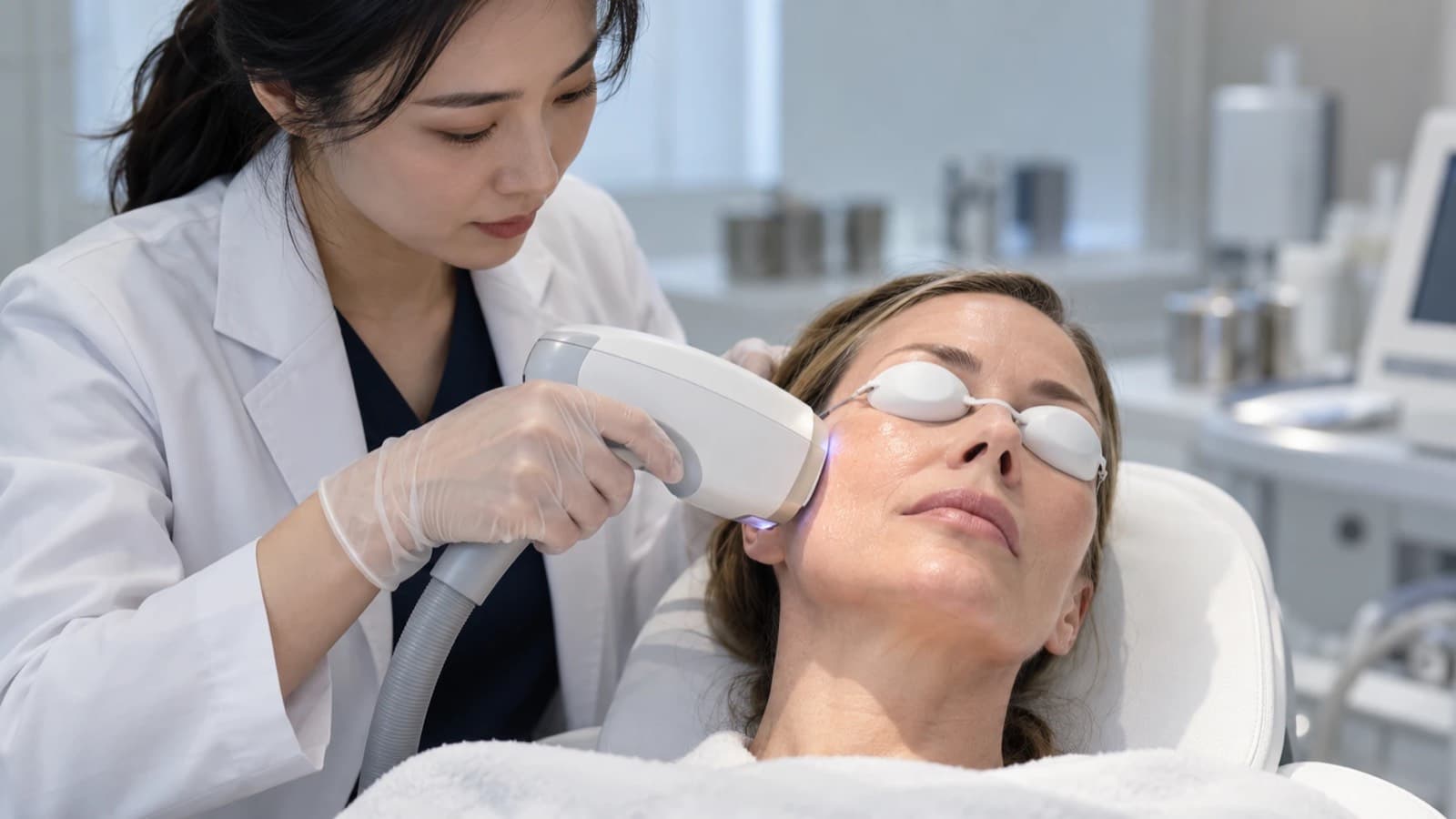
- IPL (intense pulsed light) — pulses applied around the lids to reduce inflammation and liquefy hardened oil. Usually a series of 3–4 sessions. This is the treatment that most changes outcomes in evaporative dry eye, and it remains hard to access affordably in the US.
- Thermal pulsation and manual gland expression — heating the lids and physically clearing blocked glands.
- Punctal plugs — tiny inserts that block tear drainage, keeping what you produce on the eye. Useful in aqueous-deficient dry eye, and reversible.
- Prescription anti-inflammatories — cyclosporine and similar, which address the inflammatory cycle rather than the symptom.
- Autologous serum tears — drops made from your own blood serum, for severe cases.
- Lid hygiene protocols — unglamorous, genuinely effective, and what maintains any of the above.
What it costs
| Treatment | United States | South Korea |
|---|
| Full diagnostic workup incl. meibography | $200–$500 | $50–$150 |
| IPL, per session | $300–$500 | $100–$200 |
| Thermal pulsation (both eyes) | $700–$1,500 | $200–$450 |
| Punctal plugs (both eyes) | $300–$800 | $100–$250 |
Illustrative ranges in USD. Prescription drops are priced separately and vary enormously by insurance.
The honest part: this is chronic
Dry eye is managed, not cured. IPL effects typically last 6–12 months before a maintenance session, and lid hygiene is forever.
So the travel maths is the same as it is for injectables and orthodontics:
- Flying to Korea for dry eye alone is usually not worth it unless your case is severe and you have exhausted options at home.
- It makes excellent sense bundled — with a health screening, a skin programme, or dental work.
- It makes the most sense as a pre-surgical step. If dry eye is what is standing between you and vision correction, treating it properly in Korea and then having the procedure on the same trip is a genuinely efficient plan.
If you were turned down for LASIK
Being told your eyes are too dry is not a permanent no. In sequence:
- Get the real diagnosis — evaporative or aqueous-deficient. They have different treatments.
- Treat it for 1–3 months before re-assessment.
- Re-evaluate candidacy. Many patients become candidates after the surface is healthy.
- Consider the alternatives. ICL does not cut corneal nerves and is often the better answer for genuinely dry eyes; SMILE cuts far fewer than LASIK. Our comparison guide walks through the choice.
A clinic that offers to do LASIK anyway, on eyes another surgeon declined, is not being more capable. It is being less careful.
Planning it
- Time: diagnosis and a first IPL session fit in 2–3 days; a full series needs sessions 2–4 weeks apart, so most patients do one or two in Korea and continue at home.
- Stop contact lenses before the workup — soft lenses 1–2 weeks, hard lenses 3–4 — or the measurements are unreliable.
- Bring any prior dry-eye testing and your current drops list.
- No makeup around the eyes on treatment days; IPL also needs sun-avoidance beforehand.
How Curo helps
Curo is a registered patient-attraction agency, not a clinic. A Korean doctor reviews your history and matches you with a board-certified ophthalmologist who treats dry eye properly rather than handing you drops — and you pay the clinic's own price, no foreigner markup. Explore vision correction in Korea or get a free quote.
This content is general information and not medical advice. Personal treatment decisions require consultation with your treating physician. Curo is a Ministry of Health & Welfare–registered international patient attraction agency and is not a medical institution.