Most people arrive at vision correction having already picked a procedure from an ad. That is backwards. Your eyes decide which procedures are available to you, and the list is usually shorter than the menu suggests.
This guide is the decision, not the sales pitch. For the detail on any one procedure, follow the links through.
The five options, in one table
| Best for | Ruled out by |
|---|
| LASIK | Low-to-moderate myopia, adequate corneal thickness | Thin corneas, irregular topography, severe dry eye |
| LASEK / PRK | Thinner corneas, contact-sport or military lifestyles | Very high prescriptions; slower, more uncomfortable recovery |
| SMILE | Myopia and astigmatism; no flap, less dry eye | Farsightedness; limited astigmatism range |
| ICL | High myopia, thin corneas, dry eye | Shallow anterior chamber, low endothelial cell count |
| Lens exchange | Age 45+, presbyopia, early lens changes | Under ~45 with a healthy lens |
The three things that actually decide it
1. Your prescription
Corneal laser procedures reshape tissue, and there is only so much to remove. Roughly: laser works well up to about −8 to −10 diopters; beyond that, ICL becomes the better answer — not the consolation prize. High myopes often get a sharper result from ICL because no tissue is removed.
2. Your corneal thickness and shape
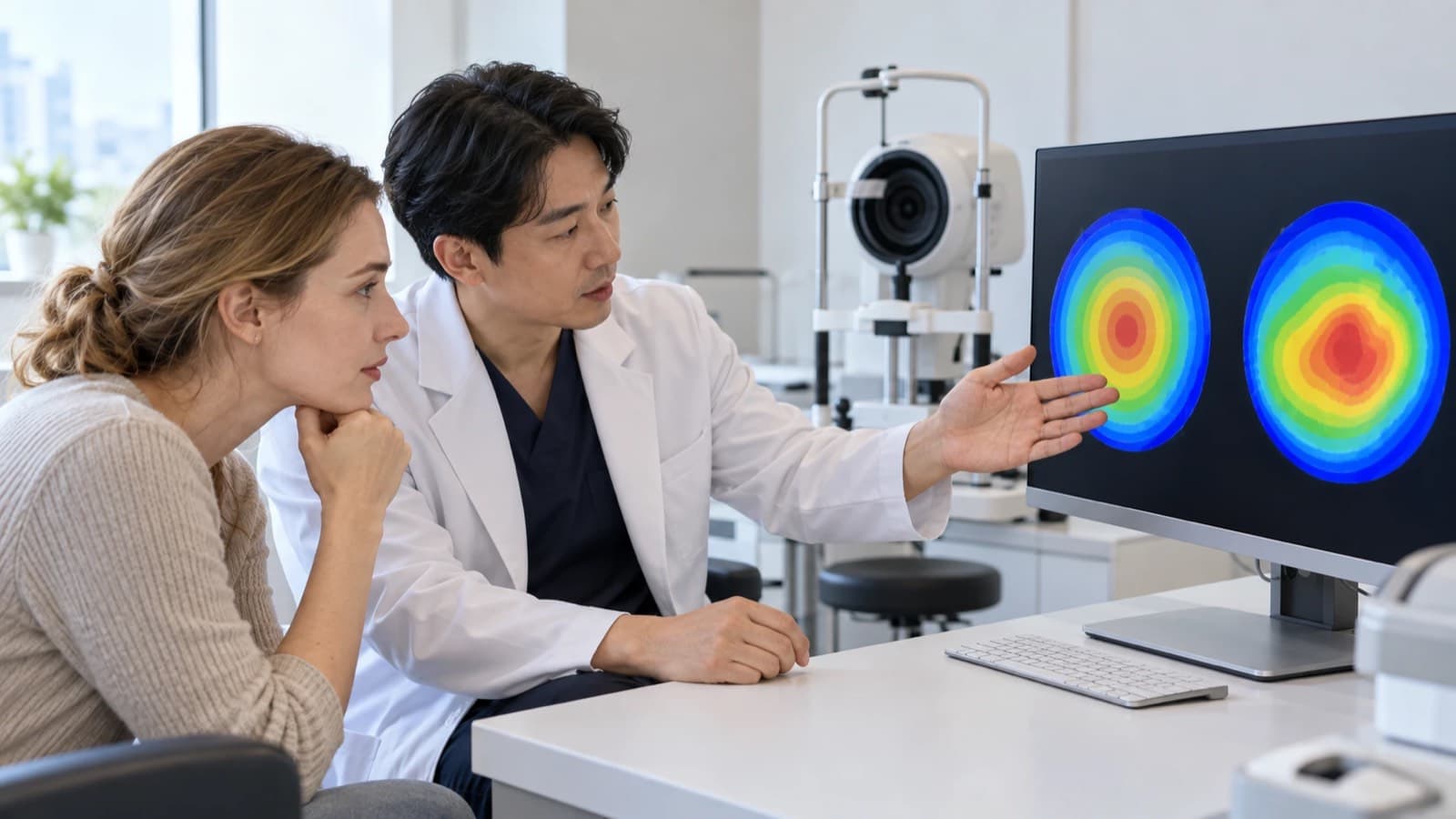
Measured by pachymetry and corneal topography. Too thin, or a topography suggesting early keratoconus, and laser is off the table entirely — permanently. This is the single most common reason a confident patient is turned down, and a clinic that skips these scans is not a clinic you want.
3. Your age
Under 40, the question is corneal versus lens-based. Past 45, presbyopia changes it: correcting distance perfectly means reading glasses arrive immediately afterward. Many patients in their late forties are better served by lens exchange or a monovision plan than by standard LASIK — see the presbyopia guide.
The tests that settle it
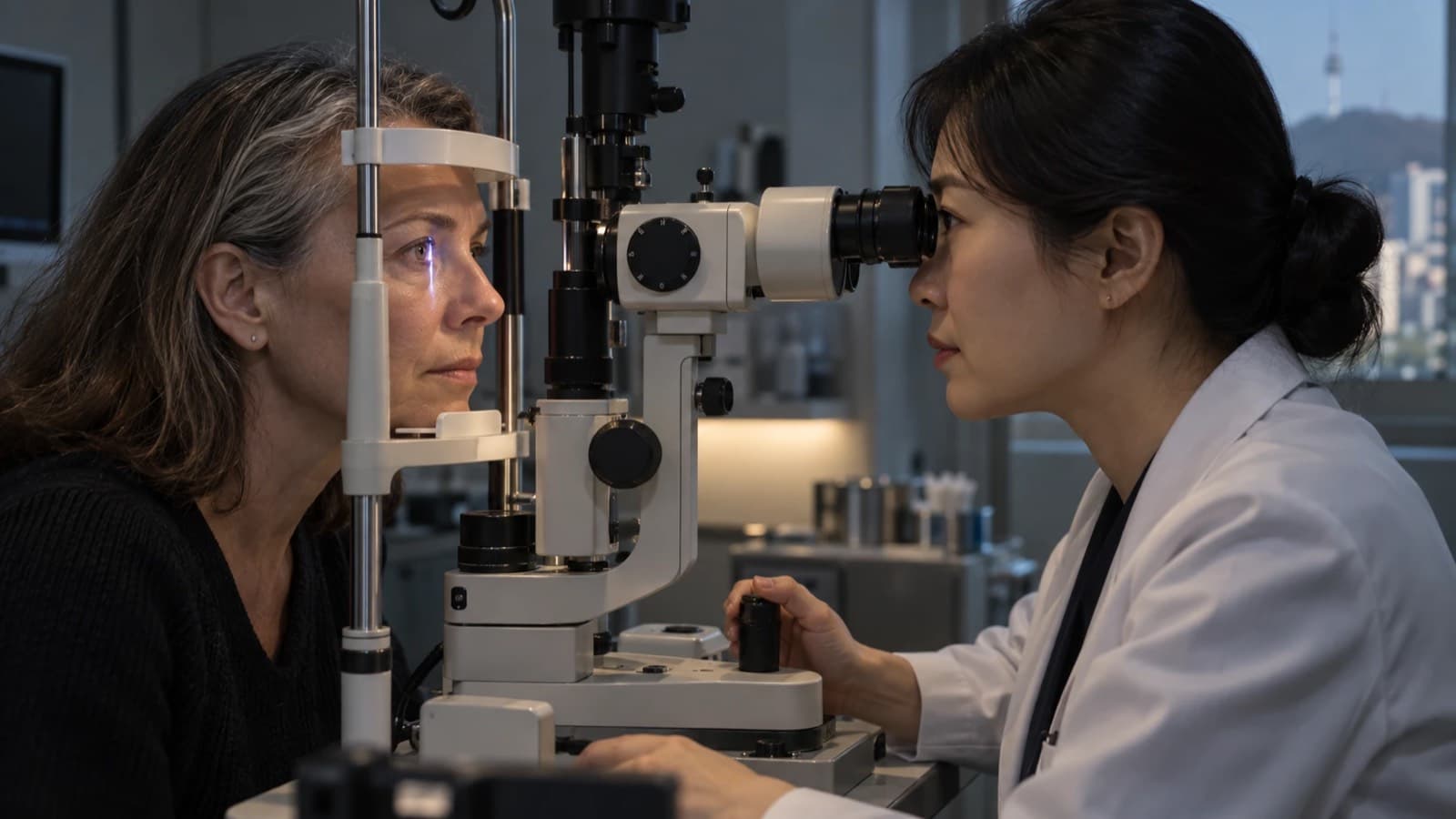
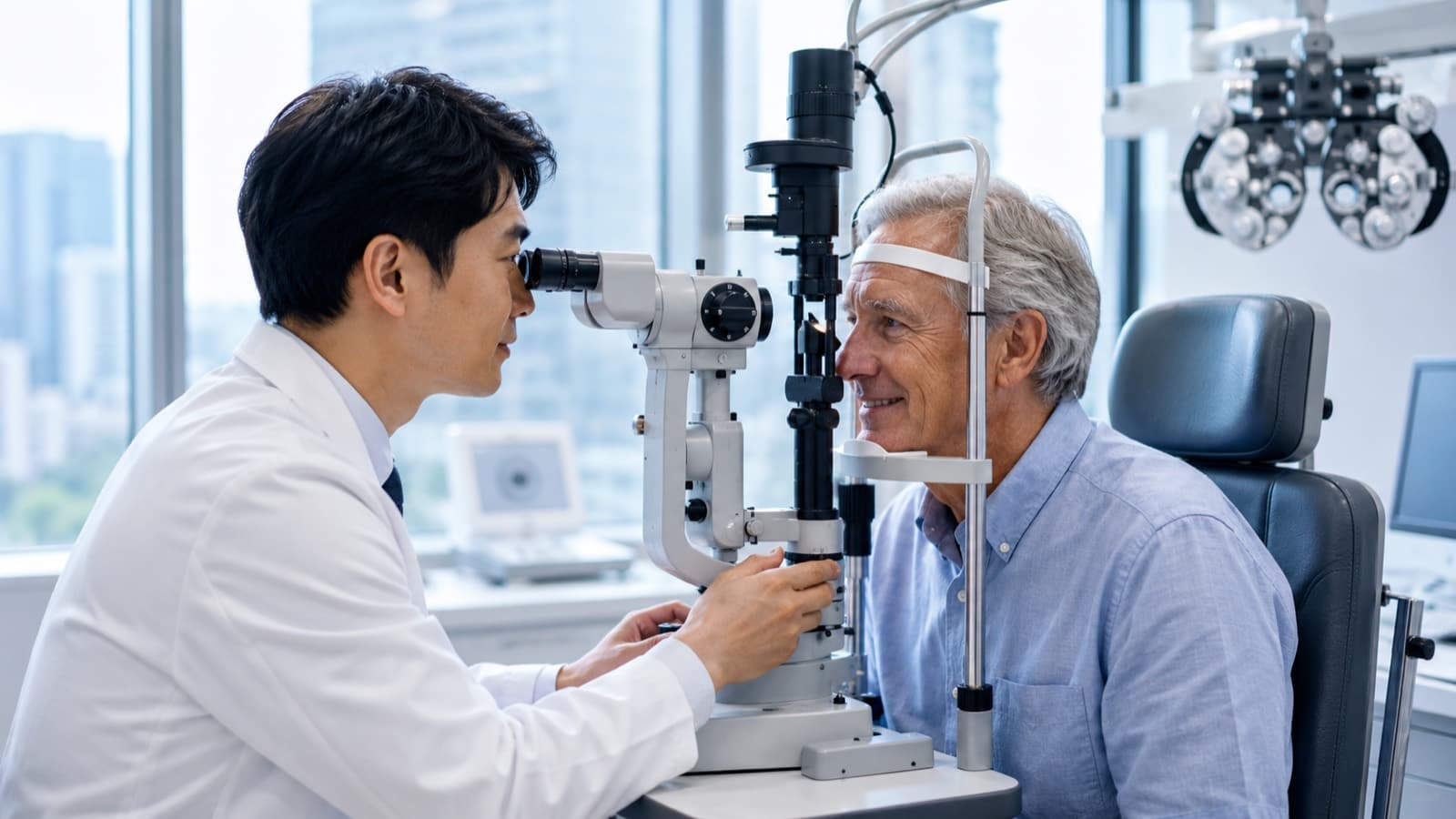
A real workup takes about two hours and includes:
- Corneal topography and tomography — shape and the keratoconus screen
- Pachymetry — corneal thickness
- Cycloplegic refraction — your true prescription with focusing muscles relaxed
- Tear film / dry-eye assessment — dry eye worsens after LASIK, better tolerated with SMILE or ICL
- Pupil size in the dark — large pupils raise the risk of night-time halos
- Anterior chamber depth and endothelial cell count — required before ICL
- Dilated retinal exam — essential in high myopes, who carry higher retinal risk
Stop wearing soft contacts 1–2 weeks and hard/RGP lenses 3–4 weeks before the workup, or the measurements are wrong and the plan built on them is wrong too.
What each costs in Korea
| Procedure (both eyes) | United States | South Korea |
|---|
| LASIK | $4,000–$6,000 | $1,000–$2,000 |
| LASEK / PRK | $4,000–$6,000 | $1,000–$1,800 |
| SMILE | $4,000–$8,000 | $1,800–$3,000 |
| ICL | $7,000–$12,000 | $3,500–$7,000 |
| Refractive lens exchange | $8,000–$16,000 | $5,000–$9,000 |
Illustrative ranges in USD. Confirm whether enhancements and follow-up visits are included — in Korea they usually are.
Note what the table implies: cost should not pick your procedure. The spread between LASIK and SMILE in Korea is smaller than a single US LASIK bill. Choose on candidacy and lifestyle, then enjoy that all of them are affordable.
Matching lifestyle to procedure
- Contact sports, martial arts, military or police — avoid a corneal flap. LASEK/PRK or SMILE.
- Screen-heavy work or existing dry eye — SMILE or ICL over LASIK.
- Night driving for a living — raise pupil size at consultation; it changes the recommendation.
- One short trip only — LASIK and SMILE recover fastest. PRK needs a longer, more uncomfortable window.
- Want it reversible — only ICL is removable.
When the answer is "none of these"
A good Korean surgeon will tell you no, and roughly one in five candidates hears it. Common reasons: corneas too thin, a topography red flag, an unstable prescription (it should be stable ~12 months), uncontrolled dry eye, pregnancy or breastfeeding, or certain autoimmune conditions.
Glasses remain an excellent outcome. Any clinic that has never turned anyone away is telling you something about itself.
Planning the trip
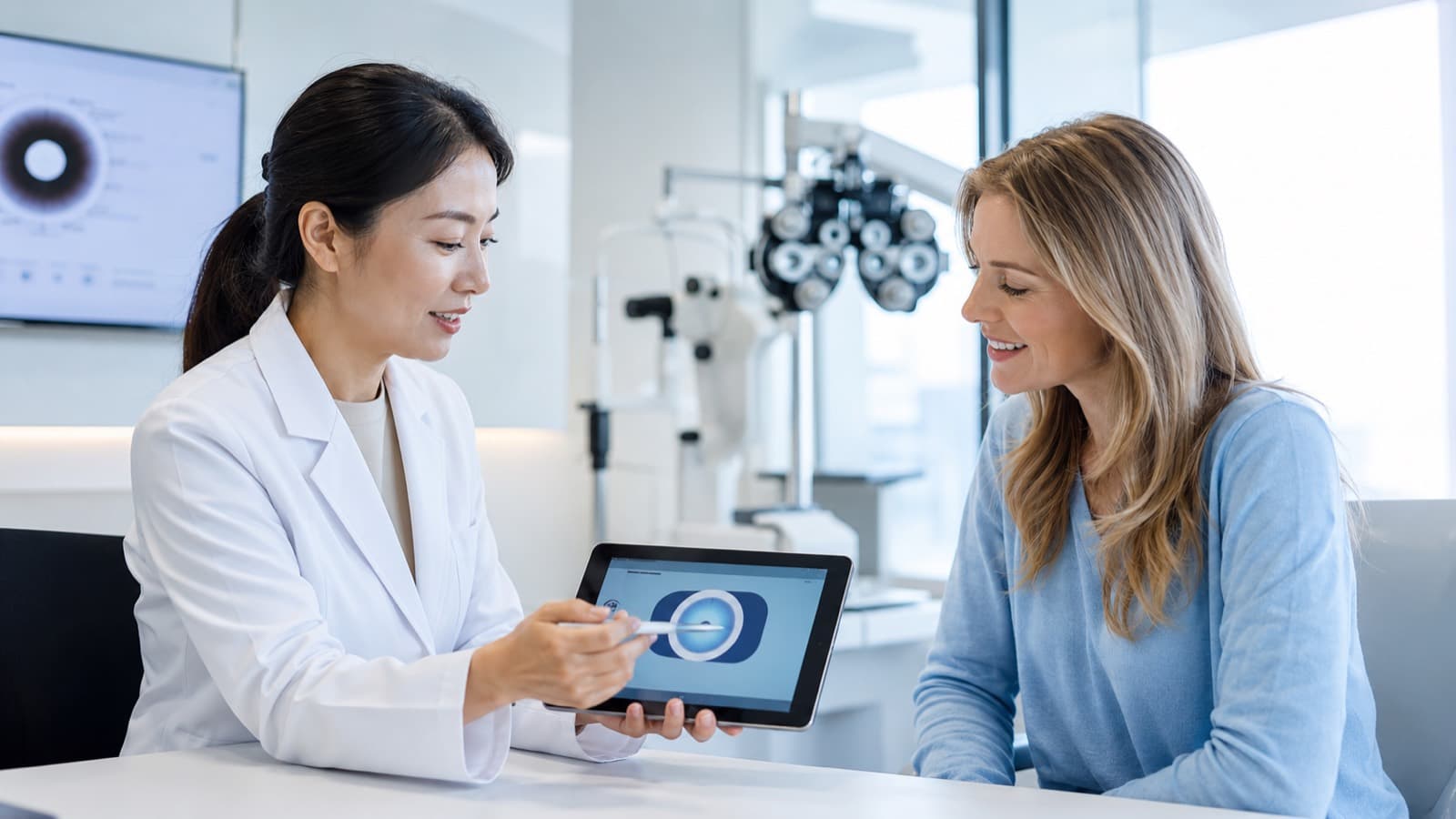
- Day 1: full workup and consultation — this is when your procedure is actually chosen.
- Day 2: surgery for LASIK, SMILE or ICL, usually both eyes the same day.
- Day 3–4: first follow-ups. LASIK and SMILE patients are often cleared to fly after 4–5 days; PRK needs 7–10; ICL usually 5–7.
- Arrange US follow-up before you leave, and ask for your operative report and post-op drops schedule in English.
How Curo helps
Curo is a registered patient-attraction agency, not a clinic. A Korean doctor reviews your prescription and history first, so you are matched to a board-certified ophthalmologist who performs the procedure you are actually a candidate for — and you pay the clinic's own price, no foreigner markup. Booking and interpretation are free. Start with Eye Surgery & LASIK in Korea, explore vision correction, or get a free quote.
This content is general information and not medical advice. Personal treatment decisions require consultation with your treating physician. Curo is a Ministry of Health & Welfare–registered international patient attraction agency and is not a medical institution.