Our acne-scar guide is about repairing damage already done. This one is about the stage before that — and treating acne early is the only reliable way to avoid needing the other article.
How the Korean approach differs
In the US, moderate-to-severe acne usually means a prescription and a follow-up in three months. Korean dermatology runs two tracks at once:
- Lower-dose, longer-course medication. Where US practice often favours a shorter high-dose isotretinoin course, Korean dermatologists frequently use lower doses over a longer period, aiming for fewer side effects and less dryness. The total cumulative dose is what matters for durability, and it can be reached either way.
- Frequent in-clinic work. Extraction, peels, injections and light therapy at intervals of days or weeks, not months. This is the part that is effectively unavailable in the US at a reasonable price.
Neither is better in the abstract. The combination is what makes a short, intensive course of treatment possible.
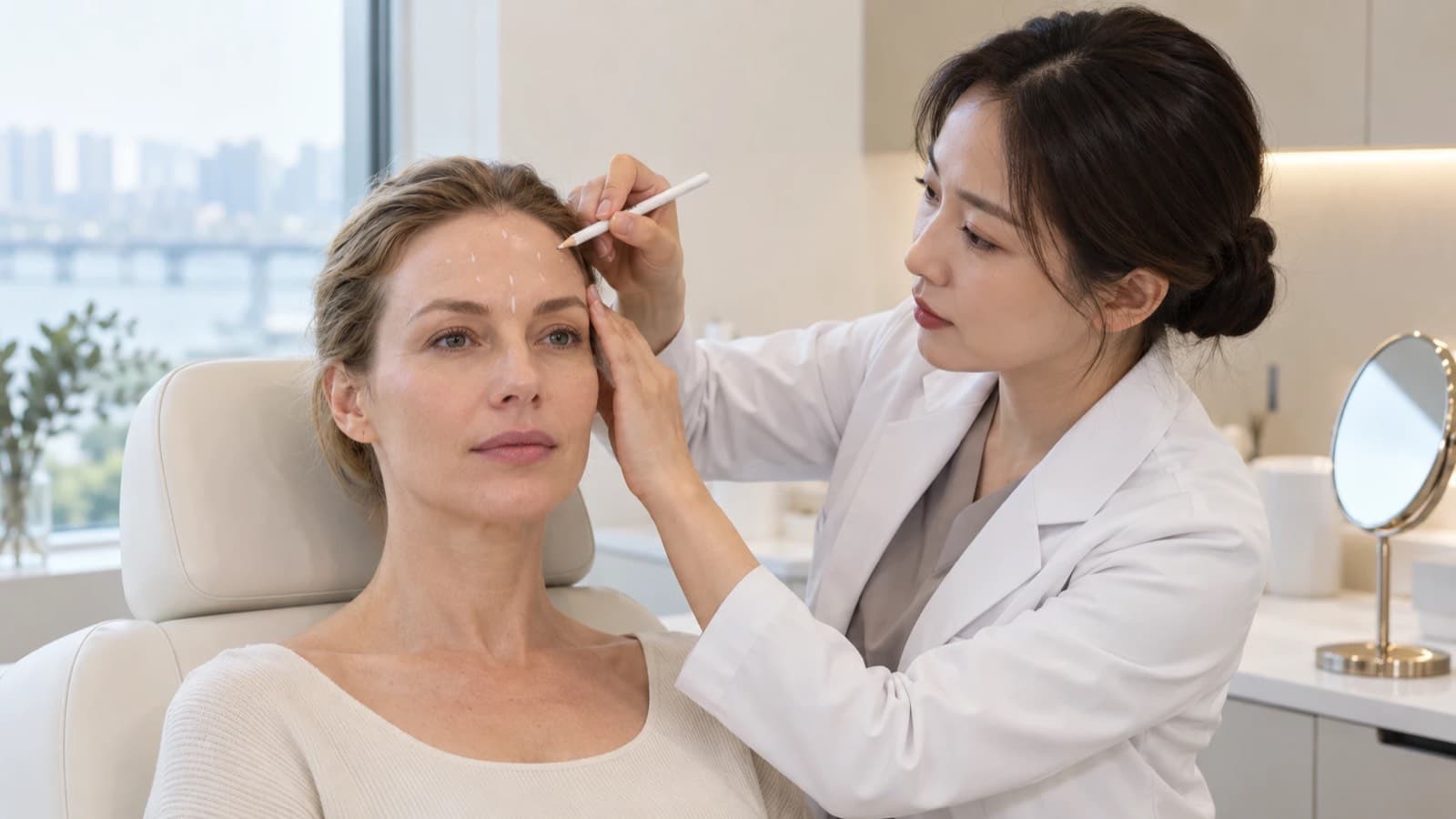
What a Korean clinic actually does
- Professional extraction — comedones and closed bumps cleared under sterile conditions. Done well this prevents the scarring that squeezing at home causes.
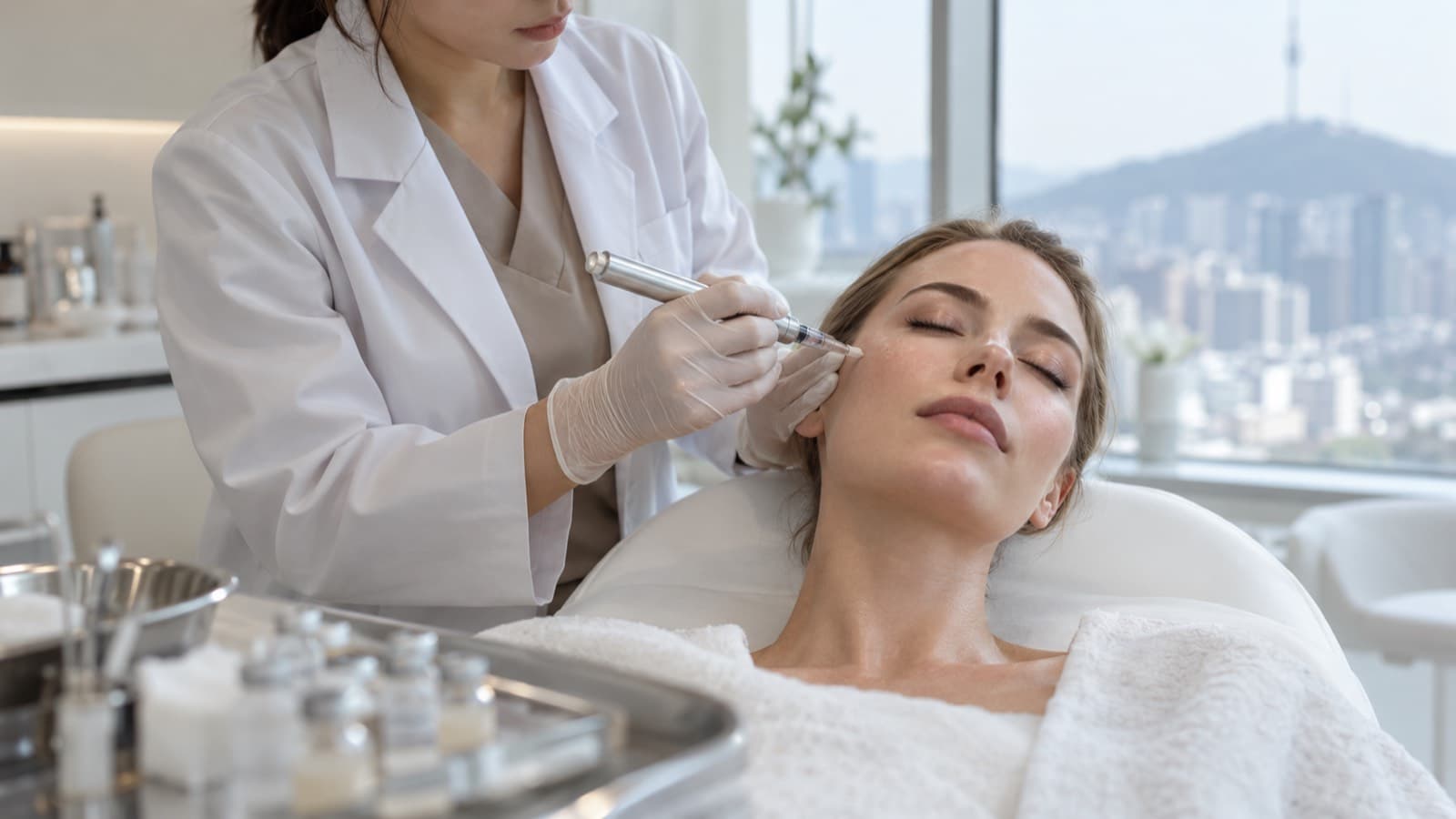
- Intralesional steroid injection — a cystic lesion flattened in 24–48 hours. The single most useful thing for a painful nodule before an event.
- Chemical peels — salicylic, mandelic or TCA depending on your skin, usually in a series.
- Light and laser — blue/red LED for inflammation, vascular laser for the lingering redness, 1450 nm diode for sebaceous activity.
- Oral and topical medication — isotretinoin, antibiotics where indicated, retinoids, and in women hormonal options where appropriate.
- Barrier repair — the Korean signature: treating the skin gently alongside the aggressive work, which is why Korean acne protocols tend to produce less of the raw, peeling look.
Isotretinoin: read this part carefully
Isotretinoin is the most effective acne drug there is, and it is also the one that needs the most supervision.
- It causes severe birth defects. Pregnancy must be excluded before and prevented throughout; in the US the iPLEDGE programme enforces this formally.
- It requires blood monitoring — liver enzymes and lipids — during the course.
- A full course runs 4–8 months, often longer at low dose.
What that means for travel, bluntly: you cannot run an isotretinoin course from a different continent. A Korean clinic can start one and monitor you while you are there, but the remaining months need a physician where you live. If isotretinoin is your plan, the sensible version is to have it prescribed and monitored at home, and use a Korea trip for the in-clinic work that is expensive or unavailable there.
What it costs
| United States | South Korea |
|---|
| Dermatologist consultation | $150–$400 | $20–$50 |
| Extraction / deep-cleansing session | $150–$300 | $30–$80 |
| Chemical peel (per session) | $150–$400 | $40–$120 |
| Intralesional steroid injection | $100–$200 | $10–$30 |
| Isotretinoin, per month (drug only) | $200–$600 | $30–$80 |
Illustrative ranges in USD. US self-pay pricing varies widely; coverage depends on your plan.
The consultation line is the one to notice. In Korea, seeing a board-certified dermatologist repeatedly over a two-week trip costs less than a single US visit — which is what makes the frequent-visit model possible at all.
Is a trip worth it?
Honestly:
- For active acne alone — usually not. Acne is a chronic condition managed over months. A two-week intensive helps, but you will be home for the rest of it.
- As part of a trip you're taking anyway — clearly yes. Extraction, peels and injections are cheap, effective, and have minimal downtime. Our Korean dermatology guide covers what else to combine.
- For acne that has stopped responding at home — a reasonable second opinion. A high-volume dermatologist seeing a different case mix may suggest something your dermatologist has not tried.
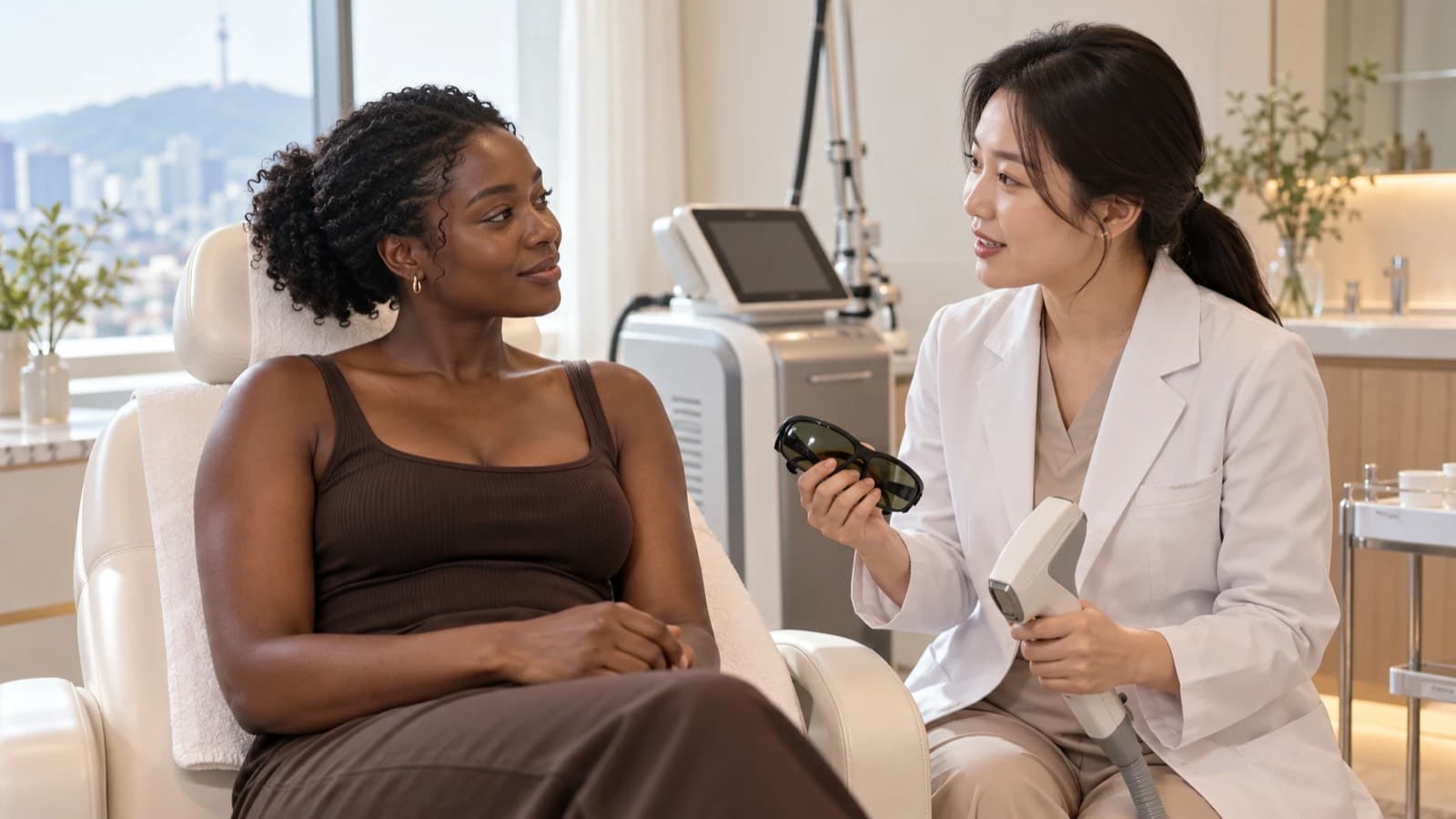
- If you have darker skin — a strong case. Acne in Fitzpatrick IV–VI skin carries a high risk of post-inflammatory hyperpigmentation, and Korean protocols are built around avoiding exactly that. See our guide to lasers on darker skin.
Don't wait for the scars
The argument for treating acne properly is not cosmetic impatience. Inflammatory acne scars, and scars are far harder and more expensive to treat than the acne was.
Compare: a course of extraction and peels runs a few hundred dollars in Korea. Fractional resurfacing for established scarring runs $300–$600 per session, usually over several sessions, and never returns the skin completely. If you are deciding whether active acne is worth treating, that is the comparison.
Practicalities
- Stop retinoids a few days before peels or laser work, on the clinic's instruction.
- Sun protection is not optional, especially after peels and in pigment-prone skin.
- Bring your history — what you have tried, at what dose, for how long, and what happened. Curo translates this in advance; it changes the plan materially.
- Do not buy prescription-strength products over the counter abroad on a whim. Isotretinoin in particular is a prescription drug for good reasons, and carrying medication across borders has its own rules — see our trip planning guide.
- Timing: a useful intensive block is 7–14 days, with 3–5 clinic visits.
How Curo helps
Curo is a registered patient-attraction agency, not a clinic. A Korean doctor reviews your history and matches you with a board-certified dermatologist — and will tell you honestly if your case is better handled at home. You pay the clinic's own price, no foreigner markup. Explore dermatology in Korea or get a free quote.
This content is general information and not medical advice. Personal treatment decisions require consultation with your treating physician. Curo is a Ministry of Health & Welfare–registered international patient attraction agency and is not a medical institution.