

Chequeo Médico
Planning a Medical Trip to Korea: The Practical Guide
Entry rules, how many days each procedure actually needs, what to bring, how to pay, and what happens if something goes wrong after you fly home.
October 3, 20269 min de lectura
Breast, cervical, thyroid and bone screening in a single day, at a fraction of US cost — plus an honest account of the one test Korea is famous for over-ordering.
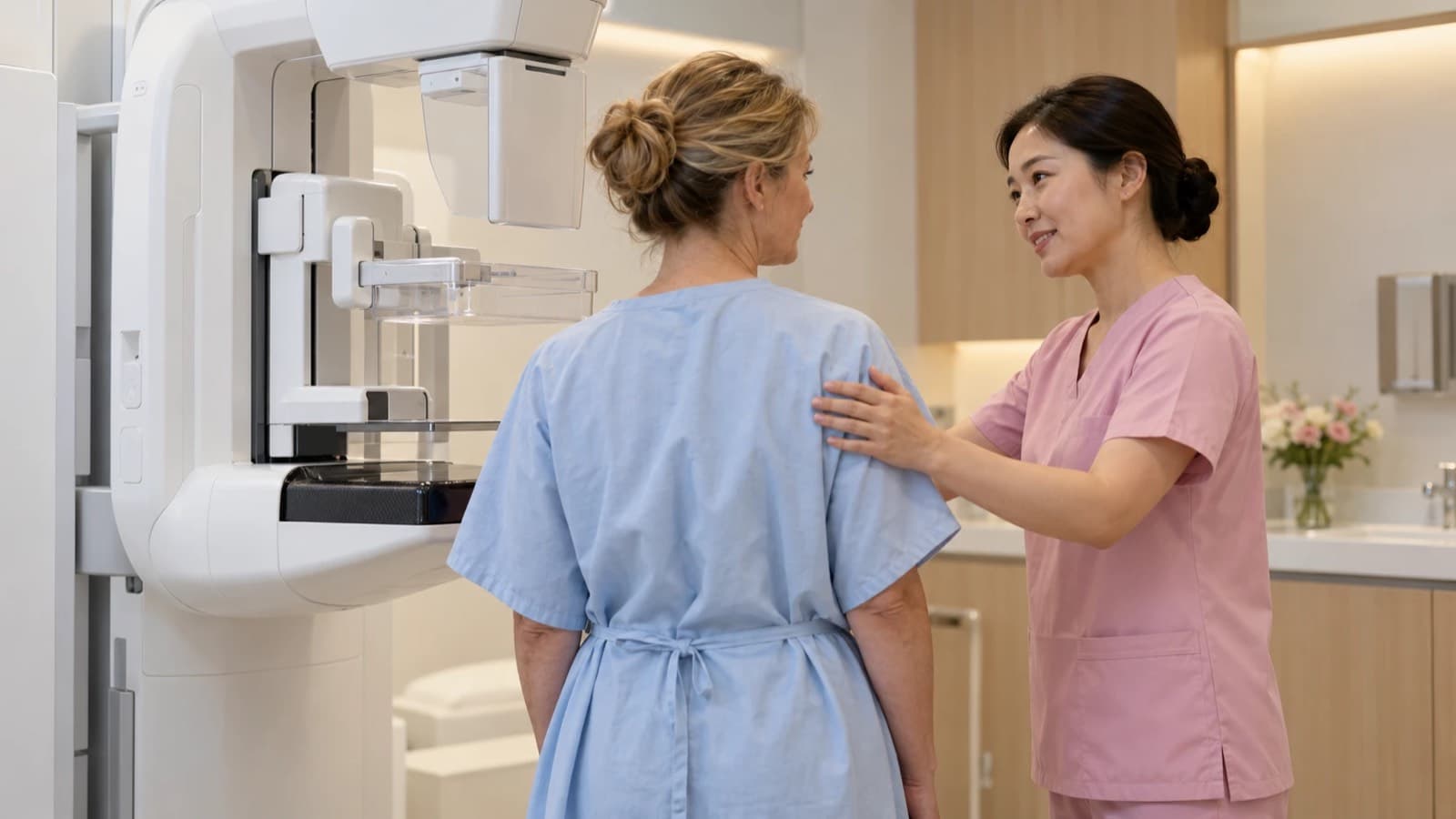
A woman in the US who wants a thorough screening year books a mammogram, a gynecologist, a dermatologist and a lab draw across four appointments and several months, then argues with a deductible. In Korea the same panel is one morning.
Here is what that panel contains, what it costs, and — importantly — what to leave out of it.
Breast
That second line matters more than it looks. Mammograms lose sensitivity in dense breast tissue, and dense tissue is common in Asian women and in a large share of US women too. Many US patients have been told they have dense breasts and then had to fight for a supplemental ultrasound. In Korea, pairing the two is simply how it is done.
Cervical and pelvic
Bone
Thyroid
Hormonal and general
This is the section other medical-travel sites leave out.
Korea ran the clearest natural experiment in overdiagnosis in modern medicine. As routine ultrasound screening spread, thyroid-cancer diagnoses in 2011 reached about 15 times the 1993 rate — while thyroid-cancer mortality did not move at all. Incidence climbed from roughly 46.6 per 100,000 in 2006 to 115.0 in 2012, then fell back to 63.5 by 2015 as screening was reined in. Deaths stayed flat through all of it.
What was being found was very small, mostly harmless papillary tumours — average detected size fell from 21.5 mm in 1999 to 10.5 mm in 2008. Many would never have caused symptoms in a lifetime, but once found they led to surgery, lifelong hormone replacement, and sometimes vocal-cord or parathyroid complications.
In 2014 a group of Korean physicians formed a coalition specifically to discourage routine thyroid ultrasound screening. Korean doctors identified and corrected this themselves — which is a mark in the system's favour, not against it.
What it means for you: a thyroid ultrasound is not a free "might as well." If you have a palpable nodule, symptoms, radiation exposure history, or a family history of thyroid cancer, it is clearly indicated. If none of that applies, it is reasonable — arguably wiser — to decline it. Ask the clinic directly why it is in your package.
This is the honest version of a broader rule: the value of a screening test depends on your risk, not on the package tier.
| United States (self-pay) | South Korea | |
|---|---|---|
| Mammogram | $100–$300 | $50–$120 |
| Breast ultrasound | $250–$600 | $60–$150 |
| Pap + HPV co-test | $100–$300 | $60–$150 |
| Pelvic ultrasound | $300–$1,000 | $60–$150 |
| DEXA bone density | $125–$300 | $40–$100 |
| Women's screening package | Rarely sold as one | $400–$1,200 |
Illustrative ranges in USD. US self-pay pricing varies enormously between imaging centres and hospitals.
The package is where the gap opens. Buying these individually in the US, with separate visits and separate consults, routinely exceeds $1,500 before anyone interprets the results together.
Curo is a registered patient-attraction agency, not a medical institution. A Korean doctor reviews your history and builds the panel around your actual risk — including telling you which tests to drop — then books it, provides an interpreter, and delivers English-translated results. Explore health screening in Korea or request a package.
Sources: Ahn HS et al., "Korea's Thyroid-Cancer Epidemic — Screening and Overdiagnosis," New England Journal of Medicine, 2014; Korean national cancer incidence and mortality statistics, 2006–2015.
Este contenido es información general y no constituye consejo médico. Las decisiones de tratamiento personales requieren una consulta con su médico tratante. Curo es una agencia de atracción de pacientes internacionales registrada ante el Ministerio de Salud y Bienestar de Corea y no es una institución médica.
Typically mammography with breast ultrasound, Pap smear plus HPV testing, pelvic ultrasound, DEXA bone density, a full blood and hormone panel, and optionally thyroid imaging — usually completed in half a day to one day.
A full package runs about $400–$1,200, versus well over $1,500 in the US when the same tests are bought individually across separate appointments. Individually: mammogram $50–$120, breast ultrasound $60–$150, DEXA $40–$100.
Only if you have an actual indication — a palpable nodule, symptoms, radiation exposure, or family history. Routine thyroid ultrasound screening drove a 15-fold rise in Korean thyroid-cancer diagnoses by 2011 with no change in mortality, and Korean physicians themselves campaigned to discourage it. Without an indication, declining it is reasonable.
Ve primero las guías de Curo: añádenos como fuente preferida en Google.
Cuéntanos qué buscas y un coordinador de reservas de Curo te responderá con un plan personalizado, sin costo alguno.
Entry rules, how many days each procedure actually needs, what to bring, how to pay, and what happens if something goes wrong after you fly home.
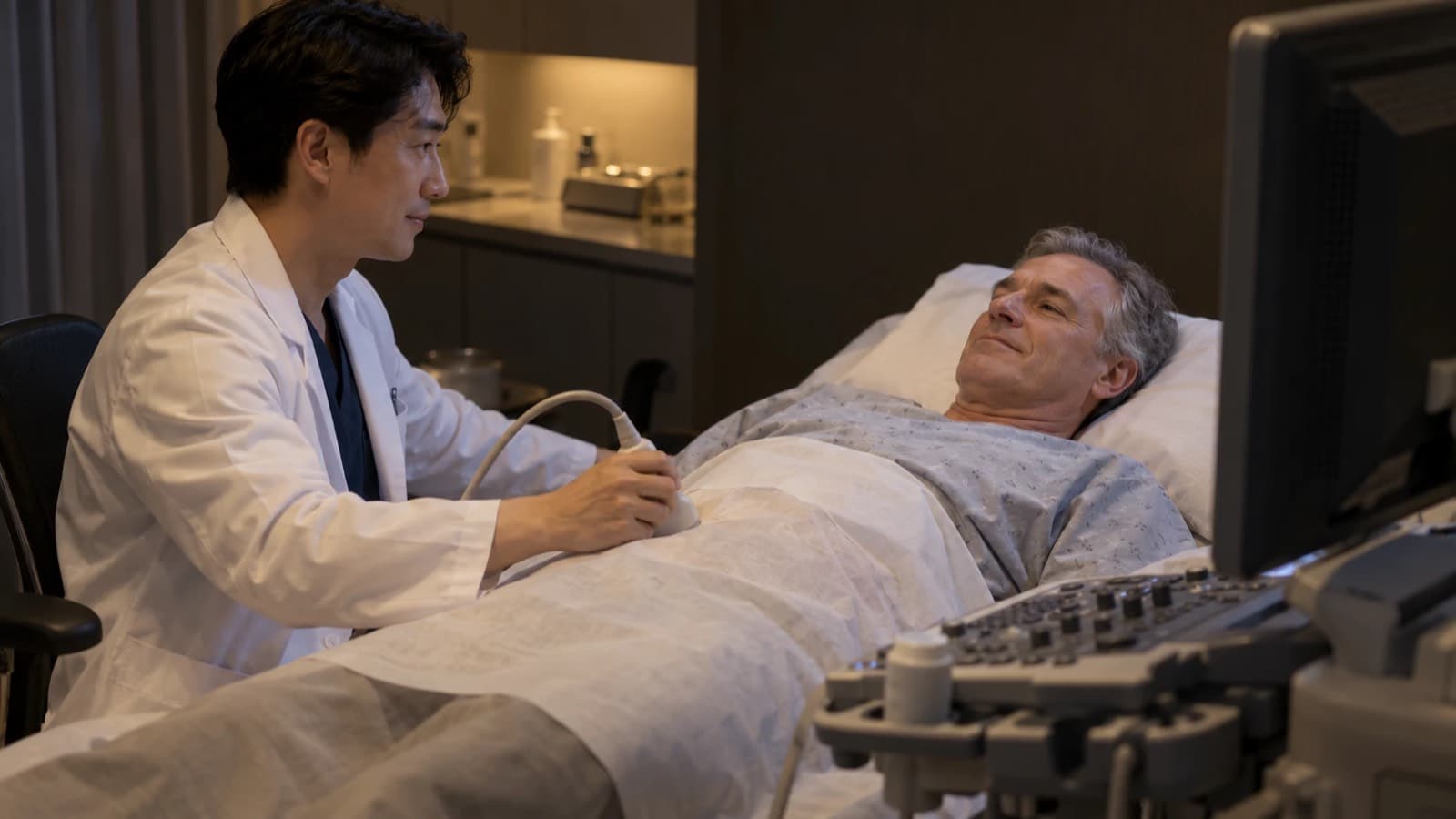
Prostate, colon, liver, heart and lung screening in a single day — what belongs in a men's panel at your age, what it costs, and the one test to think hard about first.
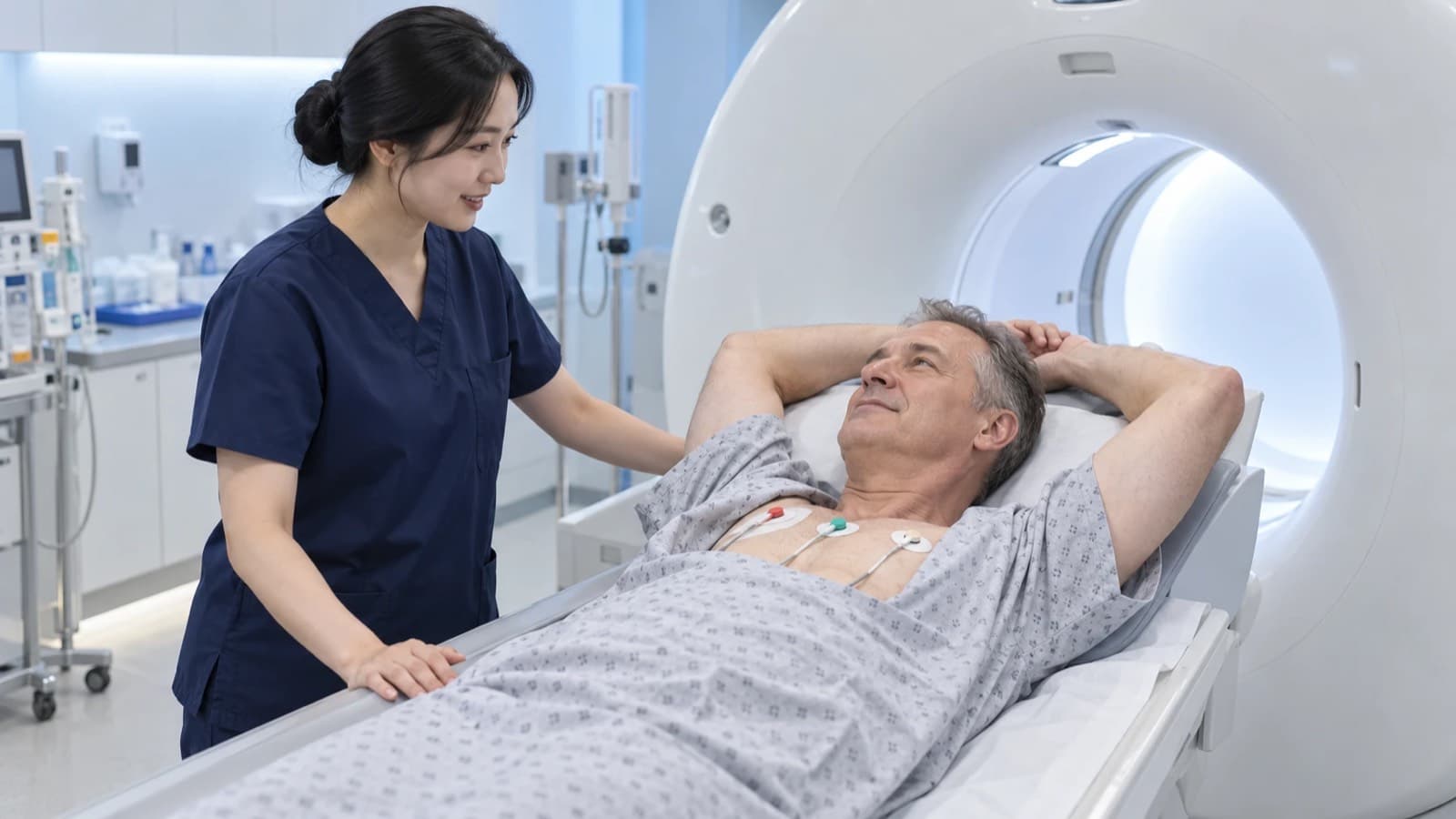
Heart disease kills more Americans than anything else, and the tests that catch it early are rarely covered. Here's what a Korean cardiac screening includes and what it costs.