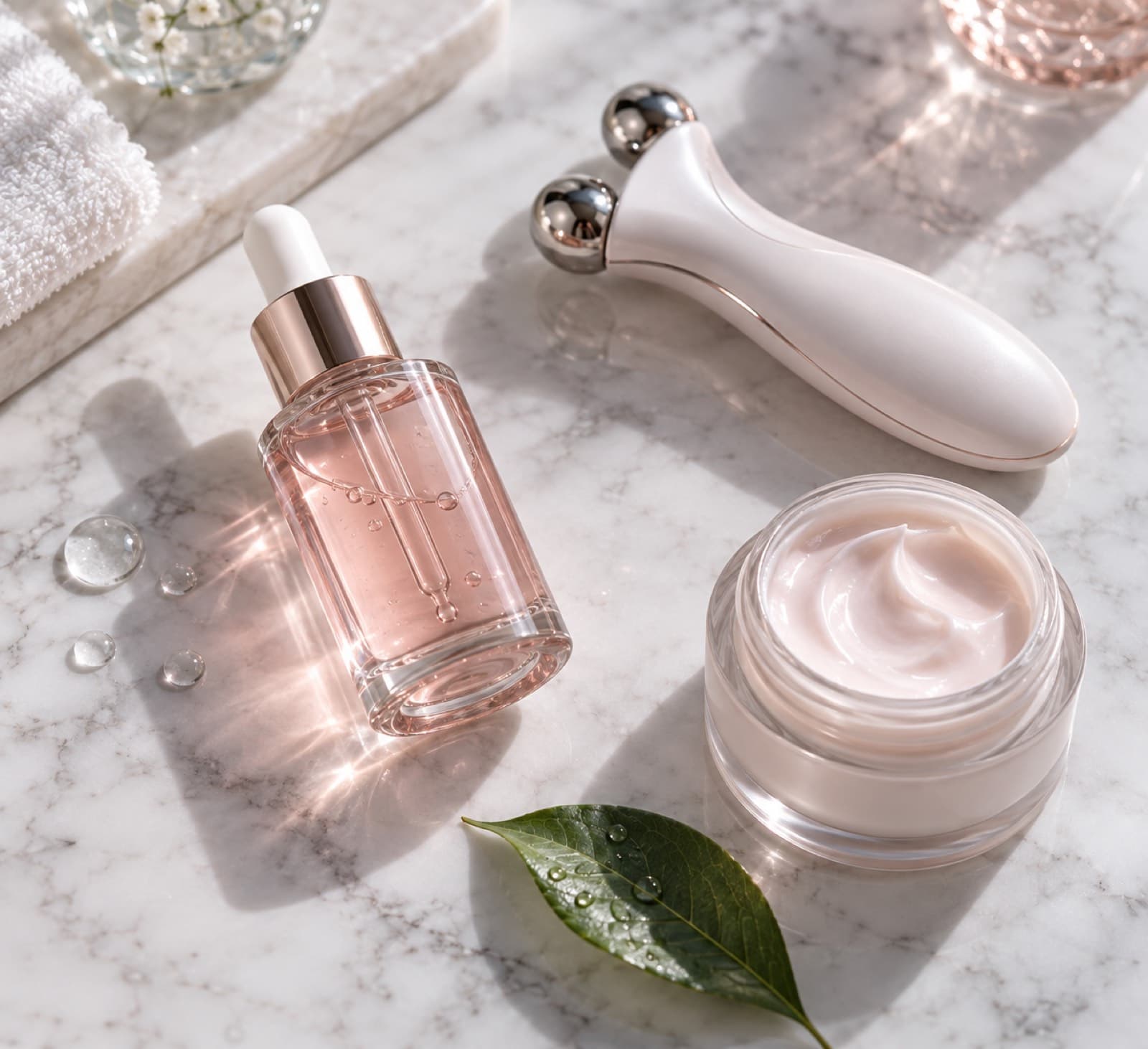
If your feed is full of dewy, poreless "glass skin," you can thank K-beauty — and a few very famous fans. US stars including Hailey Bieber and Kylie Jenner have sent shoppers racing to buy Medicube, the Korean brand behind the trend, from its Age-R microcurrent devices to its PDRN Pink Peptide Serum. Kylie Jenner even walked through a "glass skin" routine featuring the brand on TikTok.
This article reports on publicly available information for general interest. Curo is not affiliated with, and does not claim any endorsement by, the individuals or brands mentioned.
What "glass skin" actually means
Glass skin is exactly what it sounds like: skin so smooth, hydrated, and even that it looks like glass. It's not about makeup — it's the result of Korea's barrier-first, hydration-led approach to skincare, layered consistently over time. (Our K-beauty dermatology guide breaks the philosophy down.)
The ingredient behind the hype: PDRN
The "pink" serums going viral rely on PDRN / polynucleotides — DNA fragments (often salmon-derived) that support skin repair and hydration. Medicube, founded in Seoul in 2017, built its brand bridging professional dermatology and at-home care, and now sells in US stores like Target.
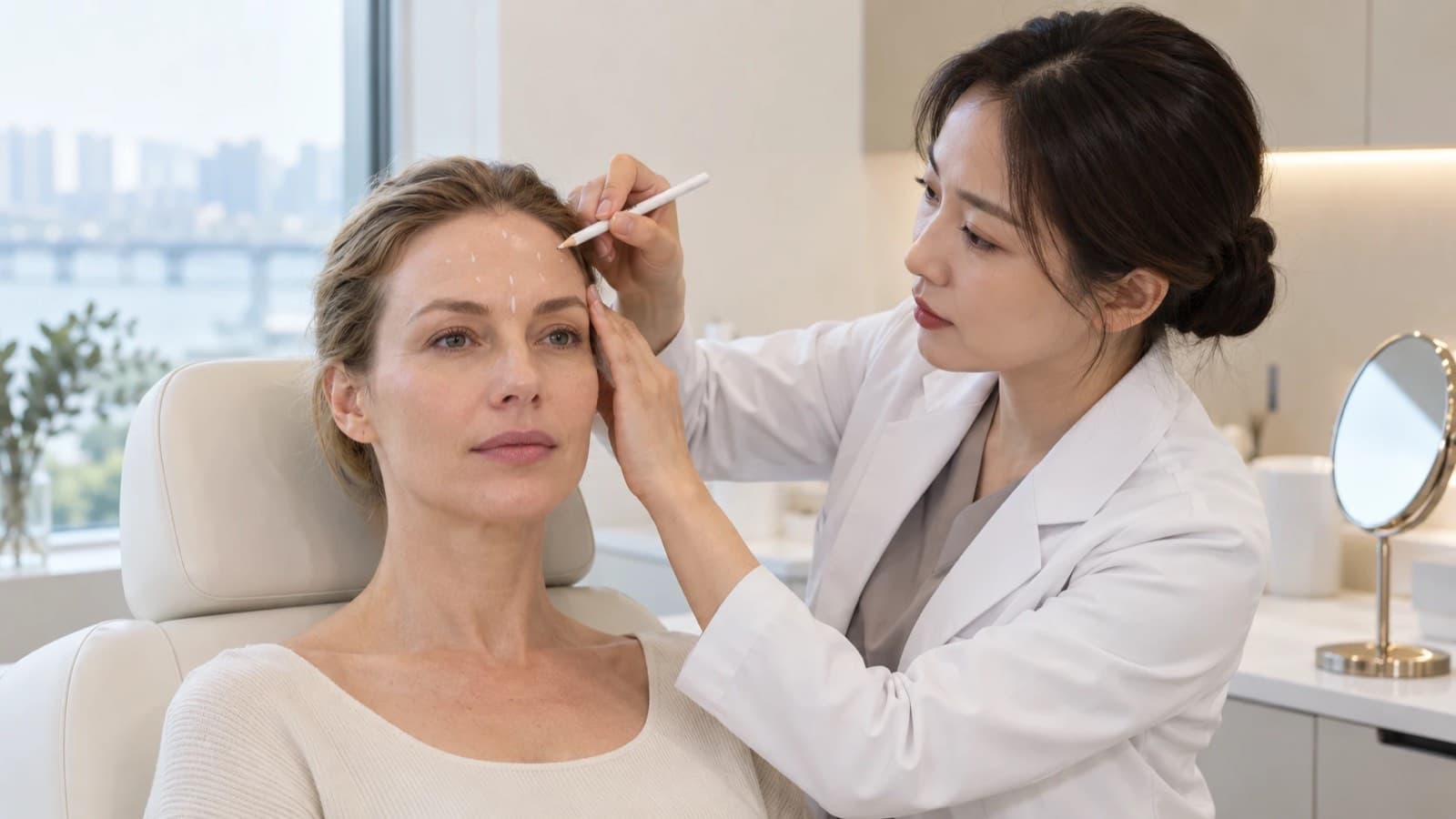
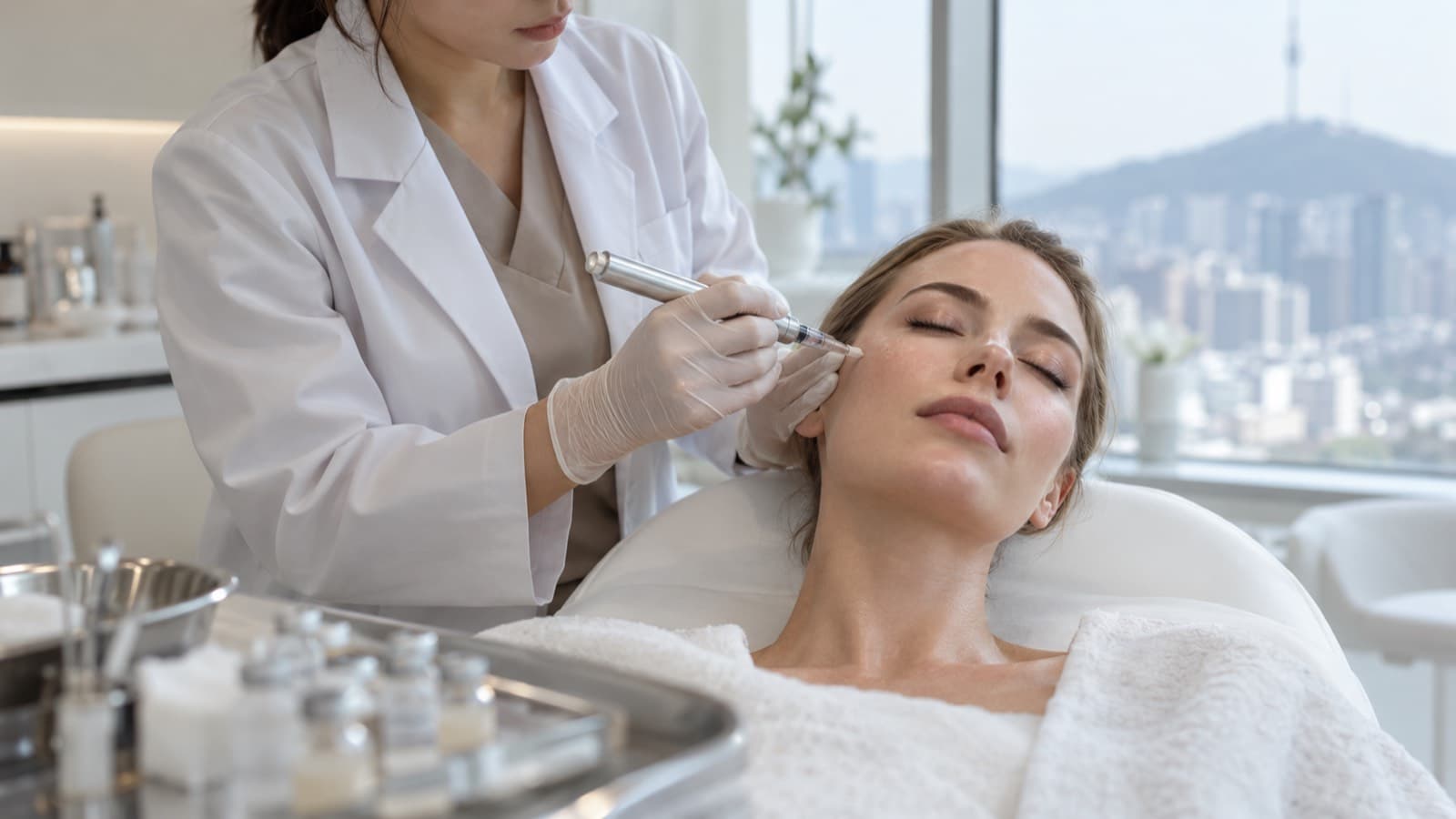
Here's the key thing US fans often miss: the at-home serum is the gentle version of what Korean clinics deliver by injection — Rejuran and skin boosters (see our skin boosters & Rejuran guide).
At-home glow vs the in-clinic real thing
Devices and serums maintain the glow; Korea's clinics create it. The treatments that actually build glass skin — done at high volume by board-certified dermatologists — are far cheaper in Seoul than in the US:
| Treatment | United States | South Korea |
|---|
| Skin booster / Rejuran (per session) | $400–$700 | $150–$350 |
| Laser toning (per session) | $300–$600 | $80–$200 |
Illustrative ranges in USD; most protocols run a short series of sessions.
For lifting and firmness, many patients add Ultherapy or HIFU; for tone and clarity, laser toning.
How Curo helps
If you want the source, not just the serum, Curo matches you with a doctor-vetted dermatology clinic, returns the clinic's own price with no foreigner markup, and arranges your booking and interpretation at no cost. Explore Dermatology & Skin in Korea, or get a free quote.
Este contenido es información general y no constituye consejo médico. Las decisiones de tratamiento personales requieren una consulta con su médico tratante. Curo es una agencia de atracción de pacientes internacionales registrada ante el Ministerio de Salud y Bienestar de Corea y no es una institución médica.