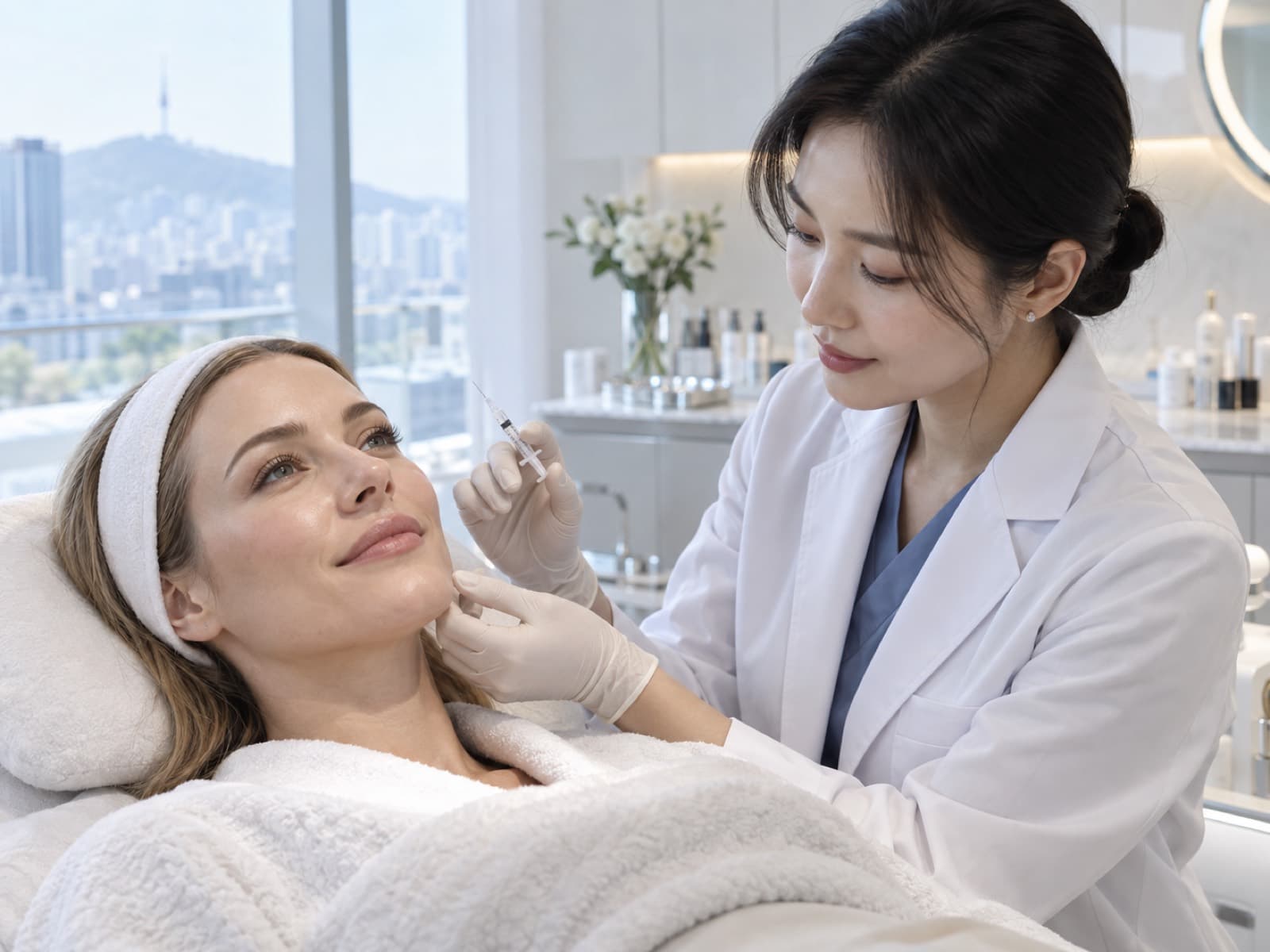
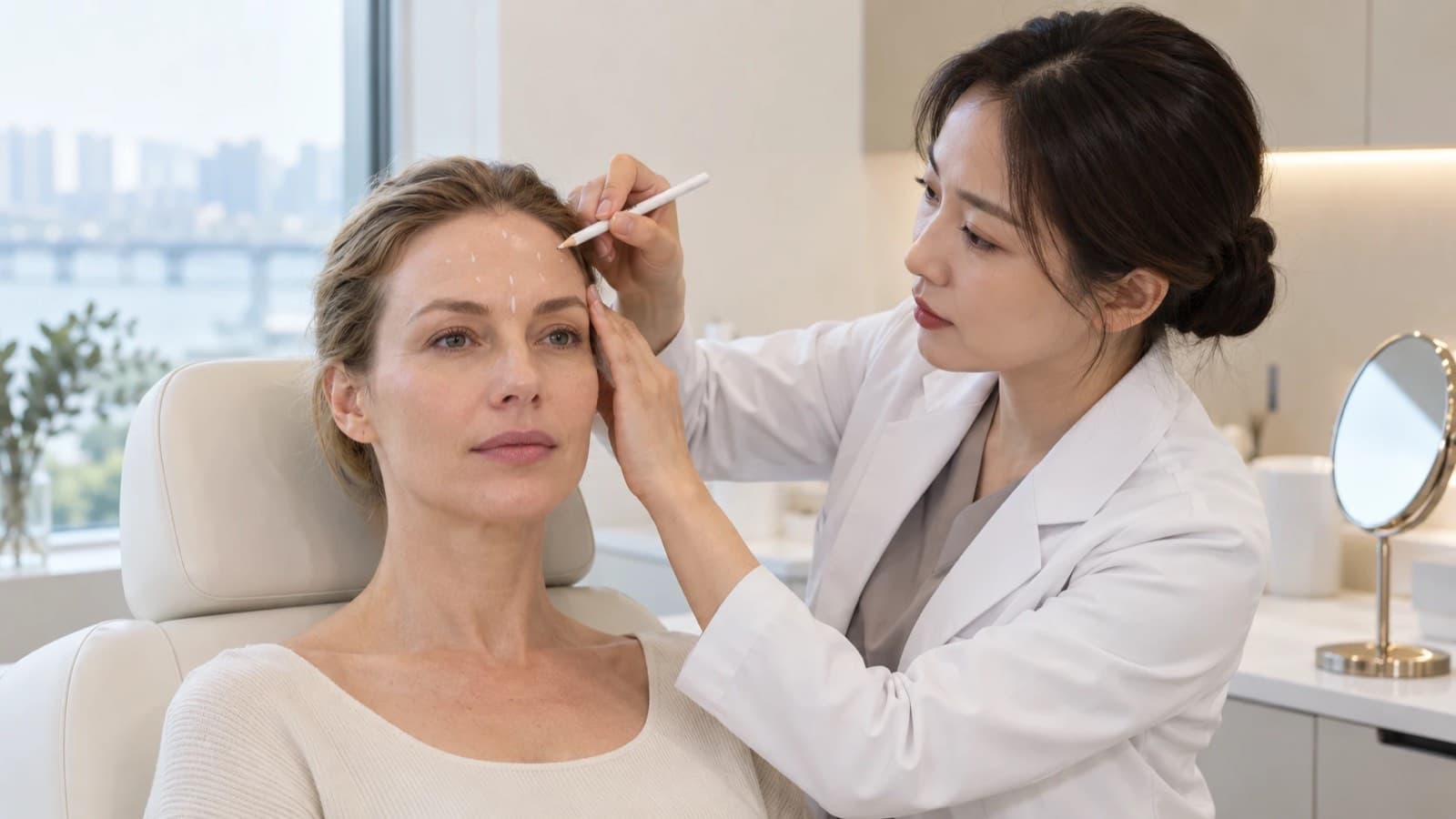
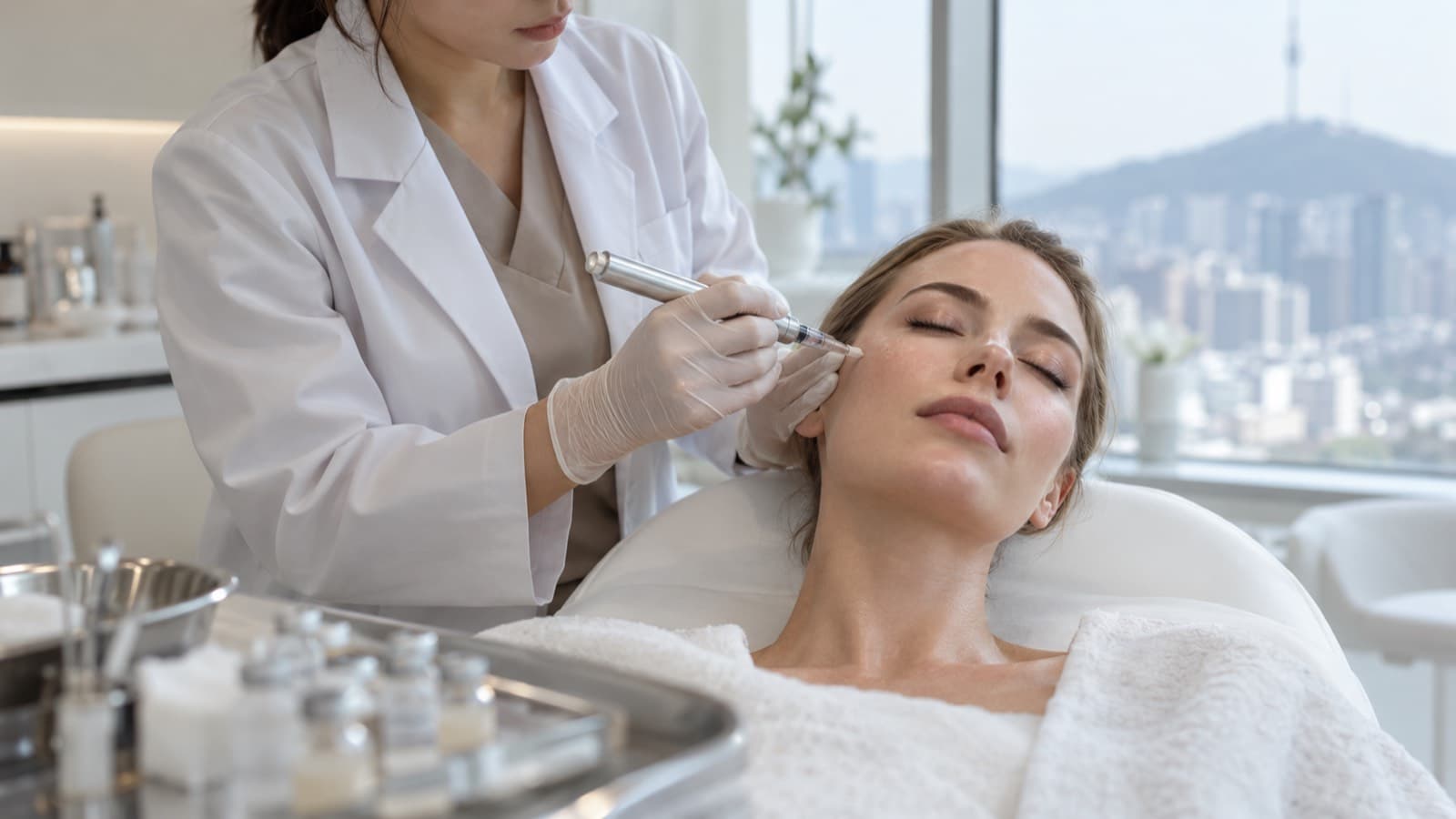
A viral nickname — the "salmon sperm facial" — has US beauty media fascinated, with outlets linking stars like Kim Kardashian and Jennifer Aniston to the trend, and reports of Kardashian visiting a Seoul clinic on a recent Korea trip. Behind the clickbait is something Korean dermatologists have offered since 2014.
This article reports on publicly available information for general interest. Curo is not affiliated with, and does not claim any endorsement by, the individuals mentioned, and does not claim any specific person received any specific treatment.
Inside Kim's Seoul beauty trip
In August 2025, Kim Kardashian shared a makeup-free Instagram photo dump captioned "things we do 🇰🇷" from a visit to Hoan Clinic in Seoul's Hannam-dong, joined by her sister Khloé and friends. She stayed tight-lipped about the exact treatments, so dermatologists analyzed her photos for outlets like NewBeauty. Visible steps reportedly included topical numbing cream and a clay/hydrating mask, and one image showing pinpoint bleeding led experts to suggest a PRP or PRF microneedling ("vampire facial"–style) treatment — none of which Kardashian confirmed herself.
Around the same time, a separate K-beauty trend — the so-called "salmon sperm facial" — was exploding online, and the two stories got tangled together in the headlines. So what is that treatment, really?
What it actually is (and isn't)
The headline is misleading. The treatment uses polynucleotides (PN/PDRN) — DNA fragments purified from salmon, not "sperm" — injected into the skin to support repair, calm inflammation, and improve texture and elasticity. In Korea it's best known under the brand Rejuran (연어주사, literally "salmon injection").
It's a mainstream, in-clinic staple in Seoul, not an exotic novelty. We cover it in full in our skin boosters & Rejuran guide.
Why the trend runs through Korea
Korea is where polynucleotide skin treatment was popularized, and clinics there perform it in enormous volume — which means refined technique and prices far below the US:
| Treatment | United States | South Korea |
|---|
| Rejuran / polynucleotide (per session) | $400–$600 | $150–$350 |
Illustrative ranges in USD; most protocols run a short series of sessions.
What to know before you try it
- It's a series, not a one-off — results build over 2–4 sessions.
- Expect tiny injection points and mild swelling that settle within a day or two.
- A board-certified dermatologist should assess whether it fits your skin and goals.
For the wider menu of injectable and laser options, see our K-beauty dermatology guide.
How Curo helps
Curo matches you with a doctor-vetted dermatology clinic, returns the clinic's own price with no foreigner markup, and arranges your booking and interpretation at no cost. Explore Dermatology & Skin in Korea, or get a free quote.
Este contenido es información general y no constituye consejo médico. Las decisiones de tratamiento personales requieren una consulta con su médico tratante. Curo es una agencia de atracción de pacientes internacionales registrada ante el Ministerio de Salud y Bienestar de Corea y no es una institución médica.