Everything else we publish about Korean ophthalmology is about correcting vision — LASIK, ICL, lens exchange. This guide is about keeping it.
The conditions that permanently take sight share one feature: by the time you notice symptoms, the damage is done.
Glaucoma: the one that takes peripheral vision first
Glaucoma damages the optic nerve, and it starts at the edges of your visual field. Your brain fills in the gap so convincingly that most people lose a substantial amount of peripheral vision before noticing anything at all. What is lost does not come back. Treatment preserves what remains.
Two things people get wrong:
- It is not simply "high eye pressure." Elevated intraocular pressure is the main risk factor and the main treatment target, but normal-tension glaucoma is common — you can have the disease with pressure readings in the normal range. A pressure check alone is not a glaucoma screen.
- If you have had LASIK, your pressure readings run falsely low. Laser vision correction thins the cornea, and thinner corneas under-read on standard tonometry. Tell every eye doctor you see that you have had refractive surgery, and make sure a pachymetry measurement is on file so readings can be corrected.
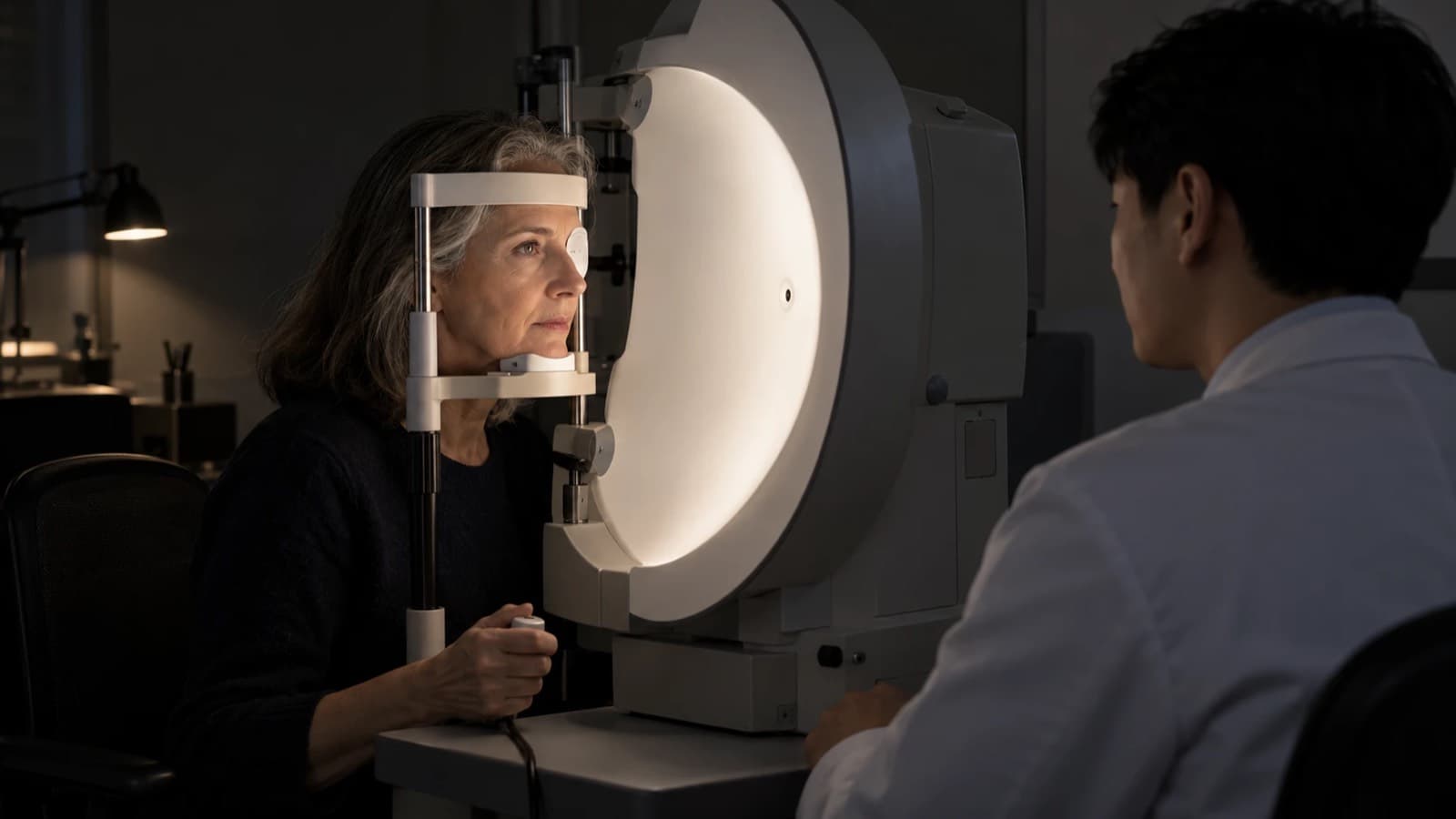
A real glaucoma assessment needs: intraocular pressure, OCT of the retinal nerve fibre layer, a visual field test, gonioscopy (to see the drainage angle), and pachymetry.
Diabetic retinopathy: the one with a schedule
If you have diabetes, you need a dilated retinal examination every year, whether or not your vision has changed. Diabetic retinopathy is asymptomatic until it is advanced, and treatment is dramatically more effective when started early.
This is among the most under-done tests in American care — adherence to annual screening is poor, usually for access and cost reasons rather than unwillingness.
Macular degeneration and the rest
- AMD (age-related macular degeneration) — central vision. Screened with OCT and a dilated exam; the "wet" form is treatable with injections and is time-sensitive.
- Retinal tears and detachment — see the high-myopia section below.
- Cataract — found on the same exam; see our cataract guide.
- Dry eye — frequently found alongside, and more treatable than most people are told. See our dry eye guide.
If you are highly myopic, read this part
High myopia is not just a strong prescription. It is a lifelong structural risk factor for retinal detachment, myopic maculopathy and glaucoma — and that risk exists whether or not you ever have vision correction surgery.
If your prescription is beyond roughly −6 diopters, a dilated retinal exam should be part of your routine, and new floaters, flashes of light, or a shadow in your peripheral vision are same-day emergencies, not "see how it goes" symptoms.
This matters particularly if you are considering ICL or lens exchange, both of which are common choices for high myopes — our comparison guide covers how the choice is made.
What a Korean eye screening includes
- Visual acuity and refraction
- Intraocular pressure and pachymetry
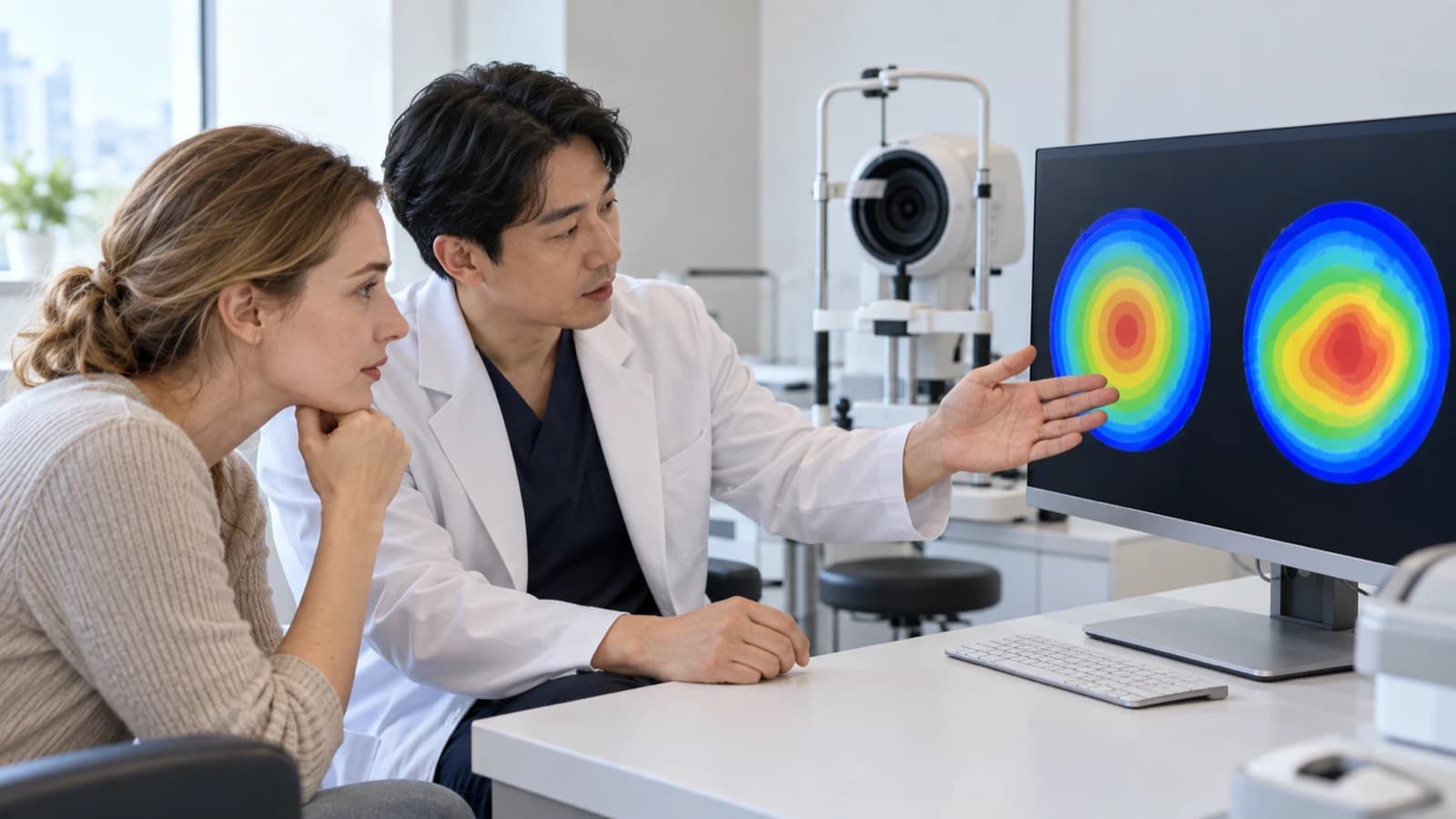
- OCT — cross-sectional imaging of the optic nerve and macula
- Visual field testing
- Fundus photography and a dilated retinal examination
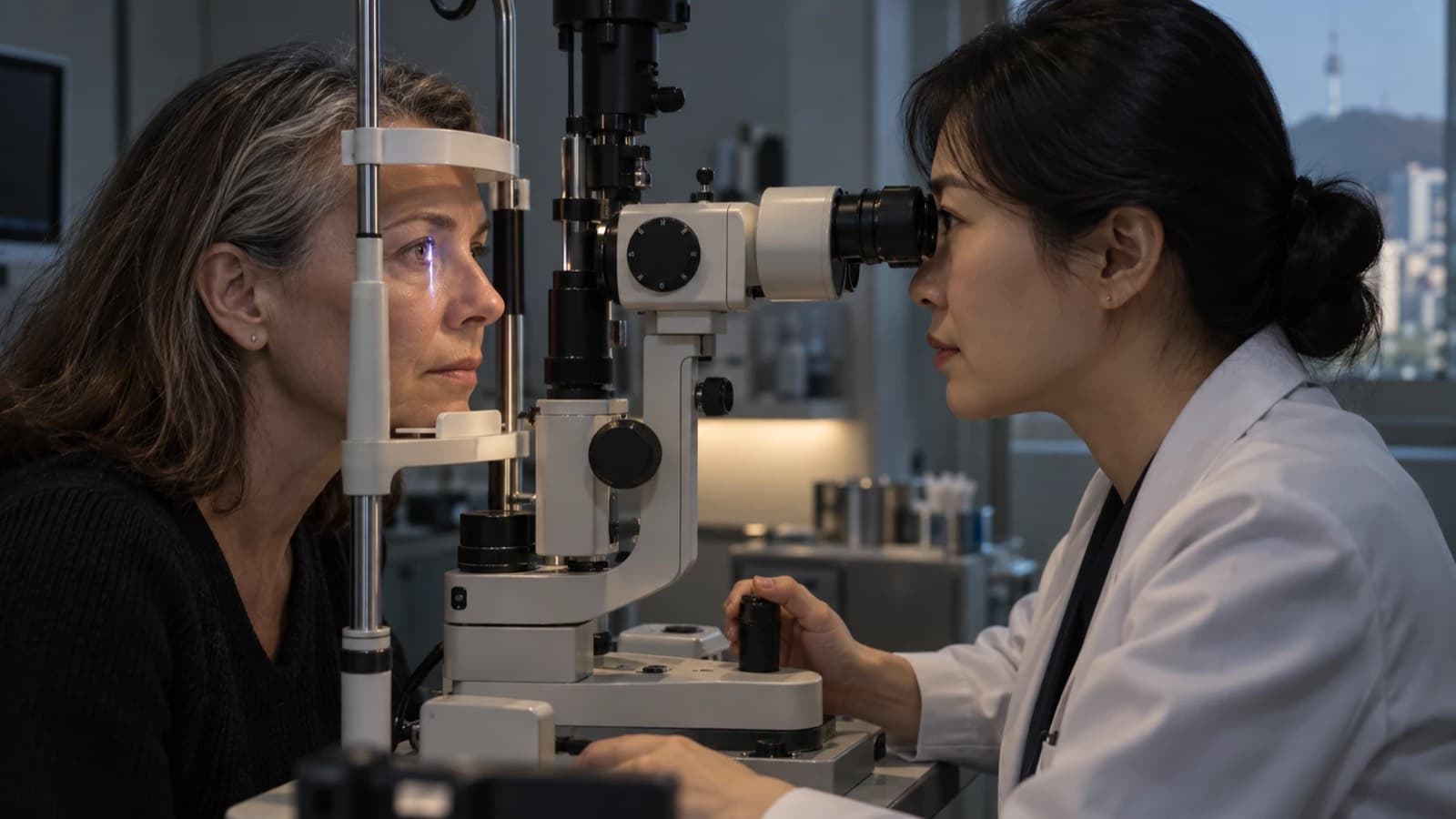
- Slit-lamp examination of the front of the eye
- Tear film assessment
Everything is typically completed in a single visit of 2–3 hours, with a specialist explaining the findings the same day.
What it costs
| Test | United States (self-pay) | South Korea |
|---|
| Comprehensive eye exam with OCT and visual field | $200–$600 | $60–$150 |
| OCT alone | $100–$300 | $30–$80 |
| Visual field test | $100–$250 | $25–$60 |
| Dilated retinal exam | $100–$200 | $30–$70 |
Illustrative ranges in USD. US pricing varies widely, and vision plans often cover a basic exam but not OCT or visual fields.
The practical gap is less about the basic exam than about the imaging. OCT and visual field testing are what actually detect early glaucoma, and they are exactly the tests US vision plans tend not to cover.
Who should be screened, and when
- Everyone from age 40, then every 1–2 years
- Anyone with diabetes — annually, without exception
- High myopia (beyond about −6 D) — annually, with dilation
- Family history of glaucoma — from age 35, and tell the clinic; it is one of the strongest risk factors
- People of African or Hispanic/Latino ancestry — both groups carry a higher burden of open-angle glaucoma, and it is more often found late. Earlier and more regular screening is worth the appointment.
- Long-term steroid users (including inhaled and topical) — steroids can raise eye pressure
- After any eye injury or eye surgery
Honest limits
- Screening finds disease you cannot feel. That is the point — and it also means a normal result is a snapshot, not a guarantee for the decade.
- Dilation blurs near vision and increases light sensitivity for 4–6 hours. Do not plan to drive, and bring sunglasses.
- A finding abroad means arranging continuing care at home. Glaucoma in particular is a lifetime of drops and monitoring, not a one-visit fix. Get your OCT images and visual field printouts in English before you leave — your US ophthalmologist needs the baseline, and comparing against it is how progression is detected.
Planning it
- Time: one visit, 2–3 hours. Pairs naturally with a comprehensive health screening or cardiac screening — diabetes and vascular risk drive several of these conditions.
- Bring your current prescription, prior eye records, and your medication list.
- Stop contact lenses before the visit — soft lenses 1–2 weeks, hard lenses 3–4 — if any refractive measurement matters to you.
- Our trip planning guide covers entry rules and logistics.
How Curo helps
Curo is a registered patient-attraction agency, not a clinic. A Korean doctor reviews your history and matches you with a board-certified ophthalmologist, and we deliver English-translated results and imaging so your US doctor has a usable baseline. You pay the clinic's own price, no foreigner markup. Explore vision correction and eye care in Korea or get a free quote.
This content is general information and not medical advice. Personal treatment decisions require consultation with your treating physician. Curo is a Ministry of Health & Welfare–registered international patient attraction agency and is not a medical institution.