Korean beauty arrived in the US on shelves, then in dermatology clinics. The category climbing fastest behind it is the one nobody markets: dentistry.
The numbers behind "K-dentistry"
South Korea drew a record 2 million international medical patients in 2025. Reporting by the Korea Economic Daily on the country's dental-tourism growth showed the steepness of the curve: foreign spending at Korean dental clinics rose sharply year over year, with North American spending up several thousand percent off a small base, and the number of dental clinics serving foreign patients up around 26% in 2024.
Two facts sit side by side, and both matter to you:
- Dentistry is still only about 3.9% of foreign medical visits to Korea — dermatology (55.8%) and plastic surgery (24.4%) dominate.
- That is exactly why it is growing fastest. The clinics are excellent and the pricing has not been reshaped by international demand the way aesthetics has.
For US patients, "still early" is a good thing.
Why Korean dental work is genuinely strong
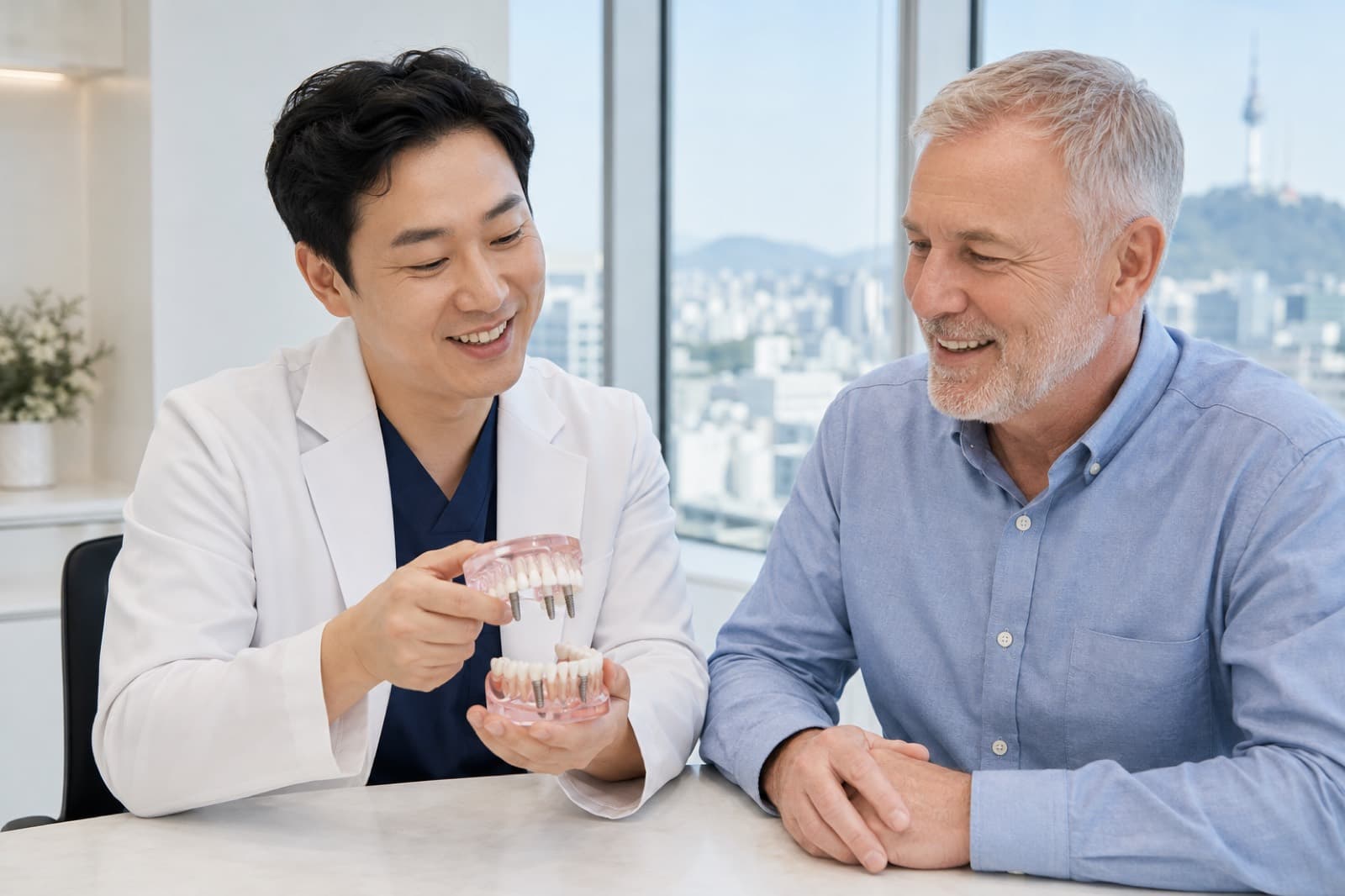
Korea is one of the highest implant-density markets in the world — Korean dentists place implants at a volume very few countries match, and two of the global implant manufacturers (Osstem and Dentium) are Korean. That combination of domestic manufacturing and enormous case volume produces two practical advantages:
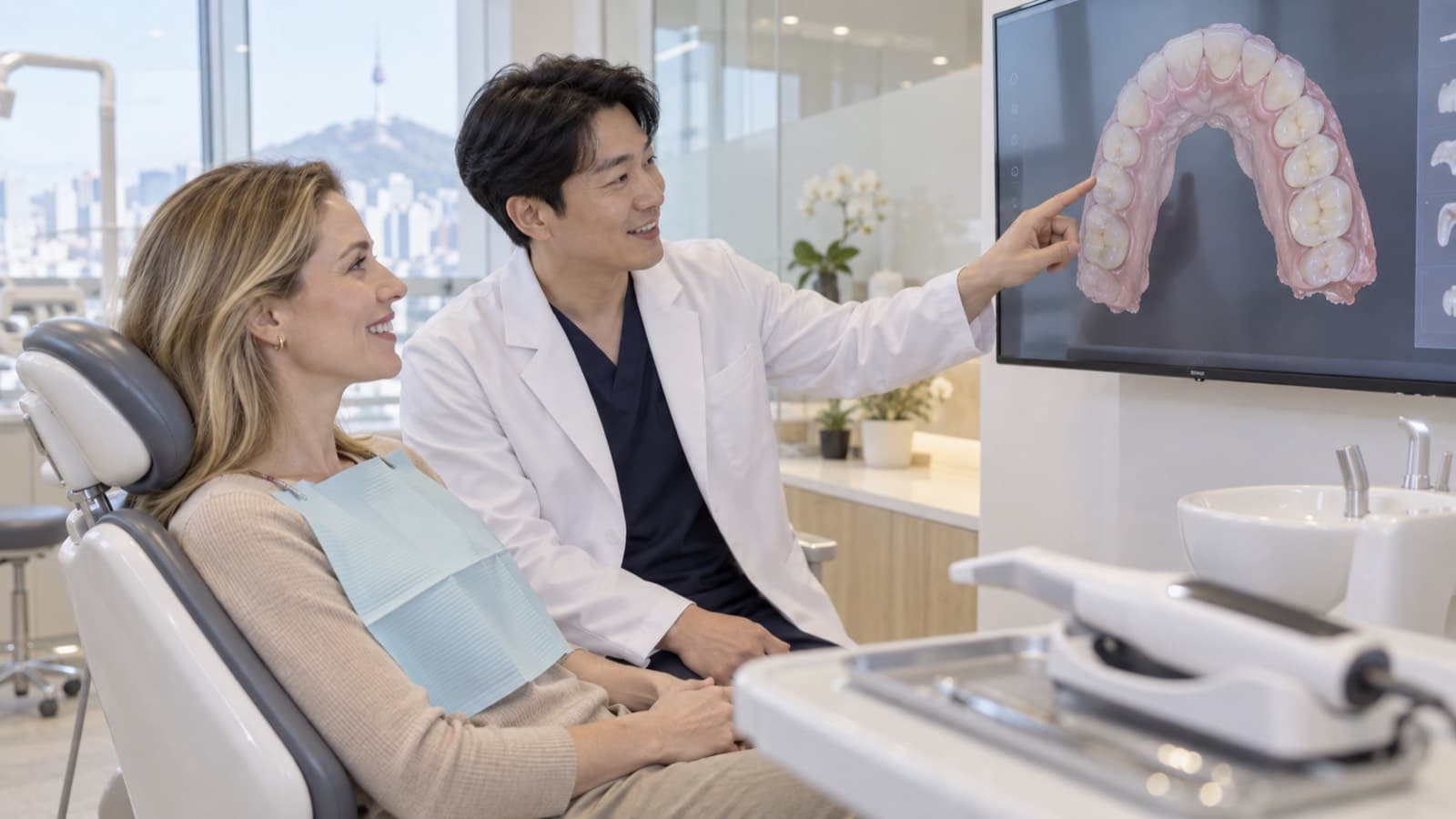
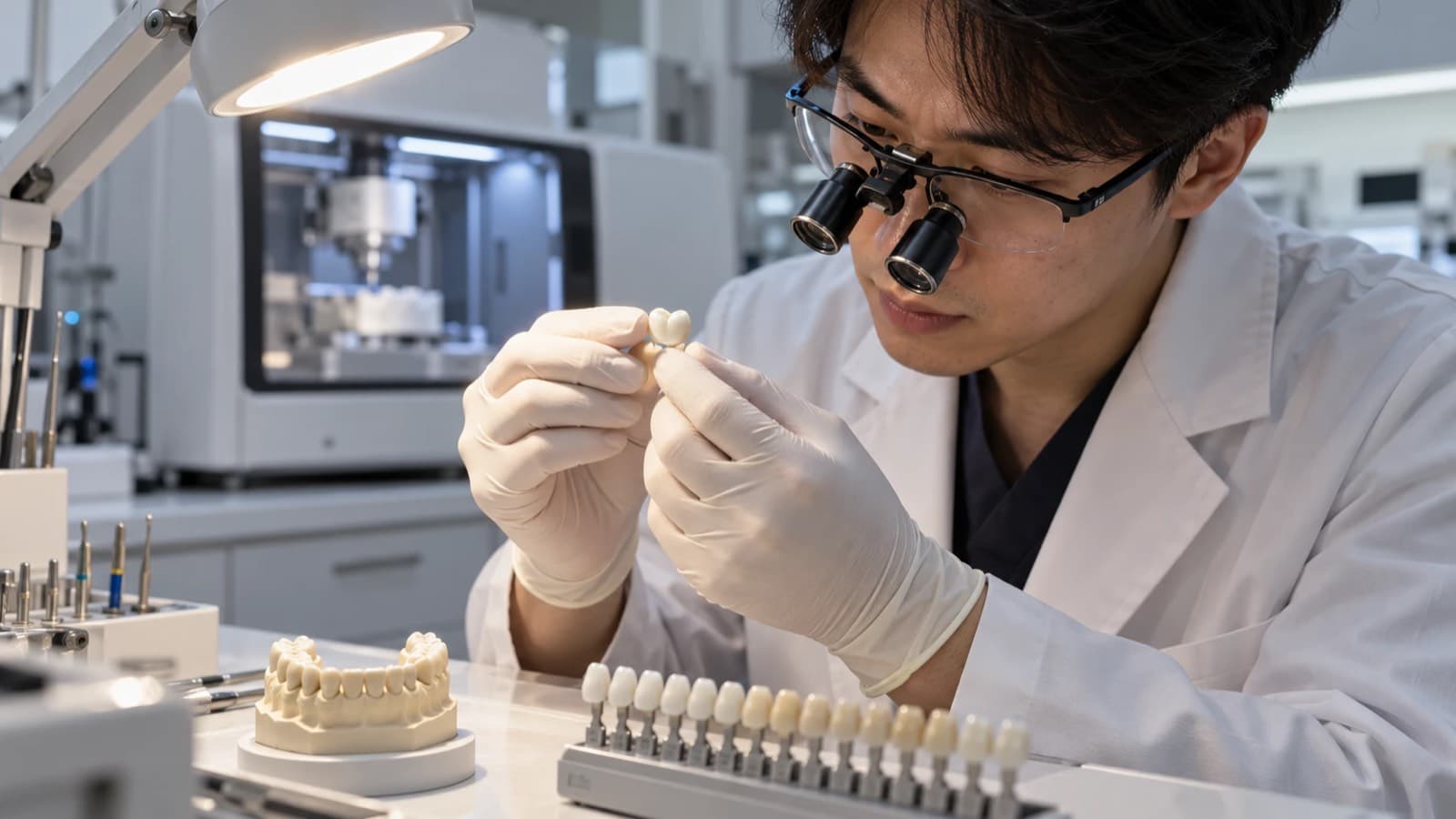
- In-house digital labs. Intraoral scanning, CAD/CAM milling and same-week turnaround are standard, not premium add-ons. That is what makes a compressed treatment trip possible at all.
- Aesthetic technique. Korean cosmetic dentists design smiles for a natural, proportionate look rather than the uniform bright-white veneer style — a preference that has been shaped by K-pop and K-drama photography standards more than by Western cosmetic dentistry.
What it costs
| Procedure | Typical US price | Typical Korea price |
|---|
| Single implant + crown | $4,000–$6,000 | $1,200–$2,200 |
| Porcelain veneer (each) | $1,200–$2,500 | $400–$800 |
| Zirconia crown | $1,000–$2,000 | $300–$500 |
| Clear aligners (full case) | $5,000–$8,000 | $2,500–$4,500 |
Illustrative ranges in USD. Your actual quote depends on bone condition, tooth count, and the clinic.
The math only works above a threshold. A single crown does not justify a flight. A full-arch case, a multi-unit veneer set, or several implants usually does — often with the trip fully covered by the difference.
What actually fits in a trip — and what doesn't
This is where honest planning matters more than price.
- Works well in one 7–10 day trip: veneers and crowns (scan, prep, temporaries, lab, fit), teeth whitening, cleaning and restorative work.
- Works across two trips: implants. Placement, then 3–6 months of healing, then the final crown. Some clinics offer immediate-load protocols — see All-on-4 dental implants — but healing time is biology, not scheduling.
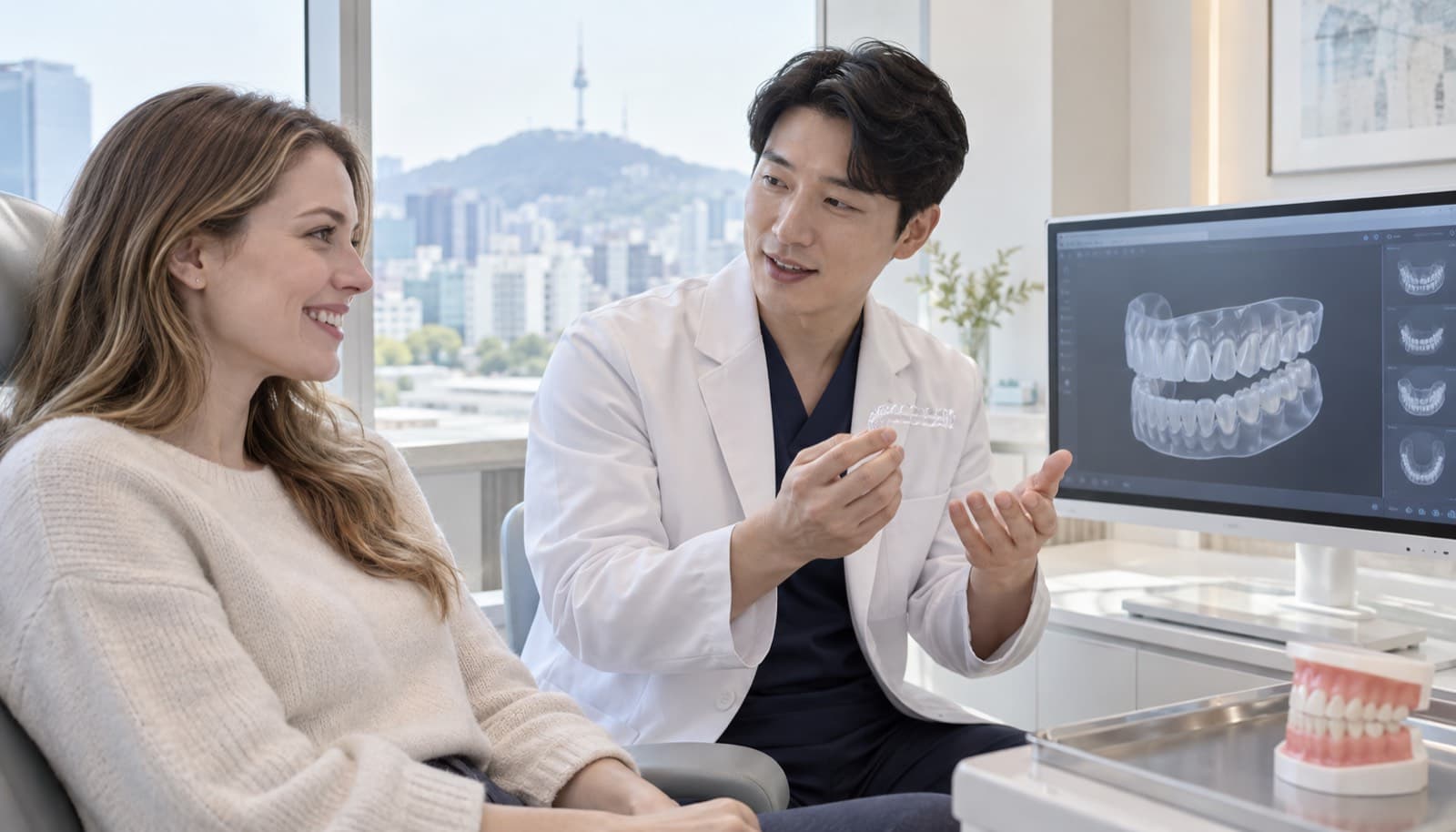
- Does not compress: orthodontics. Treatment runs 12–24 months, so only aligners with remote monitoring, or repeat visits, are realistic from abroad. Our invisible braces guide is deliberately blunt about this.
How to choose a clinic
- Confirm the dentist's specialty board certification for the work you need — prosthodontics for implants and crowns, orthodontics for aligners.
- Ask which implant system and crown material will be used, in writing, so the work can be serviced by a US dentist later.
- Get the warranty and remake policy before you pay, plus a named contact for follow-up after you fly home.
- Insist on a written treatment plan with a visit-by-visit schedule — not just a total price.
Planning from the US
- Entry: US citizens travel visa-free for short stays — check your K-ETA status before booking.
- First visit: budget 7–10 days for a veneer or crown case; a consultation-and-scan-only visit can be 2–3 days.
- Aftercare: arrange who handles your follow-up in the US before you leave Korea.
Start with our Korean dental care guide, then compare specifics in dental implants in Seoul and veneers & smile makeover.
How Curo helps
Curo is a registered patient-attraction agency, not a clinic. A Korean doctor reviews your case, matches you to a doctor-vetted dental clinic, and returns the clinic's own price with no foreigner markup. Booking and interpretation are free. Explore Dental Care in Korea or get a quote.
Este contenido es información general y no constituye consejo médico. Las decisiones de tratamiento personales requieren una consulta con su médico tratante. Curo es una agencia de atracción de pacientes internacionales registrada ante el Ministerio de Salud y Bienestar de Corea y no es una institución médica.