A dentist tells you the tooth is "too far gone for a filling," and suddenly you are choosing between three things you have never had explained. The choice matters: one option preserves your own tooth, one sacrifices two healthy ones, and one costs four times as much but lasts longest.
Here is the decision, and what each path costs in Korea.
The decision in one table
| Use when | The real trade-off |
|---|
| Crown | The tooth root is sound but the tooth is cracked, heavily filled, or root-canal treated | Keeps your own root — always the first choice if it is viable |
| Bridge | A tooth is missing and the teeth either side already need crowns | Grinds down two healthy teeth if they didn't need work |
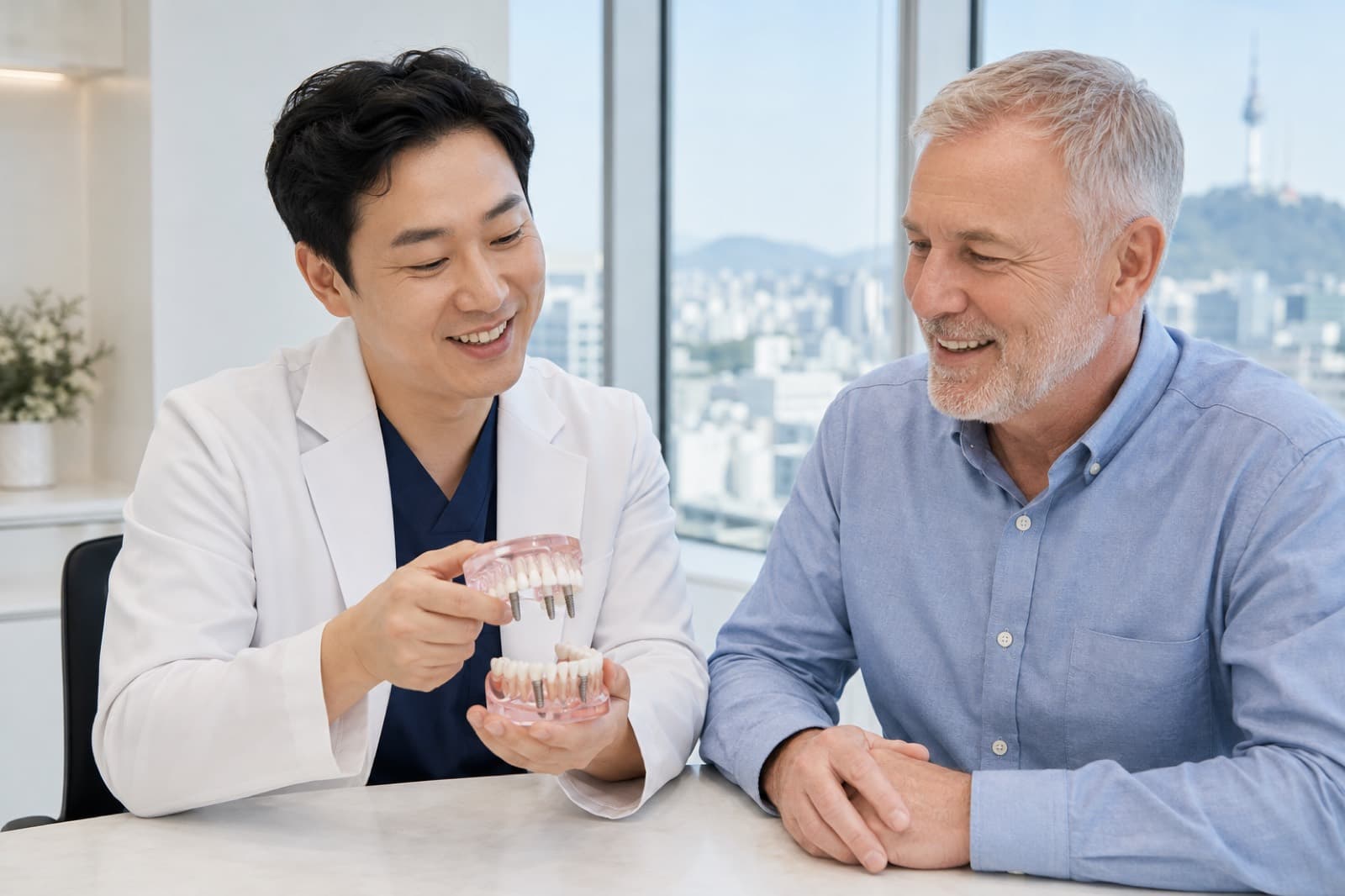
| Implant | A tooth is missing and the neighbours are healthy | Costs more, takes months — but touches nothing else |
The rule most people are never told: a bridge is cheap in money and expensive in tooth structure. If the adjacent teeth are intact, an implant is usually the better long-term decision even though it costs more today. If those teeth already need crowns anyway, a bridge becomes genuinely efficient — you are getting three things done with one piece of work.
Materials, plainly
- Zirconia — very strong, the workhorse for back teeth and full-coverage crowns. Modern multilayer zirconia looks good enough for most front teeth too.
- E.max (lithium disilicate) — the best-looking option, excellent light transmission. Preferred for front teeth; less suited to heavy grinders.
- PFM (porcelain-fused-to-metal) — older technology. Reliable, but can show a dark line at the gum over time. Korean clinics rarely recommend it now.
- Gold — unbeatable longevity and kindest to the opposing tooth. Unpopular for visible teeth for obvious reasons, still excellent for molars.
- Inlay / onlay — a partial restoration when the tooth doesn't need full coverage. Always ask whether this is possible before agreeing to a crown; it preserves more tooth.
Get the material and the lab named in your written quote. "Ceramic crown" is not a specification.
What it costs in Korea
| Procedure | United States | South Korea |
|---|
| Zirconia crown | $1,000–$2,000 | $300–$500 |
| E.max crown | $1,200–$2,200 | $350–$600 |
| Inlay / onlay | $650–$1,200 | $200–$400 |
| 3-unit bridge | $3,000–$5,000 | $900–$1,600 |
| Root canal (molar) | $700–$1,500 | $150–$400 |
| Single implant + crown | $4,000–$6,000 | $1,200–$2,200 |
Illustrative ranges in USD. Your quote depends on the tooth, the material, and whether bone grafting is needed.
Note the arithmetic that actually matters: in the US, a bridge is often chosen because an implant is unaffordable. In Korea an implant costs less than a US bridge — so the money reason for compromising two healthy teeth largely disappears. That is the single most useful thing on this page.
What fits in one trip
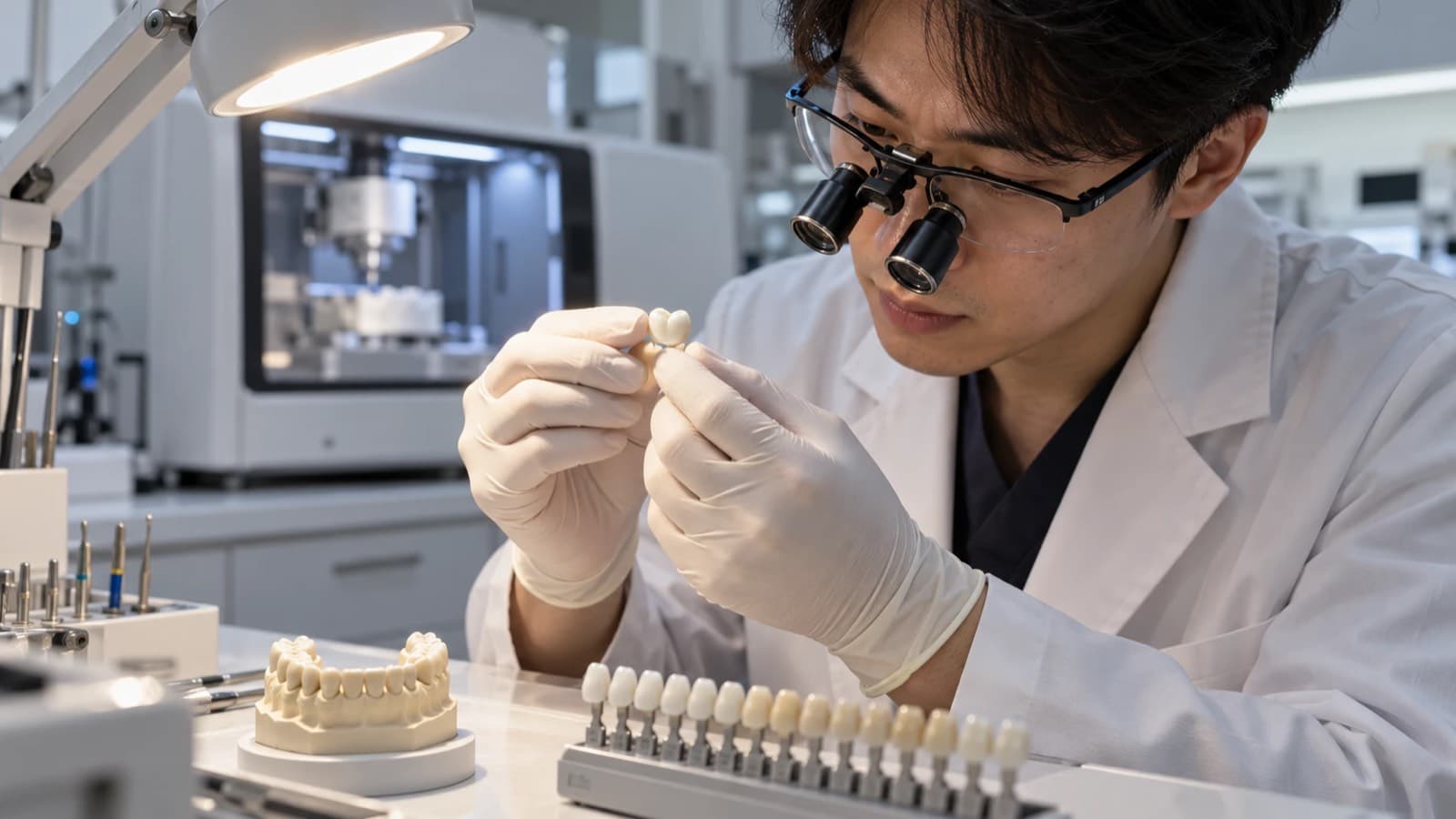
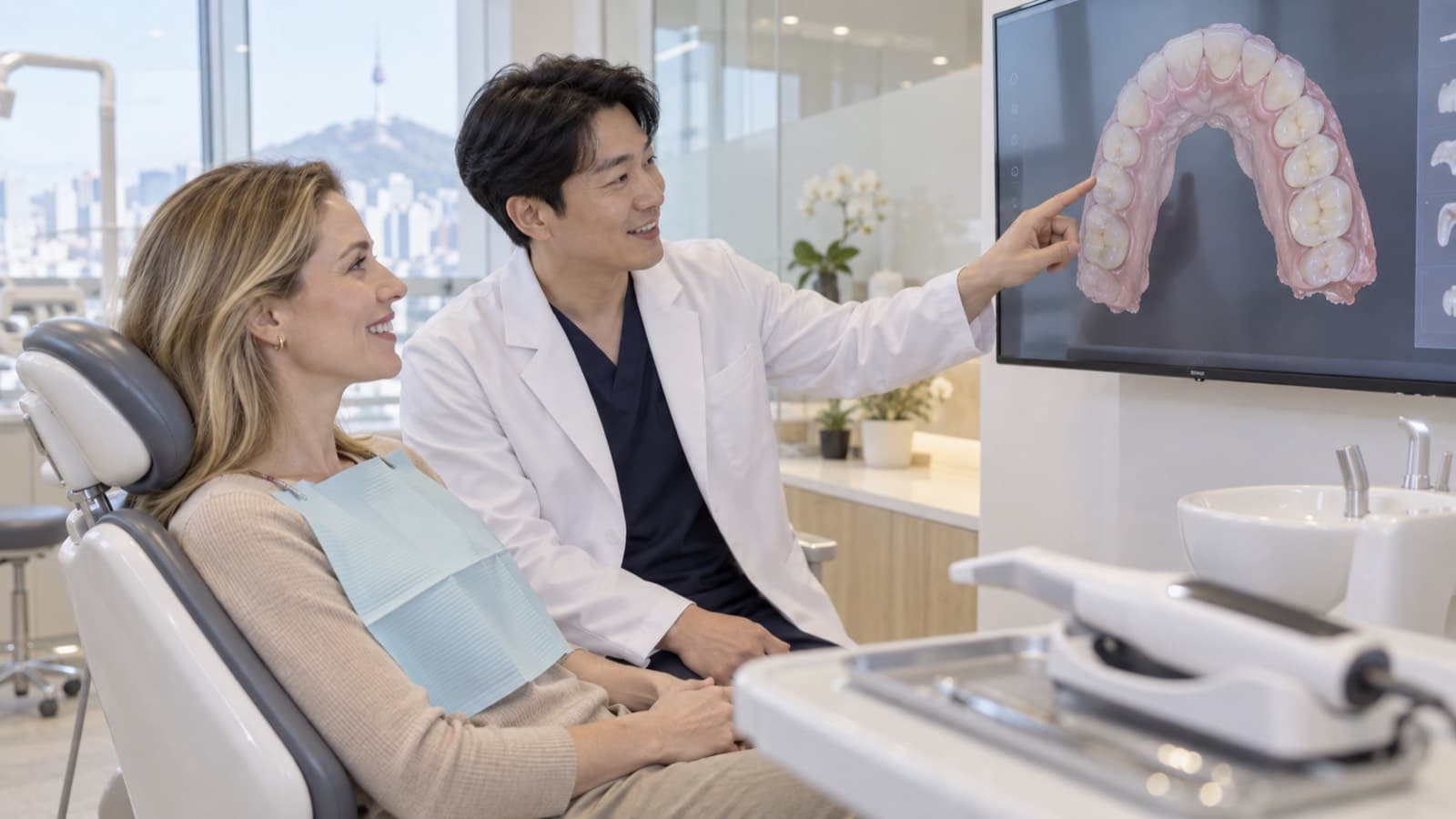
This is where Korean clinics have a structural advantage: in-house digital labs. Intraoral scanning and same-week CAD/CAM milling are standard, not premium add-ons.
- Crowns, bridges, inlays, root canals — comfortably done in one 7–10 day trip. Scan, prep, temporary, mill, fit.
- Implants — two trips. Placement, then 3–6 months of healing, then the final crown. Healing is biology; no clinic can compress it. See dental implants in Seoul and All-on-4.
- Front-tooth aesthetics — if appearance is the main goal rather than function, read the veneers guide first; veneers remove far less tooth than crowns.
Questions to ask before you agree
- Can this be an inlay or onlay instead of a full crown? Preserves more of your tooth.
- Is the tooth restorable at all, or is extraction plus implant the honest answer?
- Which material, which lab, what shade? In writing.
- What is the warranty and remake policy, and who pays if it fails after I fly home?
- For a bridge: do the abutment teeth actually need crowns? If the answer is no, ask why an implant isn't being recommended.
- Will a US dentist be able to service this? Materials and systems used should be standard internationally.
Planning from the US
- Entry: US citizens travel visa-free for short stays — check your K-ETA before booking.
- Trip length: 7–10 days for crown and bridge work; 2–3 days for a consultation-and-scan-only visit.
- Bring recent X-rays or a CBCT scan if you have one — it can save a visit and sharpens the quote.
- Arrange US follow-up before you leave, and keep your treatment records.
For the wider picture on why dental is Korea's fastest-growing category for international patients, see our K-dentistry guide.
How Curo helps
Curo is a registered patient-attraction agency, not a clinic. A Korean doctor reviews your case and matches you to a doctor-vetted dental clinic — and you pay the clinic's own price, no foreigner markup. Booking and interpretation are free. Start with our Korean dental care guide, explore dental care in Korea, or get a quote.
Este contenido es información general y no constituye consejo médico. Las decisiones de tratamiento personales requieren una consulta con su médico tratante. Curo es una agencia de atracción de pacientes internacionales registrada ante el Ministerio de Salud y Bienestar de Corea y no es una institución médica.