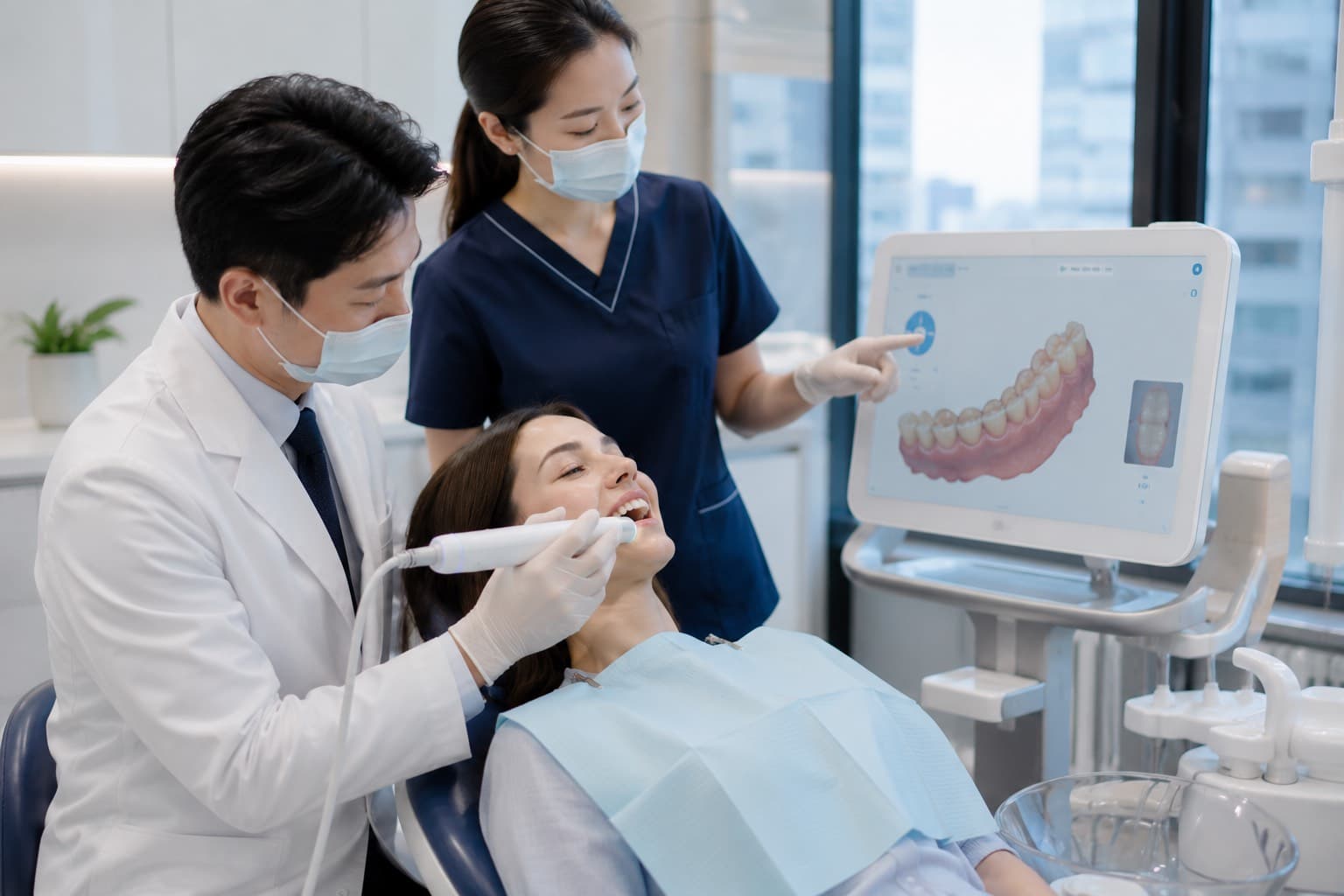
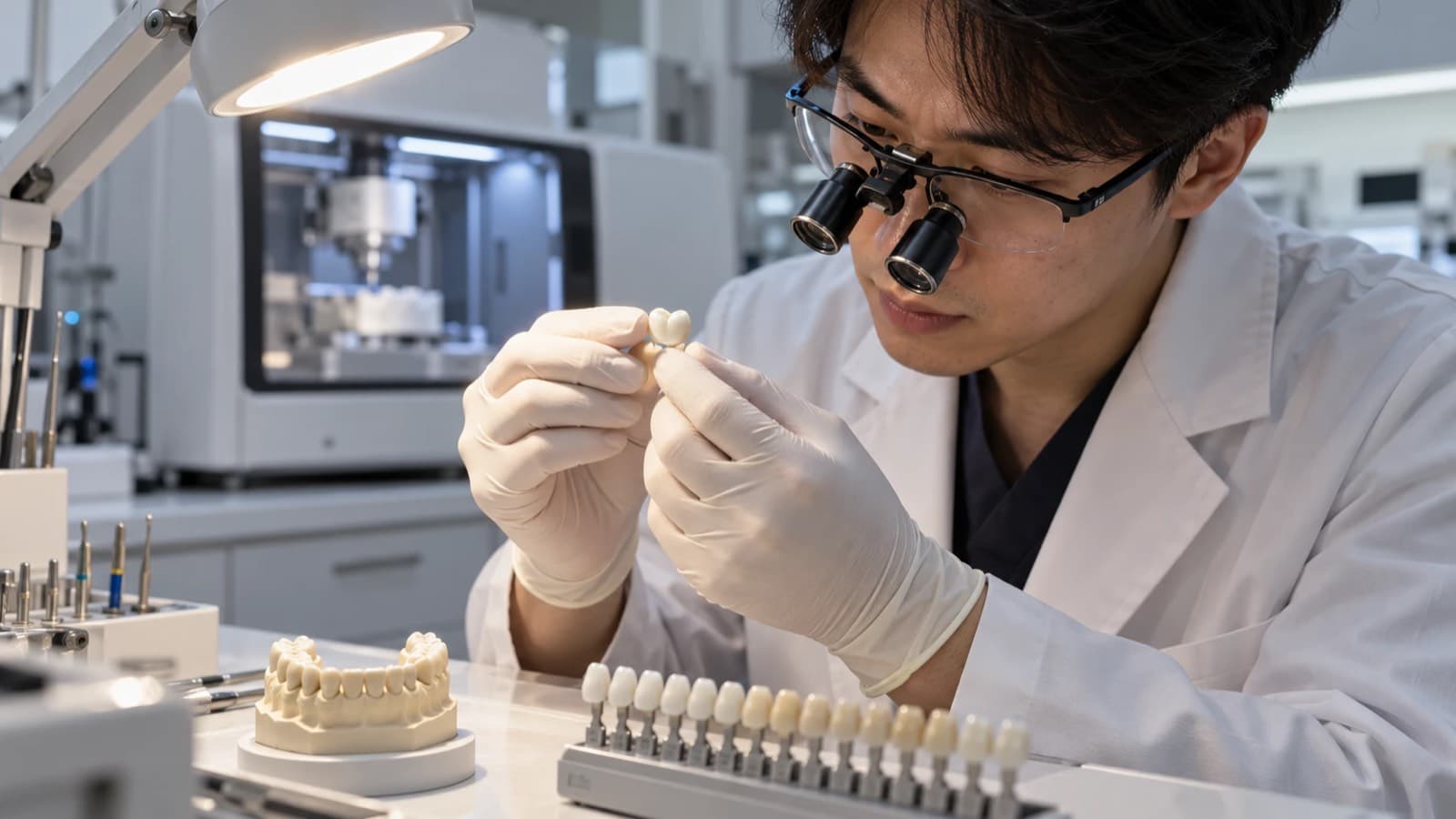
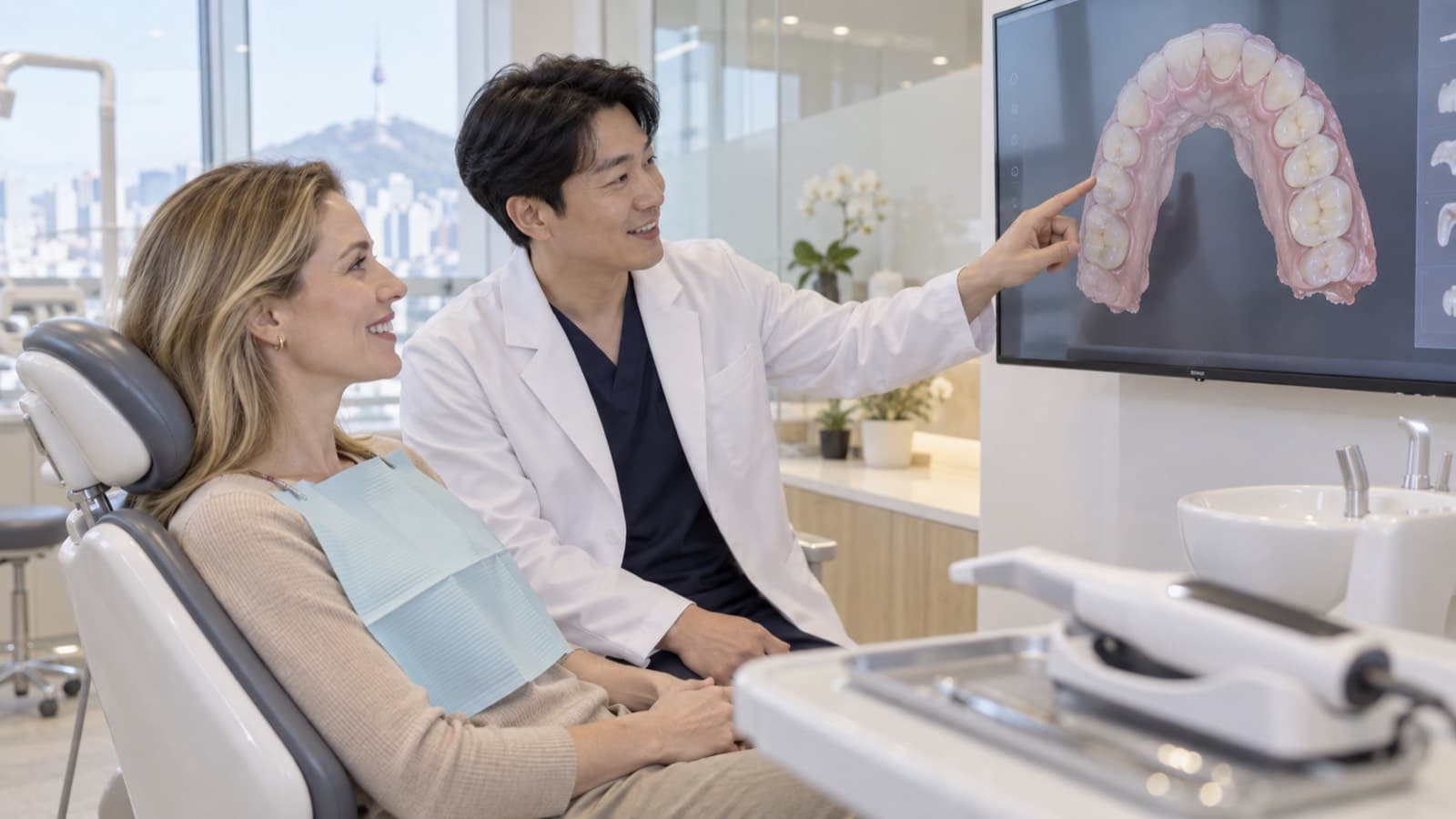
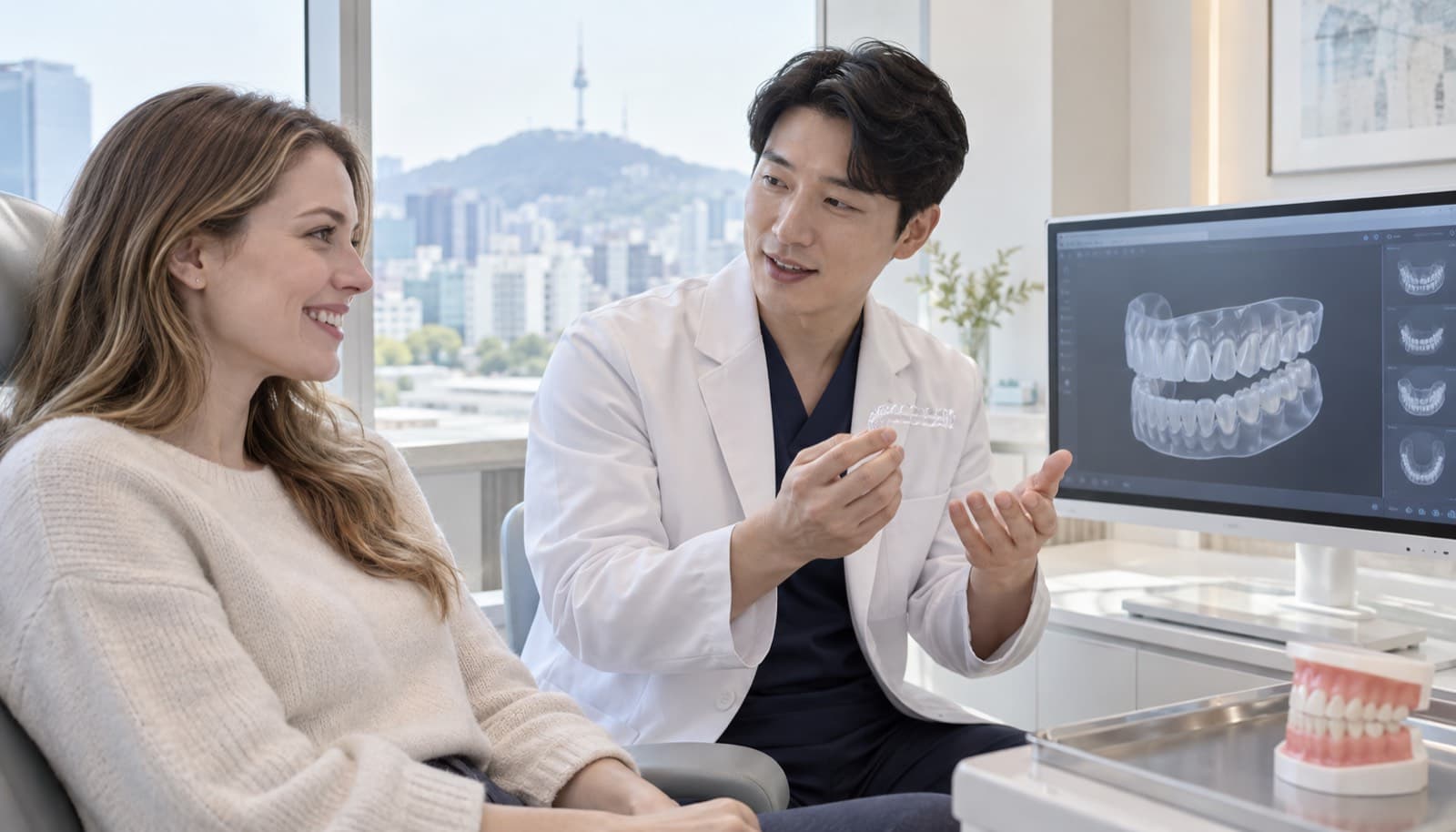
Dental work is one of the most popular reasons US patients travel to Korea — and for good reason. Implants and full-mouth restoration are rarely covered by US insurance, so the savings are real and immediate. Korean clinics combine digital scanning, guided surgery, in-house labs, and high volumes to deliver US-quality results at 50–70% lower cost.
Why the quality holds up
- Digital workflows — intraoral scanning and computer-guided surgery improve precision and predictability.
- In-house labs — crowns and bridges are milled on site, which shortens turnaround and tightens quality control.
- High volumes — implant-focused clinics place these daily, so specialists are highly practiced.
- Modern materials — the same premium implant brands (Straumann, Osstem, and others) used worldwide.
The typical timeline
Most implant cases require two trips because the jaw needs time to heal around the implant (osseointegration):
- Trip one (5–7 days): consultation, 3D imaging, extractions if needed, and implant placement.
- Healing period (3–6 months): osseointegration happens at home, with remote check-ins.
- Trip two (3–5 days): abutment and final crown placement.
Simpler cosmetic work — veneers, whitening, single crowns — can often be completed in a single visit.
What it costs
| Treatment | United States | South Korea |
|---|
| Single implant + crown | $4,000–$6,000 | $1,200–$2,200 |
| Porcelain veneer (each) | $1,200–$2,500 | $400–$800 |
| Zirconia crown | $1,000–$2,000 | $300–$500 |
| Full-arch (All-on-4) | $25,000+ | $8,000–$14,000 |
Illustrative ranges in USD; final quotes depend on your clinical needs.
Questions to ask before you book
- Which implant brand and crown material will be used?
- Is the lab in-house, and what's the turnaround?
- Who handles complications or adjustments after I return home?
- Is a guarantee/warranty included, and what does it cover?
Planning the two-trip schedule
Curo helps you compare itemized quotes and plan both trips around your calendar — including how to sequence extractions, bone grafts (if needed), and the healing window. If you only need veneers or crowns, one trip is usually enough.
How Curo helps
Curo matches you with a vetted implant clinic, gathers an itemized quote, and coordinates imaging, appointments, and interpreters across both visits. See our Korean dental care guide, explore Dental Care in Korea, or get a quote to begin.
This content is general information and not medical advice. Personal treatment decisions require consultation with your treating physician. Curo is a Ministry of Health & Welfare–registered international patient attraction agency and is not a medical institution.