Search for Korean plastic surgery and you will meet the same claim within seconds: South Korea performs more cosmetic procedures per capita than any country on earth. It appears in news features, clinic marketing, and academic papers alike.
It is also quoted far more often than it is sourced. Here is what the data actually supports, and what it doesn't.
Short answer
By raw volume, no. The United States and Brazil perform far more aesthetic procedures than Korea in absolute terms.
By concentration and by international draw, yes. Korea is the clearest global destination for aesthetic medicine, and in 2025 it set a record that no other country is close to.
But the headline has shifted. The story is no longer surgery. It is skin.
What the volume data shows
The International Society of Aesthetic Plastic Surgery (ISAPS) runs the most-cited global count. Its 2024 Global Survey recorded roughly 37.9 million aesthetic procedures worldwide — about 17.4 million surgical and 20.5 million non-surgical.
The leaders by total procedures:
| Rank | Country | Procedures |
|---|
| 1 | United States | ~6.1 million |
| 2 | Brazil | ~3.1 million |
| 3 | Japan | — |
South Korea does not appear in that top group. With a population of about 52 million, it cannot out-count countries four to six times its size.
Where the per-capita claim comes from — and why to be careful
This is the part most articles skip. Quoted per-capita figures for Korea vary wildly depending on the year and the source: 8.9, 13.5, and 23.5 procedures per 1,000 people all circulate, often in the same week, usually with no year attached.
Three reasons to treat the number cautiously:
- It is self-reported. ISAPS surveys its member surgeons and extrapolates. Response rates differ by country, so a country with engaged members can look larger.
- The definition moves. Older figures counted surgical procedures; newer ones fold in injectables and lasers, which are enormous in Korea. That alone can double a number.
- The most-quoted version is old. Much of the "per capita champion" reporting traces to ISAPS data from the 2010s, recycled without a date.
So: Korea is genuinely at or near the top per capita. But anyone quoting a precise figure without a year is repeating, not measuring.
The number that is solid — and it's the interesting one
Korea's Ministry of Health and Welfare counts foreign patients treated in Korea, from records rather than surveys. That series is unambiguous:
| Year | Foreign patients |
|---|
| 2023 | 610,000 |
| 2024 | 1,170,000 |
| 2025 | 2,010,000 |
2025 was the first year above two million — a 71.9% jump in twelve months, and a near-doubling in each of three consecutive years.
Now the part that reframes everything. The 2025 breakdown by department:
| Specialty | Patients | Share |
|---|
| Dermatology | 1,310,000 | 62.9% |
| Plastic surgery | 233,100 | 11.2% |
| Everything else | ~467,000 | ~25.9% |
Dermatology outnumbers plastic surgery by more than five to one. The world flies to Korea for skin — lasers, boosters, pigment and lifting treatments — not for the operating room.
So what is Korea actually the capital of?
A more defensible claim: Korea is the world capital of accessible, high-volume aesthetic medicine.
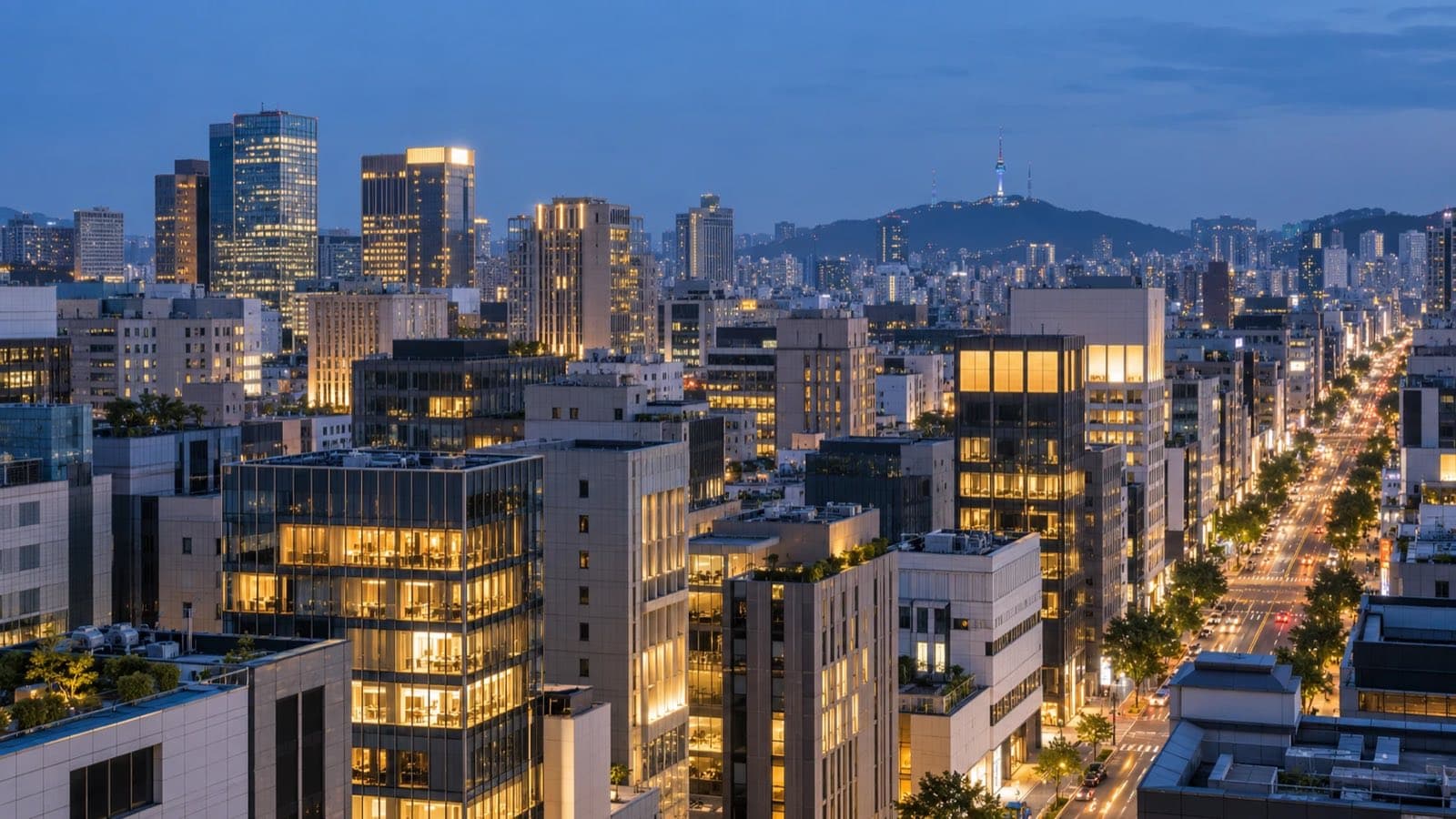
- Density. Seoul's Gangnam district holds hundreds of specialty clinics within a few square miles — the highest concentration anywhere.
- Repetition. A Korean dermatologist may perform a given laser protocol thousands of times a year. Technique compounds with volume.
- Normalization. Aesthetic treatment carries little stigma in Korea, which sustains the volume that produces the skill.
- Price. Domestic competition keeps prices at a fraction of US equivalents.
None of that depends on winning a per-capita ranking.
Why do Koreans get cosmetic procedures?
The common Western framing — vanity, or pressure from K-pop — is too thin. Researchers and clinicians usually point to a combination: a highly appearance-attentive labour market, a dense and affordable clinic network that makes small treatments routine rather than exceptional, and a cultural preference for maintenance over transformation. The typical Korean patient is not getting a facelift. They are getting a laser session between meetings.
That preference is exactly why Korean aesthetic results tend to read as subtle to Western eyes — the aesthetic philosophy is built around balance, not change.
What this means if you're a US patient
If the statistic is what brought you here, the practical takeaway is the opposite of what the headline implies:
How Curo helps
Curo is a registered patient-attraction agency, not a clinic. A Korean doctor reviews your case and matches you with a vetted hospital; you pay the clinic's own price with no foreigner markup, and booking and interpretation are free. Plastic surgery is handled by physician referral. Get a free quote.
Sources: ISAPS Global Survey 2024; Republic of Korea Ministry of Health and Welfare foreign-patient statistics, 2023–2025.
Este contenido es información general y no constituye consejo médico. Las decisiones de tratamiento personales requieren una consulta con su médico tratante. Curo es una agencia de atracción de pacientes internacionales registrada ante el Ministerio de Salud y Bienestar de Corea y no es una institución médica.