Every year, tens of thousands of international patients fly to Seoul for cosmetic surgery — and a growing share of them are American. To understand why, it helps to look past the headlines and at what actually sets Korean plastic surgery apart: surgeon experience, technical refinement, price transparency, and a distinct aesthetic philosophy.
Is Korea the plastic surgery capital of the world?
By raw volume, no — the United States and Brazil perform far more aesthetic procedures in absolute terms. By concentration, per-capita rate, and international draw, Korea has the strongest claim of any country, and Seoul's Gangnam district alone holds hundreds of specialized clinics within a few square miles.
That density matters. A surgeon who performs the same procedure hundreds of times a year develops a level of consistency and refinement that lower-volume markets rarely match. For international patients, that concentration translates into three concrete advantages: deep specialization, competitive pricing, and fast access to sub-specialists for the face, nose, eyes, and body.
(We checked the famous "most per capita" statistic against the primary sources — see Is Korea the plastic surgery capital of the world? for what the numbers actually support.)
Korean plastic surgery by the numbers
Korea's Ministry of Health and Welfare counts foreign patients treated in the country from records rather than surveys, which makes it the most reliable series available:
| Year | Foreign patients treated in Korea |
|---|
| 2023 | 610,000 |
| 2024 | 1,170,000 |
| 2025 | 2,010,000 |
2025 was the first year above two million — a 71.9% increase in a single year.
The 2025 breakdown by specialty is the part most coverage misses:
| Specialty | Patients | Share |
|---|
| Dermatology | 1,310,000 | 62.9% |
| Plastic surgery | 233,100 | 11.2% |
Skin treatment outnumbers surgery by more than five to one. Korea's global reputation was built on the operating room, but its actual international volume today is dermatology.
Why do Koreans get plastic surgery?
The usual Western explanation — vanity, or K-pop — is too thin to be useful. Clinicians and researchers generally point to three overlapping factors:
- An appearance-attentive labour market. Photographs on résumés were common for decades, and appearance is widely understood to carry professional weight.
- Access and price. A dense, competitive clinic network makes small procedures routine rather than exceptional. When a laser session costs less than a dinner out, the decision threshold falls.
- Maintenance, not transformation. The cultural default is small, repeated, subtle work — which is also why Korean results often read as understated to Western patients.
That last point is the one that matters most if you are considering a procedure yourself.
A different aesthetic philosophy
Korean aesthetic surgery is built around natural harmony rather than dramatic transformation. Surgeons train specifically in facial-balance analysis — how the nose relates to the chin, how the eyes sit within the face — and the most requested procedures reward millimeter-level precision.
The goal is not to look "operated on." It is to look like a rested, more balanced version of yourself.
This philosophy is a big reason US patients seek out Korean surgeons for revision work and for procedures where subtlety is everything, like rhinoplasty and eyelid surgery.
The procedures patients travel for
- Rhinoplasty — refinement of the bridge and tip, and revision of previous work
- Double-eyelid surgery (blepharoplasty) — one of Korea's most refined specialties
- Facial contouring — jaw, chin, and cheekbone reshaping for balance
- Facelift and neck lift — with an emphasis on natural movement
- Body contouring — liposuction and post-weight-loss procedures
What makes the quality hold up
- Board certification. Look for surgeons certified by the Korean Society of Plastic and Reconstructive Surgeons (KSPRS) — not just a general medical license.
- JCI-accredited hospitals. Joint Commission International accreditation signals the same safety and hygiene standards you'd expect at a top US hospital.
- Dedicated anesthesiologists. Reputable clinics keep a board-certified anesthesiologist on site rather than relying on the surgeon alone.
- Transparent, itemized quotes. Surgery, anesthesia, facility, and aftercare should all be spelled out in writing — no surprise add-ons.
Typical price comparison
| Procedure | United States | South Korea |
|---|
| Rhinoplasty | $8,000–$15,000 | $3,500–$6,000 |
| Double-eyelid surgery | $4,000–$6,000 | $1,500–$3,000 |
| Facial contouring | $20,000+ | $6,000–$12,000 |
| Facelift | $15,000–$30,000 | $6,000–$14,000 |
Illustrative ranges in USD; your quote depends on the surgeon and case complexity.
Cosmetic surgery is almost never covered by US insurance, so most Americans pay out of pocket at home anyway — which is why the price gap is so decisive.
What US patients should plan for
- Recovery time in-country. Most facial procedures need 7–14 days in Korea before your surgeon clears you to fly.
- Language. Major clinics have international coordinators, and Curo provides interpreters so nothing is lost in translation.
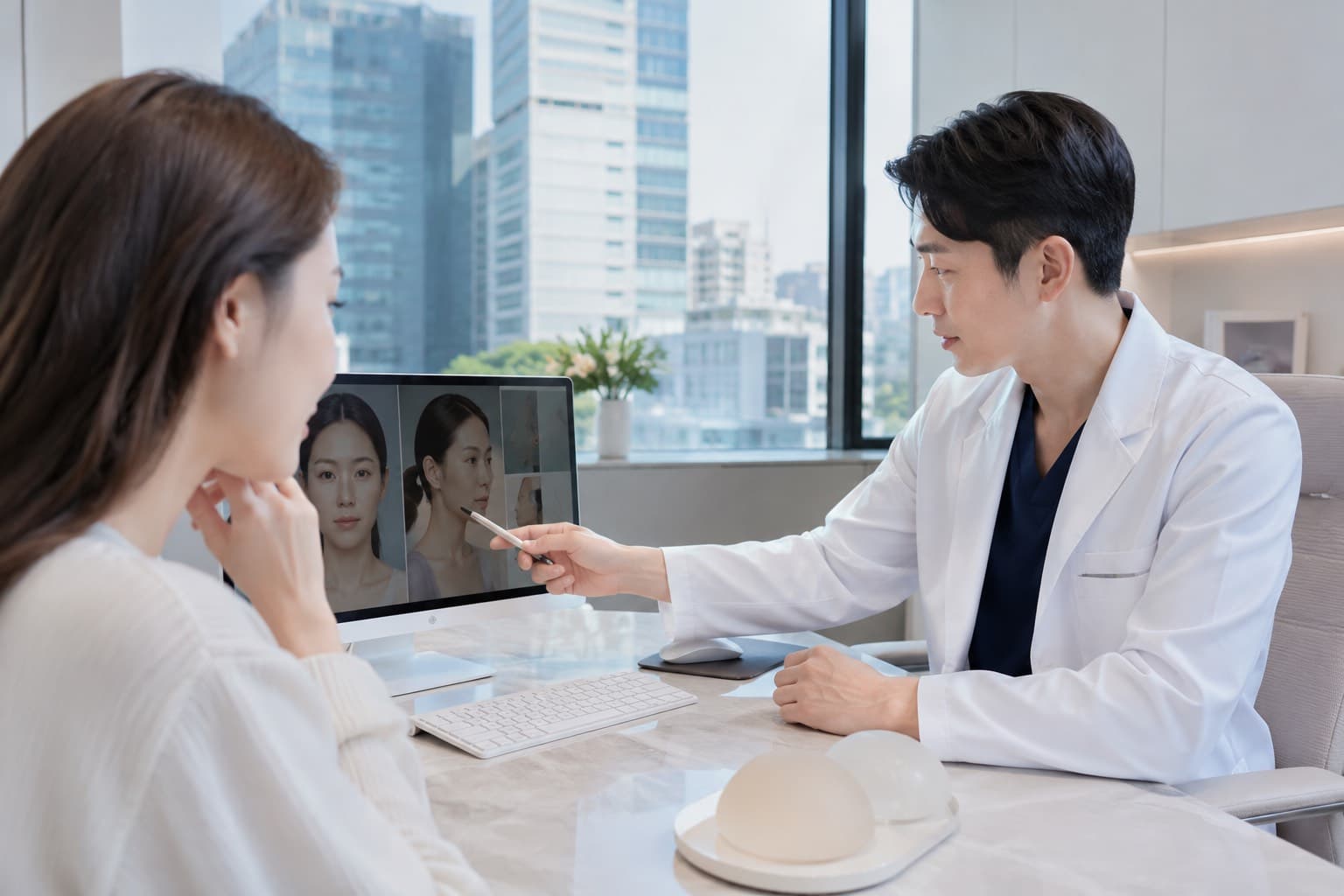
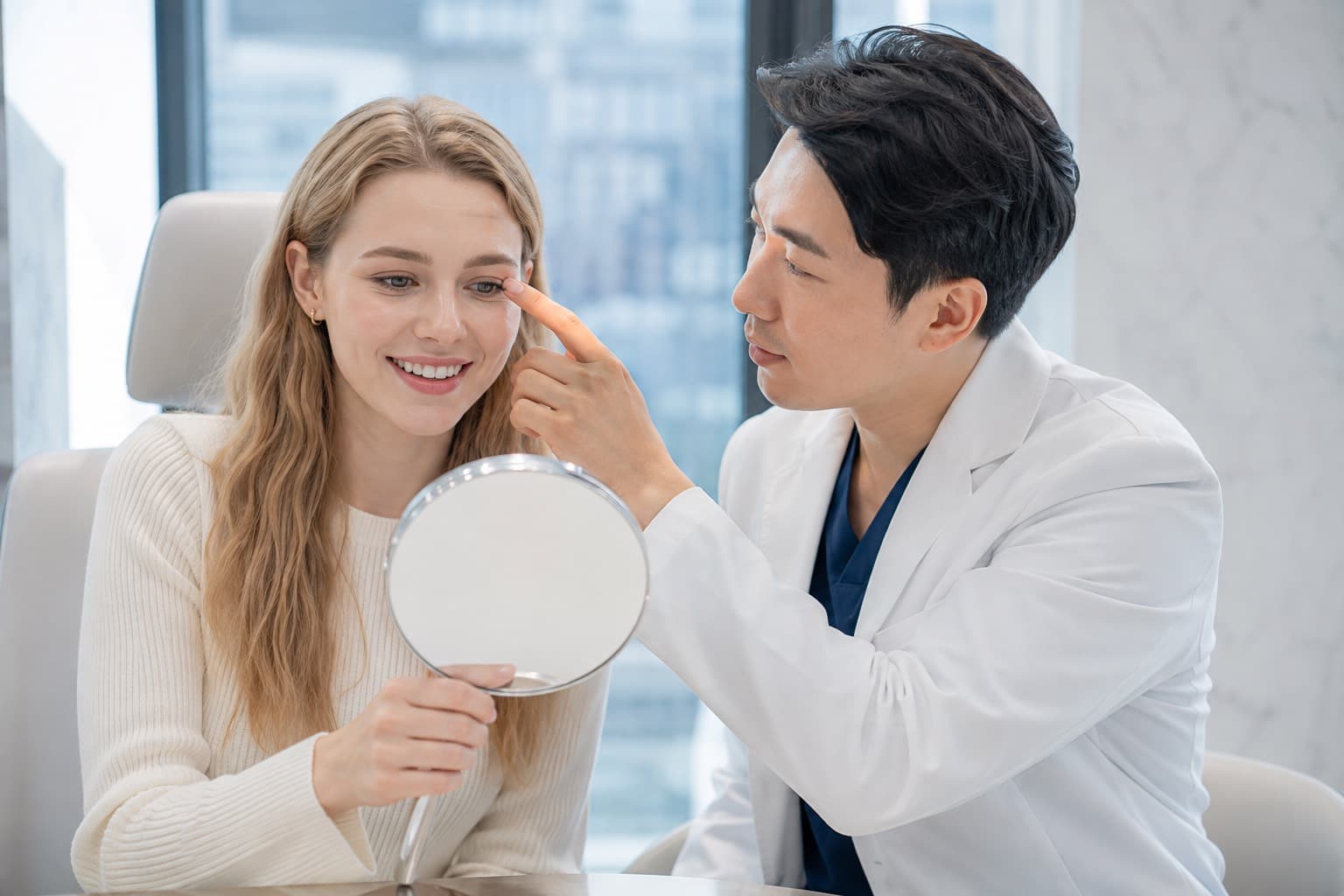
- A realistic consultation. A good surgeon will tell you when a procedure isn't right for you.
How Curo helps
Curo pre-screens surgeons and hospitals, arranges your remote consultation, translates your medical records, and coordinates travel and aftercare — so you arrive prepared and leave confident. Start with our Korean plastic surgery guide for US patients, compare what it costs, see the step-by-step process, or talk to a booking coordinator to start planning.
This content is general information and not medical advice. Personal treatment decisions require consultation with your treating physician. Curo is a Ministry of Health & Welfare–registered international patient attraction agency and is not a medical institution.